
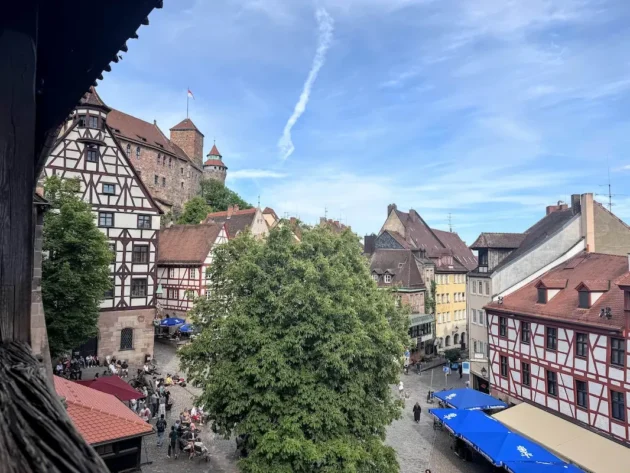
Albrecht Dürer spent almost his entire life in Nuremberg. This is where he was born, created some of his most famous paintings and prints, published his groundbreaking books, mingled with the city’s scientific and humanist leaders, and walked the city’s winding streets. While strolling its cobbled streets, passing alongside its recognisable half-timbered houses, and exploring its iconic landmarks, it is easy to feel as though Nuremberg hasn’t changed much since the famous painter lived here. To help you trace his steps and bring history to life, here is your ultimate guide to finding the legacy of Albrecht Dürer in Nuremberg.
Who was Albrecht Dürer?
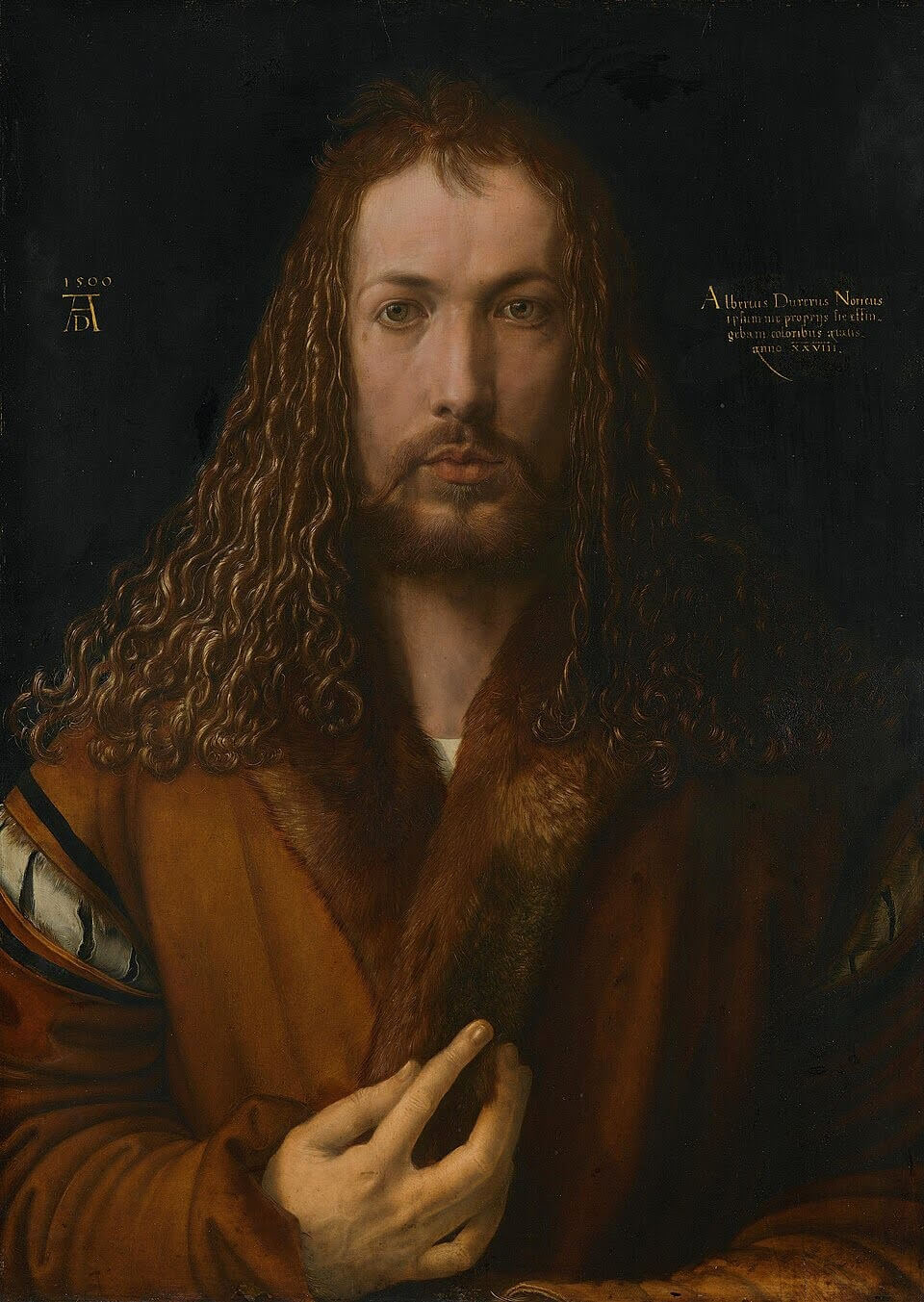
Albrecht Dürer was one of the most talented and influential artists of Renaissance Europe. While the artistic and scientific developments of this new style were mainly flourishing in Italy, Dürer brought those revolutionary ideas north of the Alps to Germany.
Born on 21 May 1471, he was the son of a successful goldsmith who likely introduced him to the basics of drawing. Even more importantly, his father connected him with the most prominent scholars and thinkers of the era in Nuremberg. Albrecht Dürer was a true Renaissance homo universalis, deeply passionate about painting and printmaking, but also fascinated by science, geometry, human anatomy, and architecture.
Something I find so fascinating about him is that Albrecht Dürer was a marketing pioneer. He was one of the first painters to systematically sign his work with a recognisable brand logo, his famous intertwined initials, “AD.” His deep alignment with Renaissance humanism shines through his numerous self-portraits. He didn’t just paint meticulous studies of his own face, he also incorporated his self-portrait into massive religious commissions and even depicted himself as a Hercules.
In 1494, he married Agnes Frey, who became his lifelong partner. She occasionally managed his workshop and travelled to distant art fairs to sell his prints during his absences. Interestingly, Dürer kept his operation lean and never maintained a massive, multi-assistant workshop like many of his Italian contemporaries.
⤷ Read more: The Travelling Artists & Artworks in Renaissance Europe
10 Locations Linked to Albrecht Dürer in Nuremberg
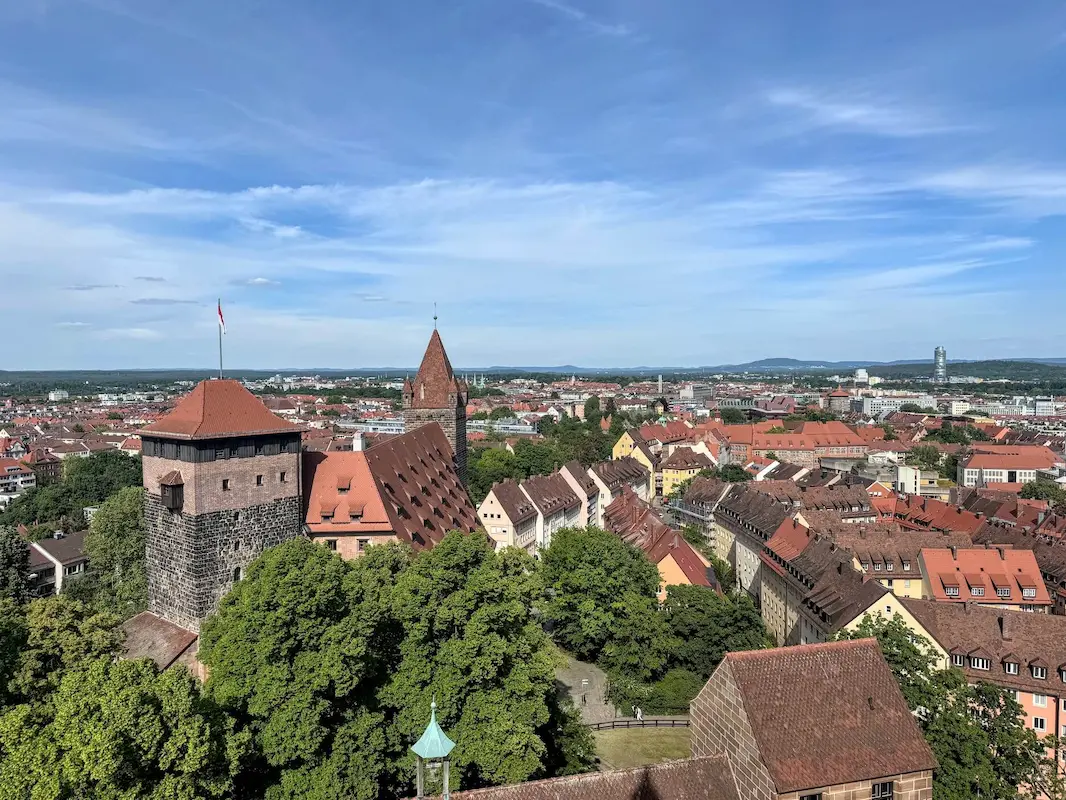
Because Nuremberg’s medieval layout remains intact for the most part, walking through its old town feels like following in Dürer’s footsteps. Here are some of the most interesting places you need to visit.
1 – The Site of His Birth House
Address: Winklerstraße 20, Nuremberg
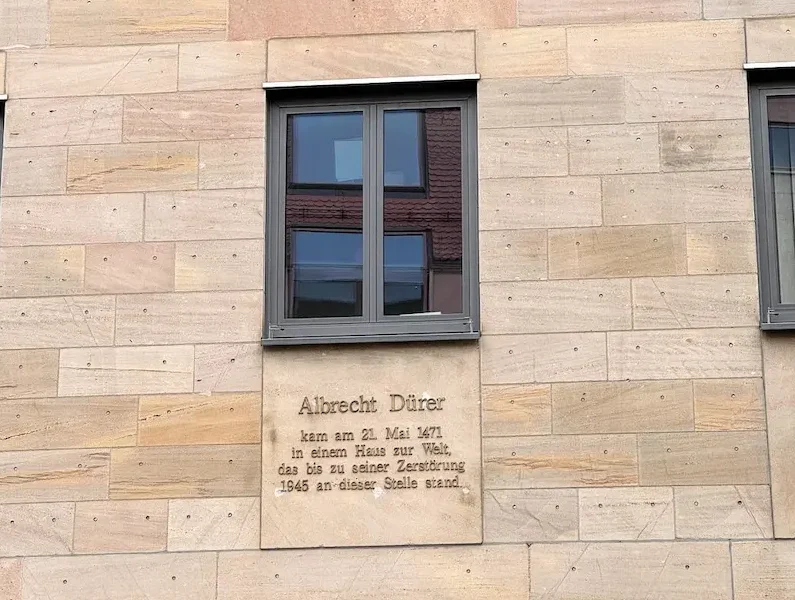
The journey to discover Albrecht Dürer in Nuremberg begins right in the heart of its Old Town, near the Main Market Square (Hauptmarkt). This is where his family home once stood and where the master was born in 1471. Unfortunately, the original building was completely destroyed during World War II, and a modern hotel stands in its place today. However, a historic plaque on the façade still marks the site for visiting art lovers.
⤷ TIP: Right across the street, you’ll find an excellent local restaurant, Die Wirtschaft. They serve traditional dishes in the form of “Gudzerla”, sort of like Franconian tapas. Apparently, Dürer and his friend, Pirckheimer were quite frequent visitors to the restaurant building, which housed the “Herrentrinkenkstube” in their day. So, there is a double reason to visit it during your search for locations linked to Albrecht Dürer in Nuremberg.
2 – St. Sebald’s Church (St. Sebaldus Kirche)
Address: Sebalder Platz, Nuremberg
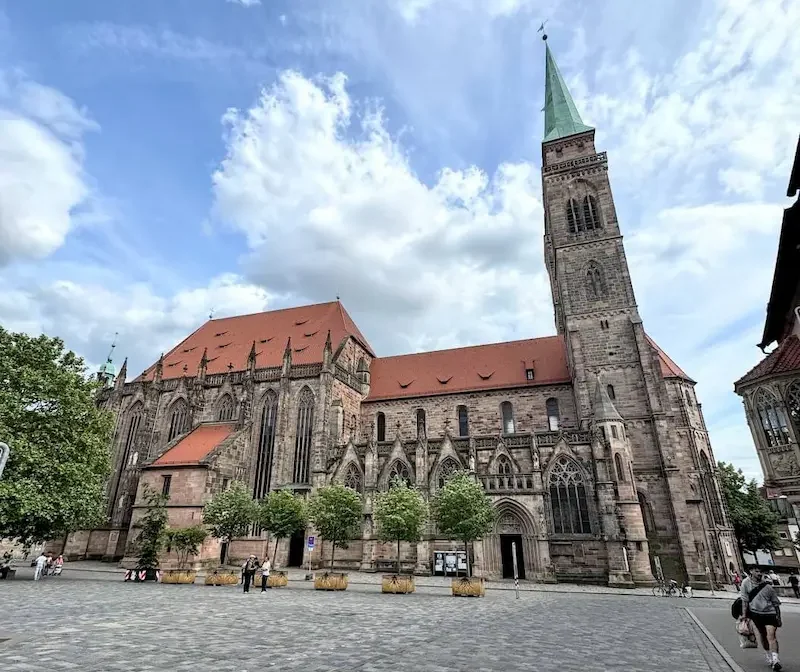
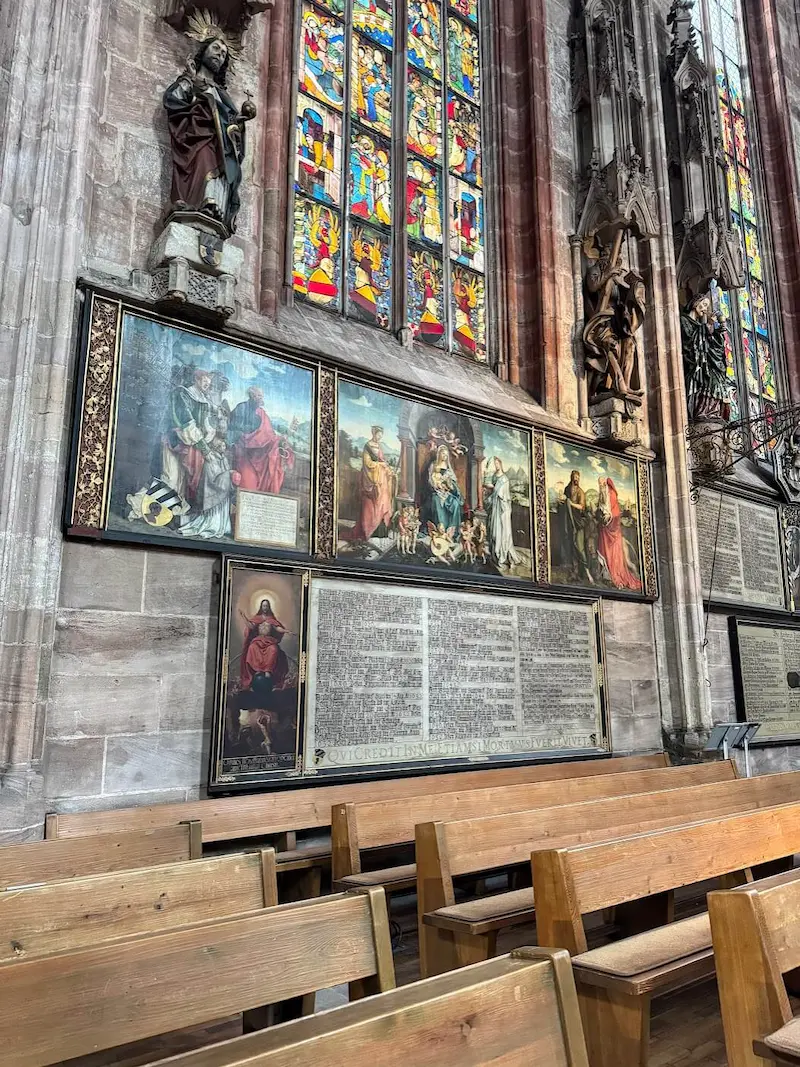
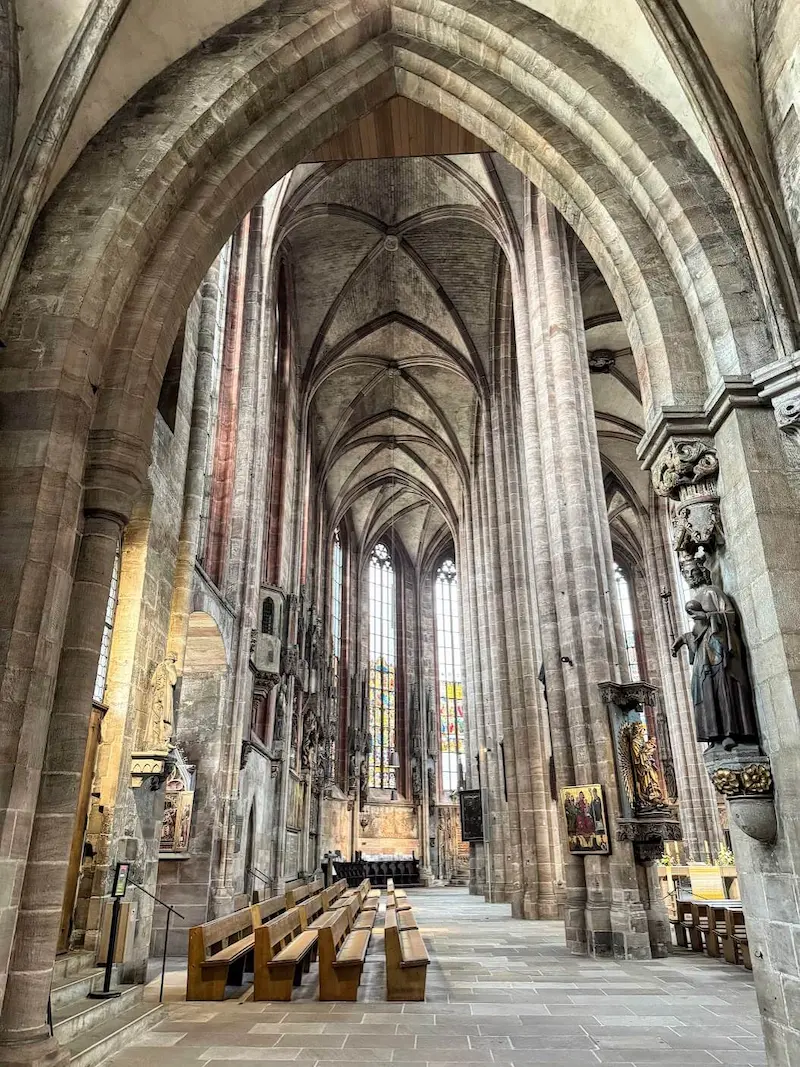
The striking twin spires of St. Sebald’s Church still dominate Nuremberg’s skyline, just as they did 500 years ago. This church was important to Dürer’s personal life. He was baptised here (you can still see the original 15th-century bronze font), married his wife Agnes, and attended Sunday mass here regularly.
His godfather, the well-known printer and publisher Anton Koberger, supported Dürer throughout his career. It was Koberger who helped shape the local print industry, paving the way for Dürer to publish his world-famous Apocalypse woodcut series in 1498.
Dürer also left his physical mark inside the church as an artist. He designed the stained glass for the famous Bamberg Window in the choir (around 1501-1502), which was executed by the local Veit Hirschvogel workshop. He also provided the design for the Dr. Lorenz Tucher memorial painting, which was beautifully executed by his pupil, Hans von Kulmbach.
3 – The Old Town Hall (Altes Rathaus)
Address: Rathausplatz 2, Nuremberg
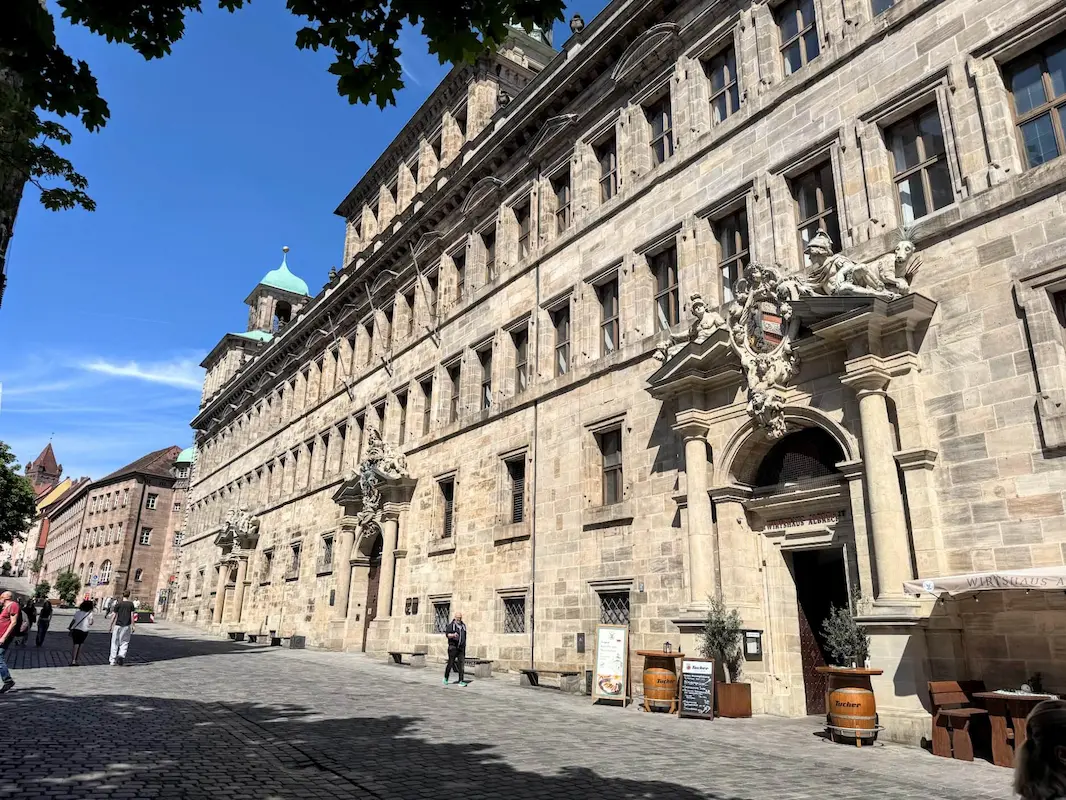
Albrecht Dürer was commissioned to paint several monumental, triumphant wall murals for the Great Hall of Nuremberg’s Town Hall. Sadly, these original frescoes were lost to fire during the 1945 air raids.
However, the Town Hall is still crucial to his story. Dürer painted his unique, iconic diptych panels, The Four Apostles, just a year after the Nuremberg Colloquy of 1525. It was the theological debate held inside this very Town Hall that marked the city’s official adoption of Protestantism. Intrigued by Martin Luther’s reformist ideas, Dürer included quotes from Luther’s Bible translation at the bottom of the panels. While the original masterpieces are now kept in the Alte Pinakothek in Munich, you can see fantastic, historic copies of them inside the Albrecht Dürer House in Nuremberg.
4 – Albrecht Dürer’s Monument
Address: Albrecht-Dürer-Platz, Nuremberg
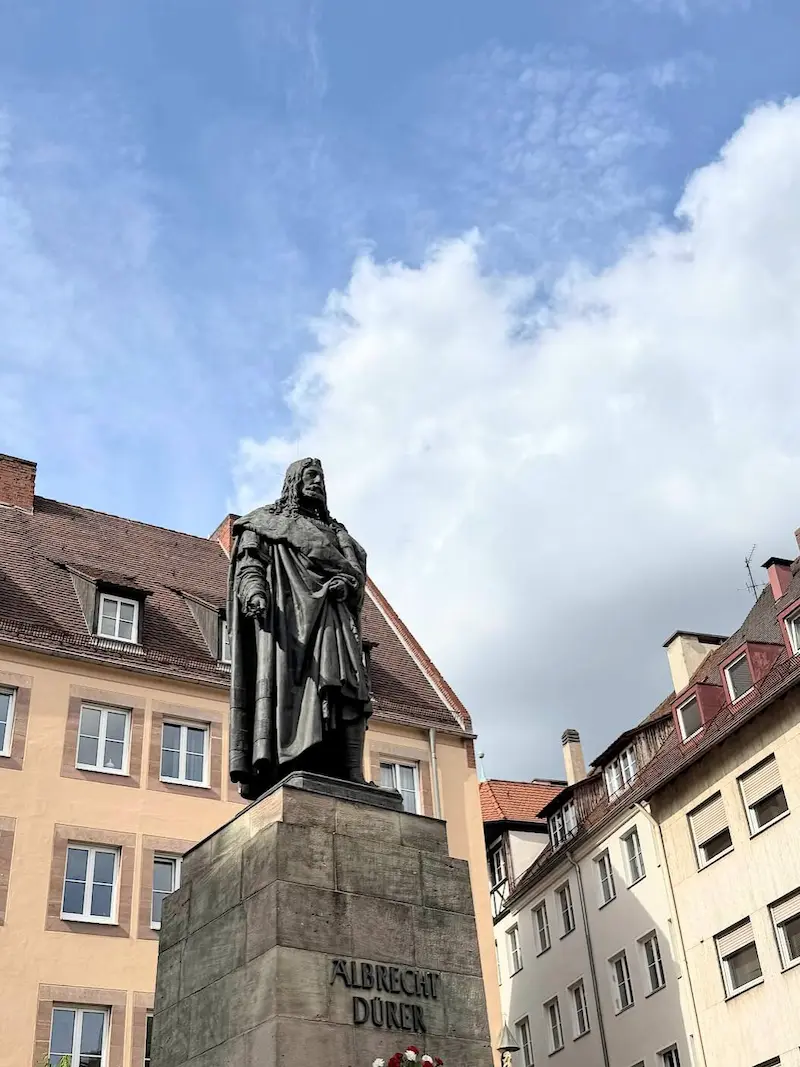
Erected in 1840 and designed by Christian Daniel Rauch, this bronze statue was the very first public monument dedicated to an artist in all of Germany. It stands as a testament to the fact that Albrecht Dürer’s fame never truly waned and that he remained the most celebrated German artist of all time.
The city still places fresh flowers at the base of the statue on significant anniversaries. During my visit, on Dürer’s 555th birthday, flowers were placed on it, too.
5 – Dürer’s Social Circle: Burgstraße Residents
Address: Burgstraße, Nuremberg
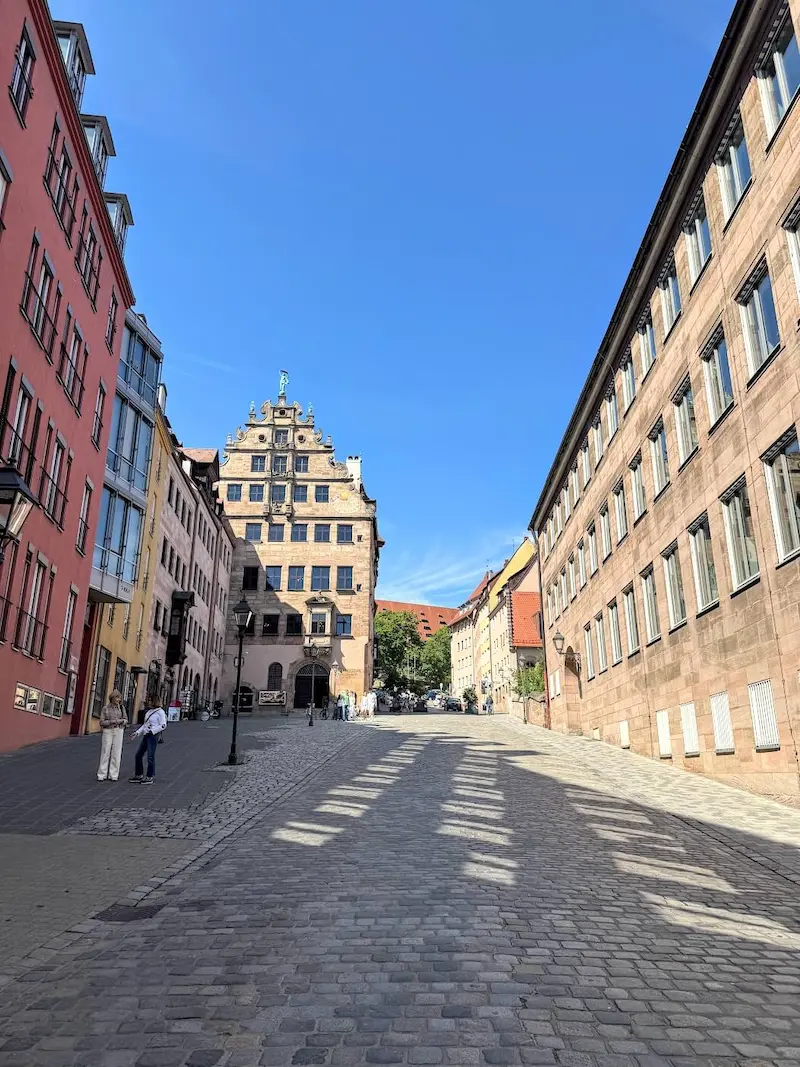
During Dürer’s life in Nuremberg, Burgstraße was the place to be. This street was the humanist heart of the city, populated by Dürer’s friends, scholars, and fellow artisans whose creative minds inspired the young painter.
Burgstraße 16: At this address, you’ll find the residence of Johann Neudörfer, a master calligrapher who added the fine text inscriptions to Dürer’s The Four Apostles. In 1547, Neudörfer wrote the first comprehensive biographies of Nuremberg’s artists, noting that Dürer was so wise and eloquent that he spoke like an elite patrician city councillor.
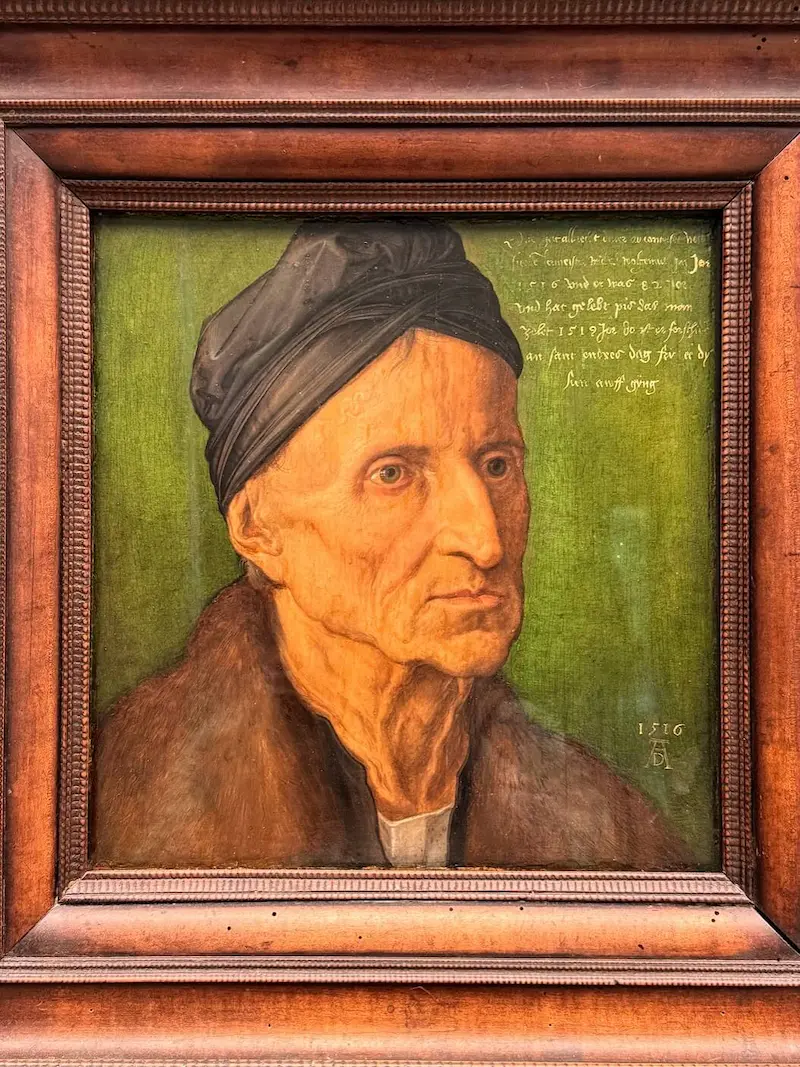
Burgstraße 21: This was the home of Michael Wolgemut, Dürer’s master teacher. In 1486, Dürer began a three-year apprenticeship at his workshop. Wolgemut was highly sought-after and acted as the chief illustrator for the famous Nuremberg Chronicle (1493), one of the earliest illustrated encyclopedias. Albrecht Dürer remained close to his mentor until the very end, painting an extraordinarily raw portrait of him in 1516.
Burgstraße 27: This was the home of Dürer’s parents and the place where he spent most of his childhood. Although the original building isn’t there anymore, the commemorative plaque marks the spot.
6 – The Albrecht Dürer’s House
Address: Albrecht-Dürer-Straße 39, Nuremberg
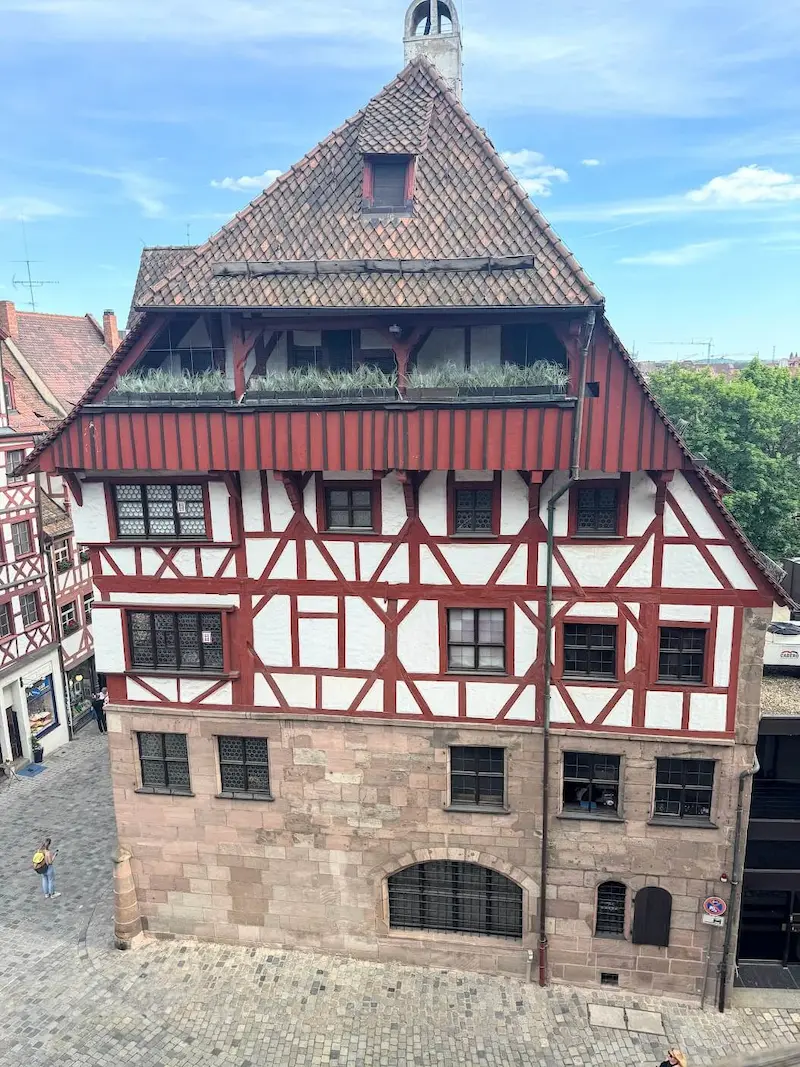
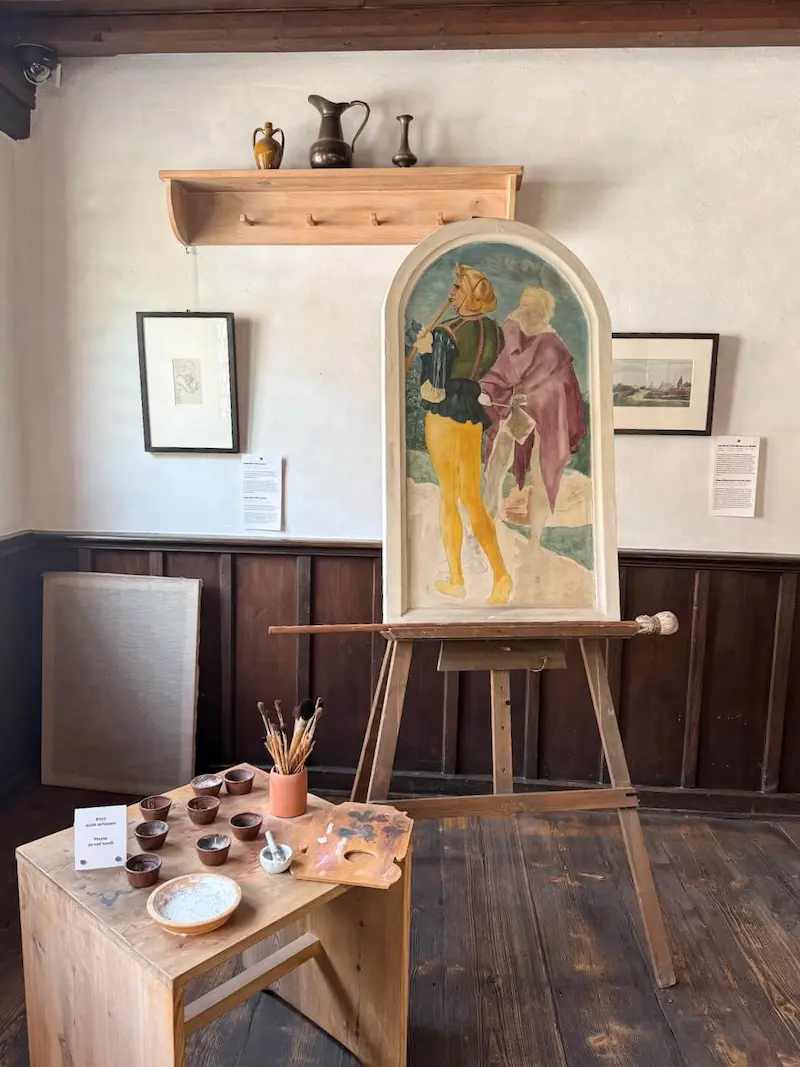
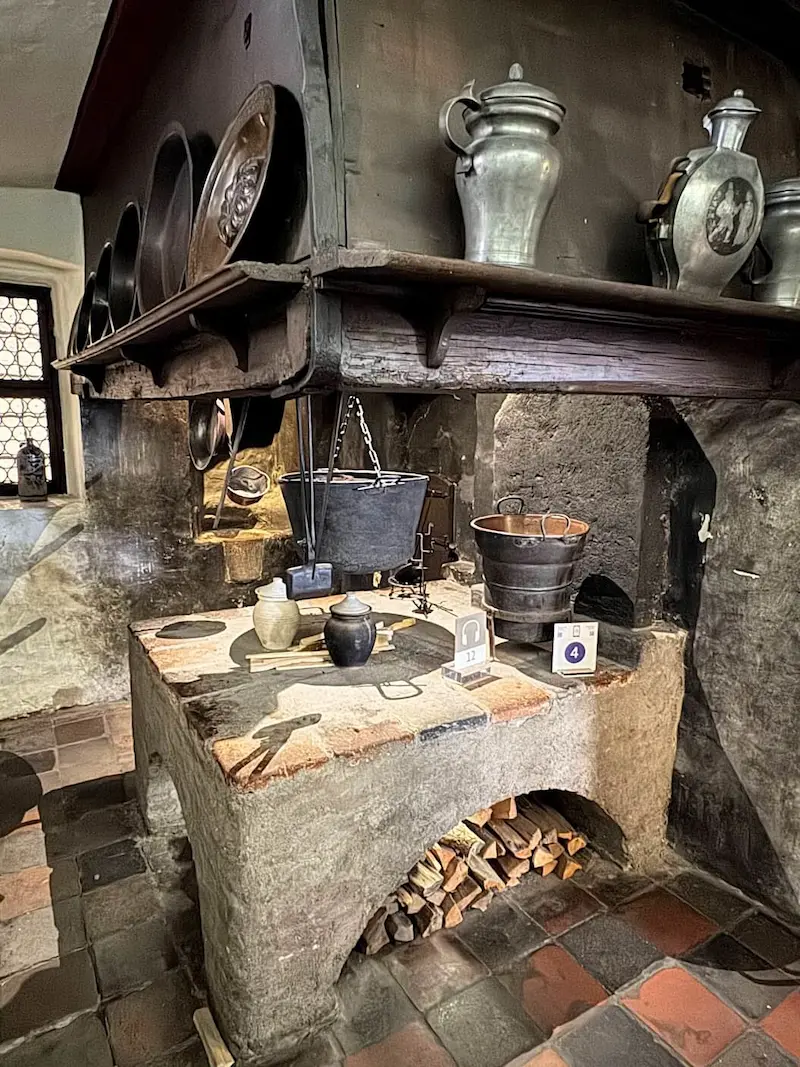
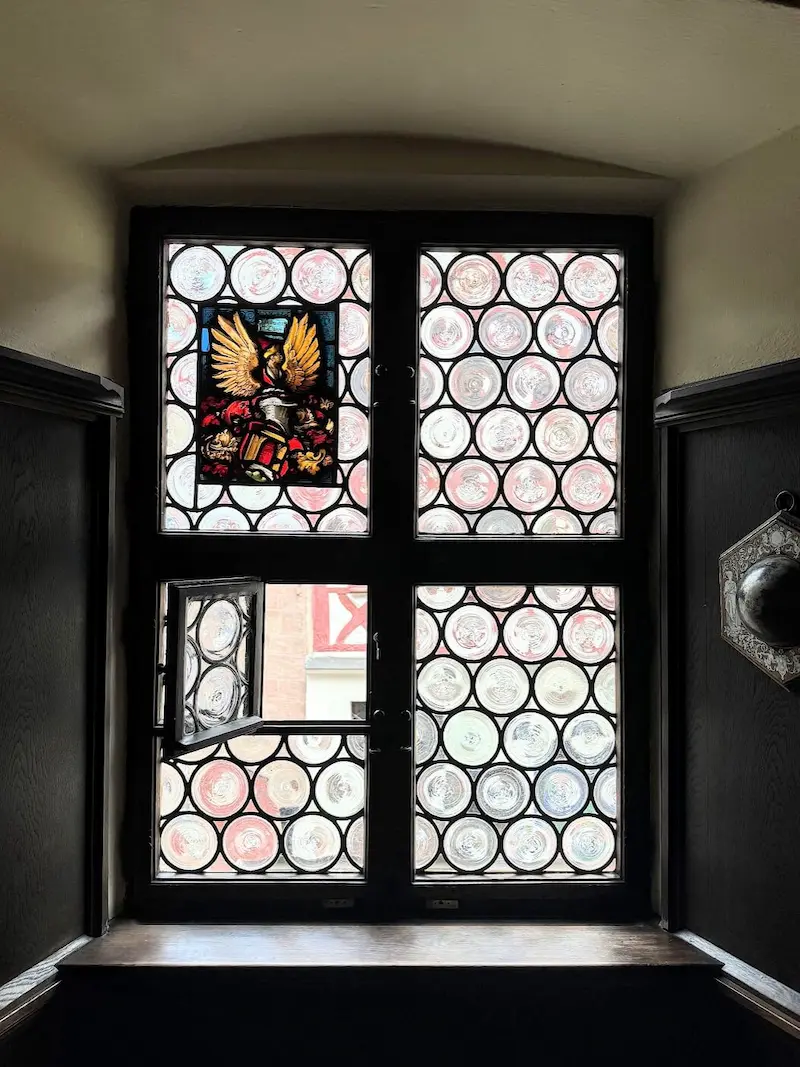
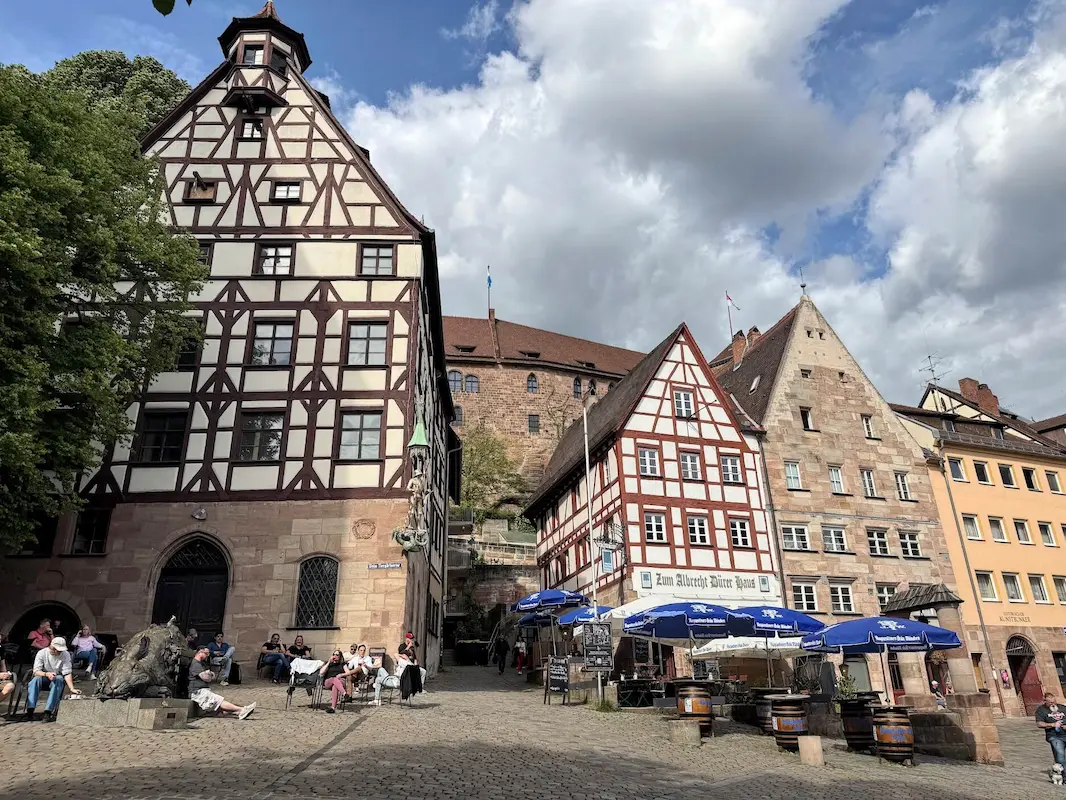
A highlight of any art trip to Nuremberg is the actual house Dürer purchased in 1509. He lived and worked here until his death in 1528, sharing the space with his wife, his workshop apprentices, and later his aging mother. He bought the home from the heirs of Bernhard Walther, a famous Nuremberg astronomer, who had previously used the top floor as a private observatory (you can still see its large window from the back of the house).
The multi-story timber house served as Dürer’s home, his painting studio, and a printmaking shop where his masterpieces were pulled from copper plates.
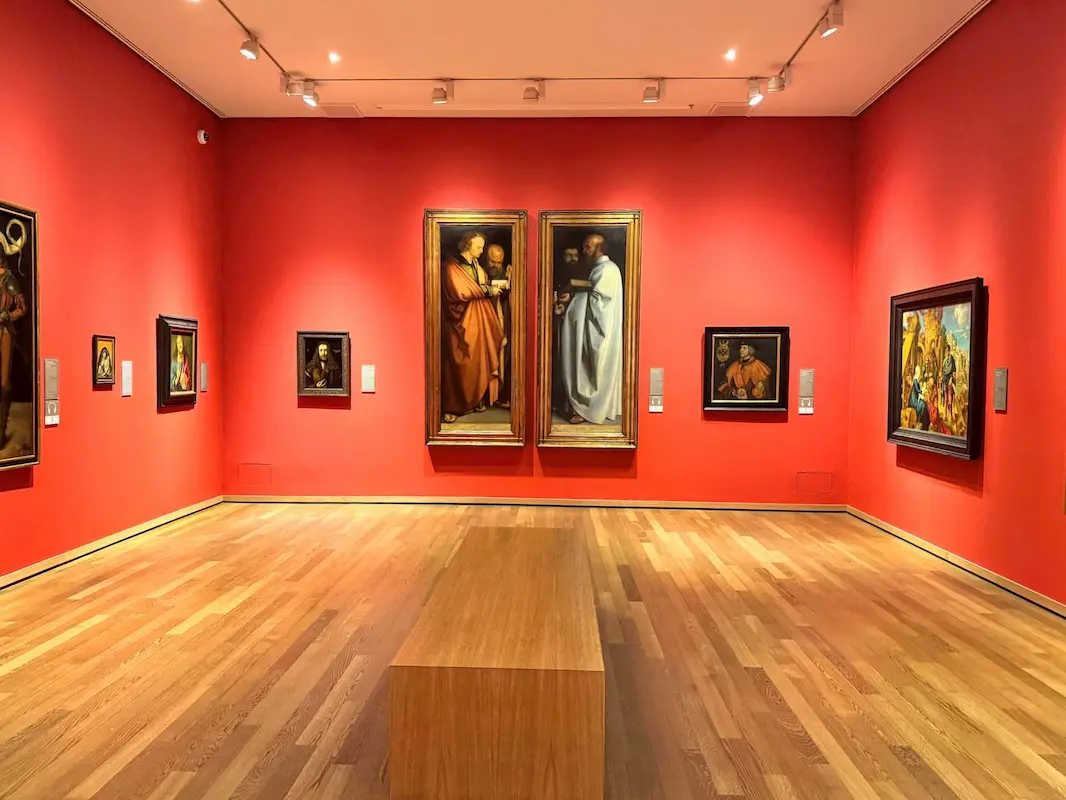
Turned into a museum today, it’s a wonderful place to learn more about the famous painter’s life and work. The lower, dark sandstone floors show where clients would gather to purchase prints. While the original furniture is gone, the rooms were reconstructed in the 19th century to mimic the exact daily environment of Dürer’s era.
The museum features fantastic demonstrations of historical printmaking techniques, displays raw pigment bowls to show how paint was made, and hosts a great collection of his master prints. You’ll find temporary exhibitions (usually featuring his prints) on the top floor, and a lovely display of copies of some of his most famous paintings there.
7 – Der Hase (The Hare Sculpture)
Address: Tiergärtnertorplatz, Nuremberg
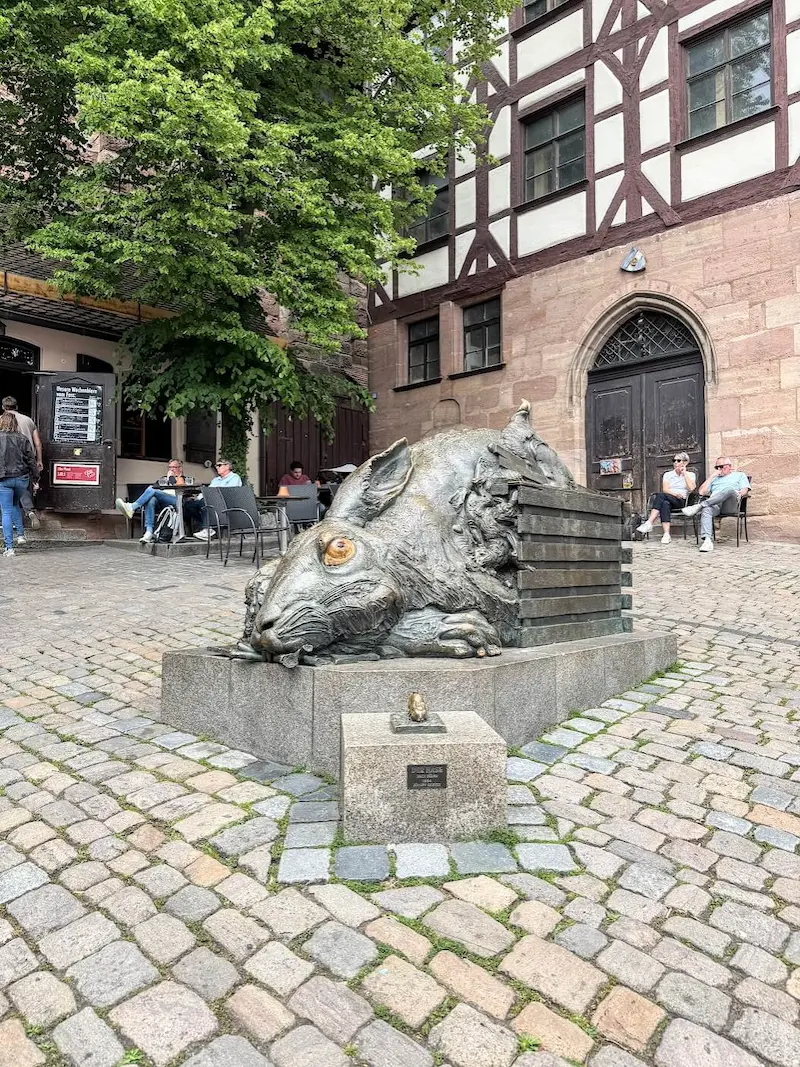
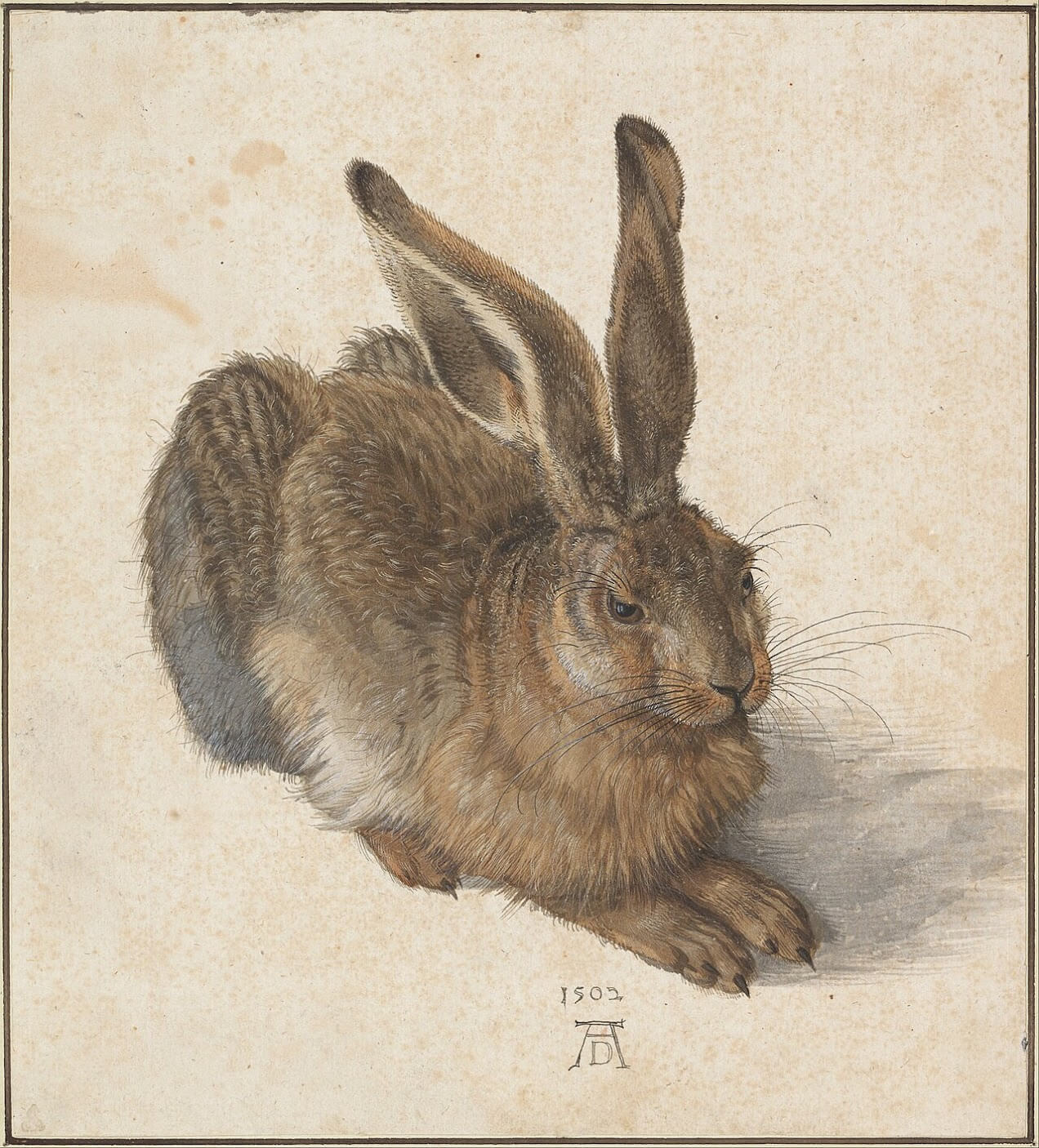
Albrecht Dürer’s 1502 watercolour The Young Hare is a masterpiece of lifelike nature study (the original is on display at the Albertina Museum in Vienna). It seems as if Nuremberg is completely obsessed with this rabbit (as is the rest of the art world), and you will see it on souvenirs all over town. However, the most unusual homage is tucked right in the square outside the Albrecht Dürer House.
Created in 1984 by the German artist Jürgen Goertz, this giant, grotesque bronze sculpture of a mutant rabbit bursting from a crate is a satirical, surrealist critique of the commercial overproduction of famous art.
8 – The Imperial Castle (Kaiserburg)
Address: Burg 13, Nuremberg
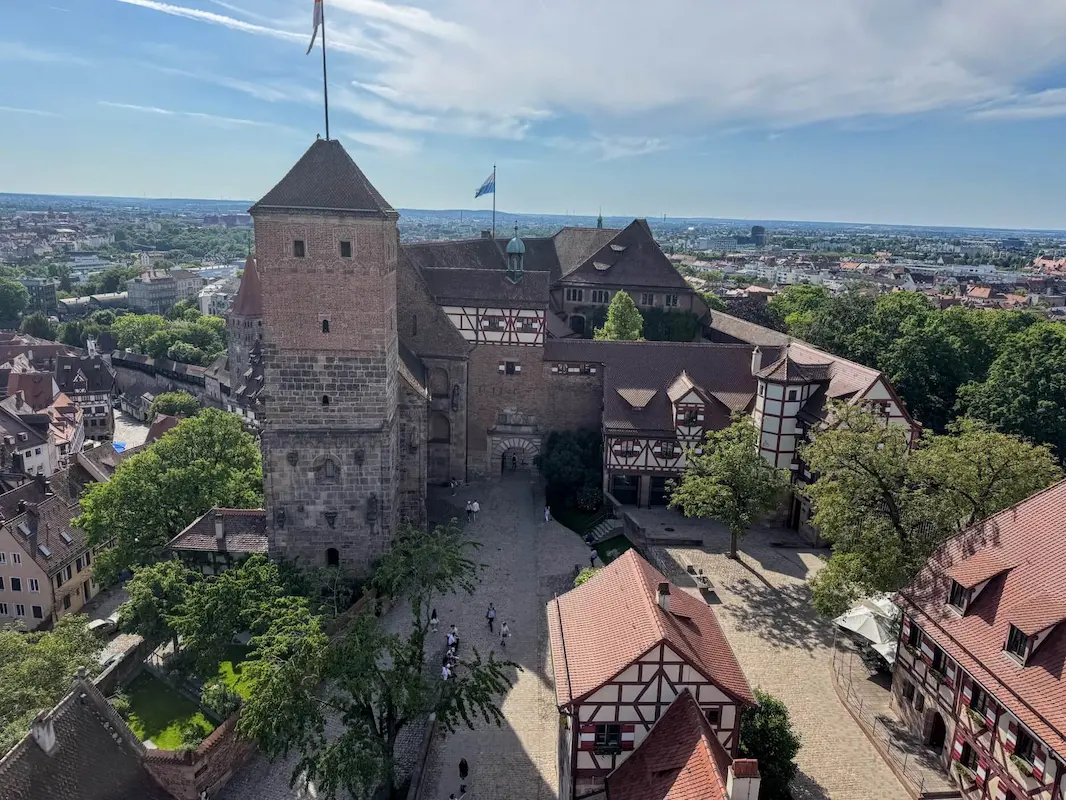
Located high above the city, the Imperial Castle houses a deep connection to Dürer’s most important patron: Holy Roman Emperor Maximilian I. Dürer worked on several massive woodcut projects for the ruler (such as the monumental Triumphal Arch) from 1512 until the Emperor’s death in 1519.
Maximilian valued Dürer so highly that he commanded the city of Nuremberg to pay the artist a permanent annual pension of 100 guilders out of the city’s imperial taxes.
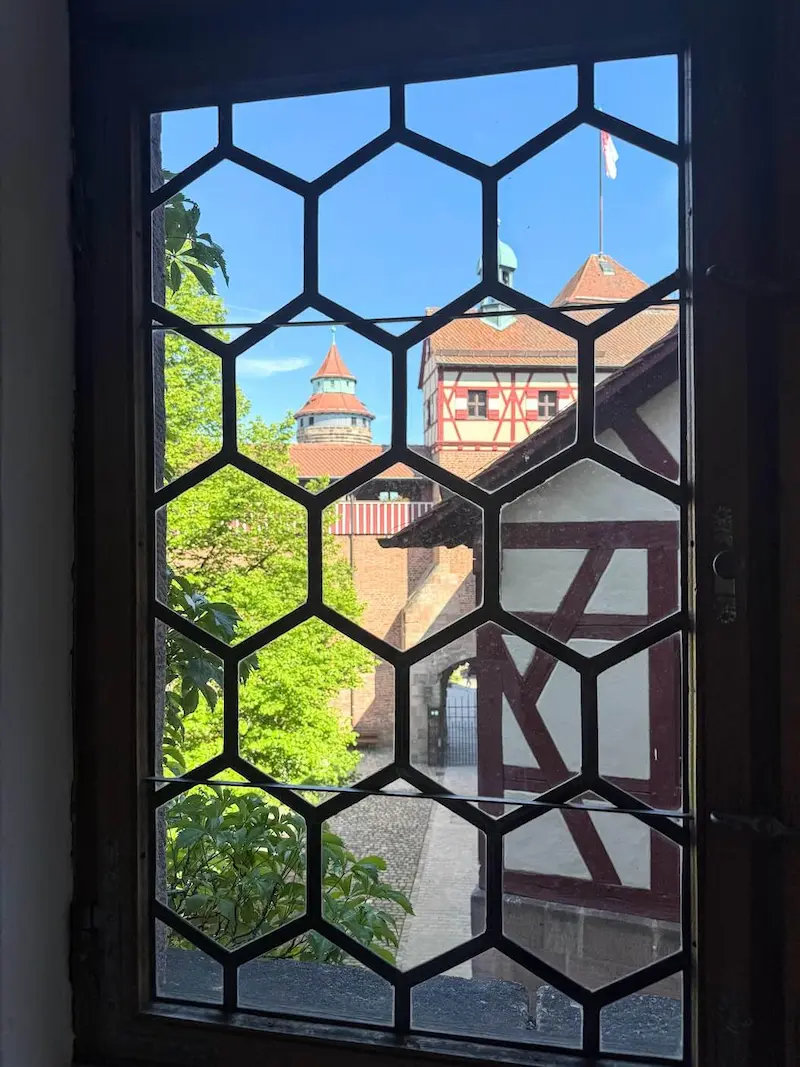
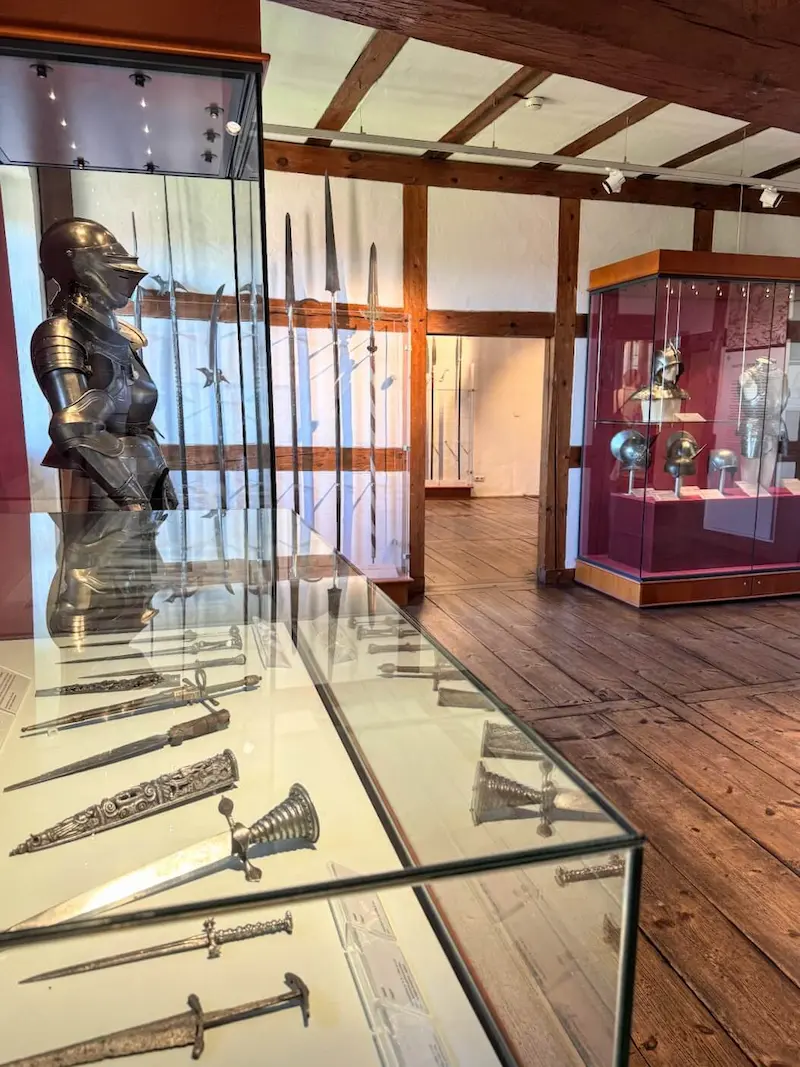
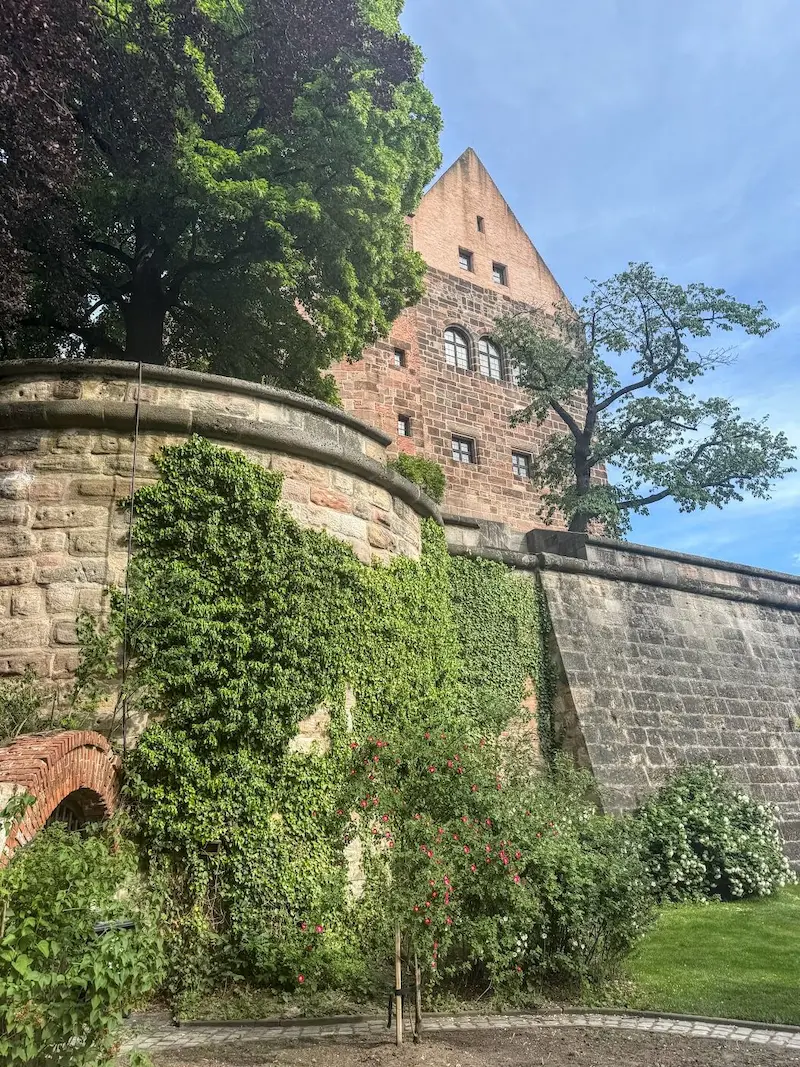
The Imperial Castle is open to visitors, and it’s a great place to learn more about life in Nuremberg during Albrecht Dürer’s time. It was one of the emperor’s royal palaces scattered all over the Holy Roman Empire, so he wouldn’t be there all the time. It’s also quite interesting to see a collection of armour and astronomical instruments, showing the high level of production of these kinds of objects in Nuremberg.
⤷ Read more: Most Beautiful Castles in Europe
9 – Germanisches Nationalmuseum
Address: Kartäusergasse 1, Nuremberg
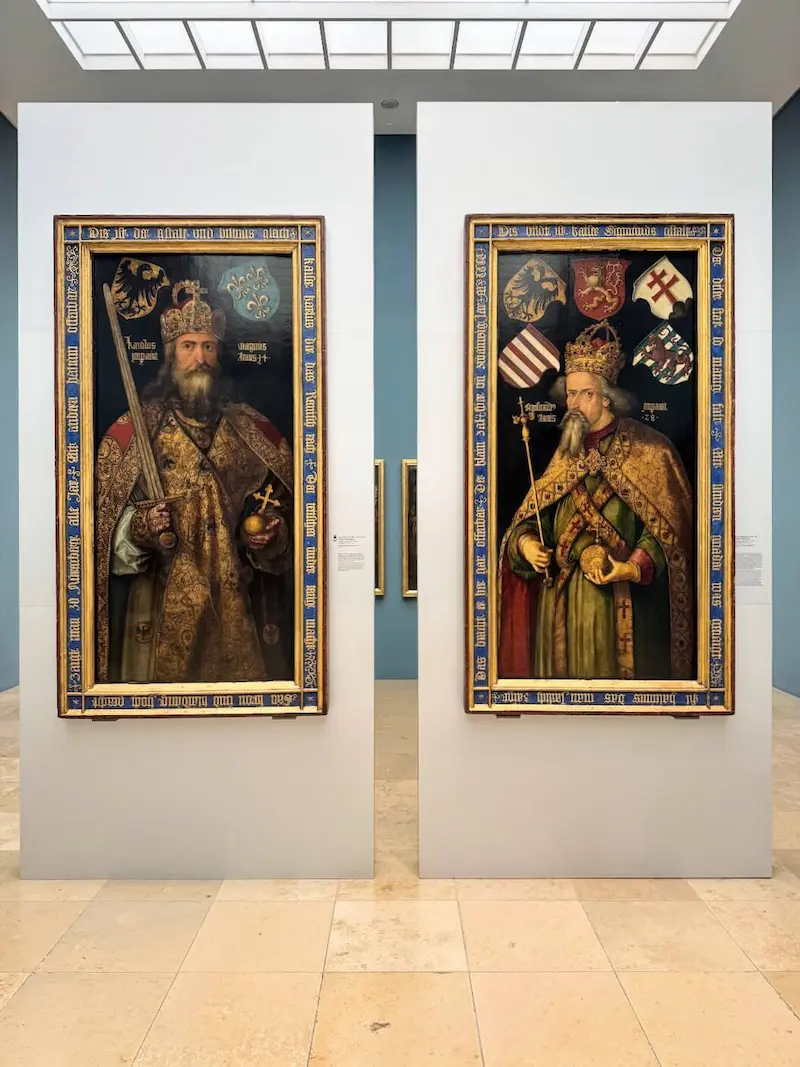
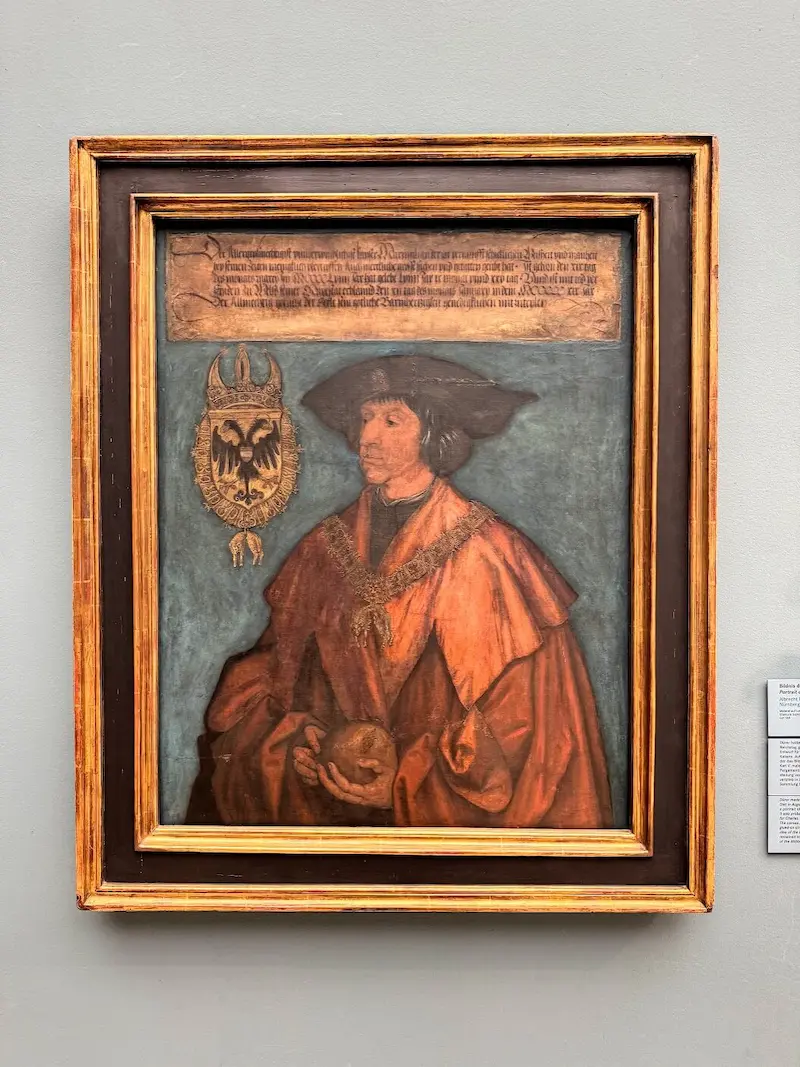
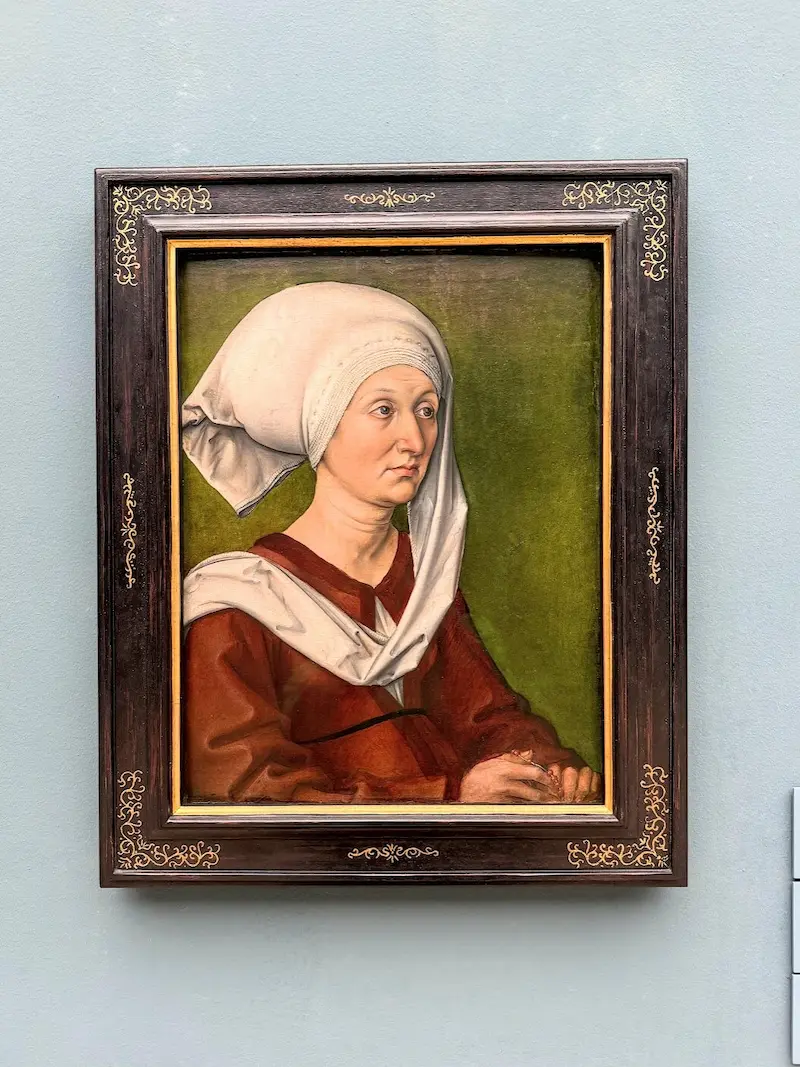
To truly understand Albrecht Dürer’s art and life in Nuremberg, you cannot miss the Germanisches Nationalmuseum. It holds an exceptional collection of his artwork, including some of his most famous paintings, like the portraits of Emperor Charlemagne and Emperor Sigismund. They were made on the wooden panels originally intended to decorate the doors of the city’s imperial relic treasury.
Some of the highlights of their Dürer collection are also an intimate portrait of his mother, Barbara Dürer, and his raw portrait of his old teacher, Michael Wolgemut. It’s so unusual to see a portrait of an aging man from that time. Dürer painted his teacher as he was, without trying to flatter him, instead creating one of the most striking portraits of that period.
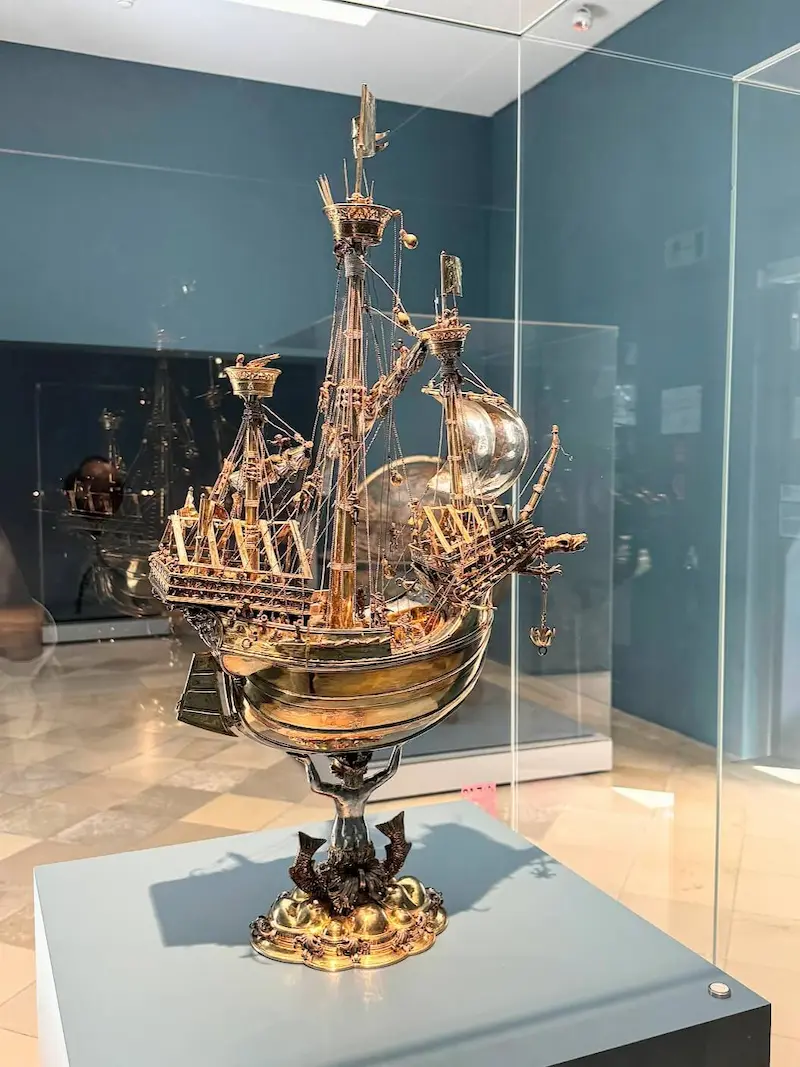
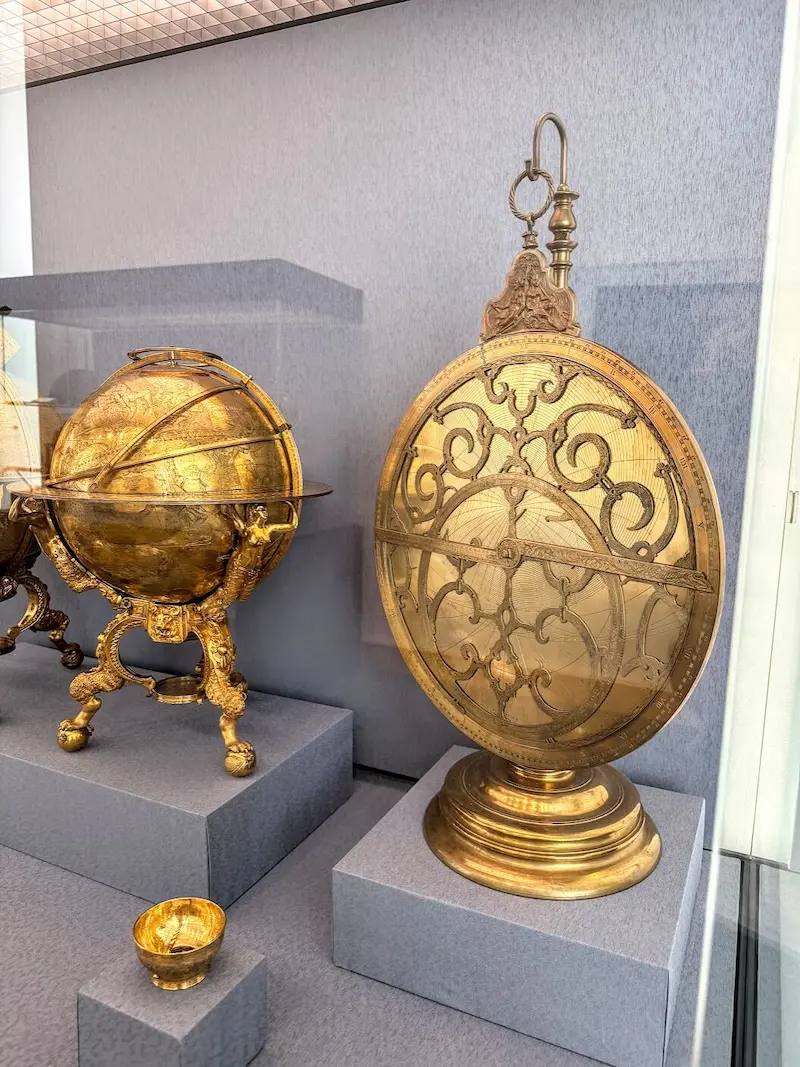
Besides exploring Dürer’s artwork, the museum is a great place to learn about everyday life in Nuremberg during his time. It was a progressive, wealthy city, filled with merchants, humanists, and interesting people of that time. So many objects bear witness to that prosperous time in Nuremberg. I enjoyed finding many little clues in the exhibits: from the city’s architecture in some paintings, to portraits of its wealthy citizens, or curious objects which were in use back then.
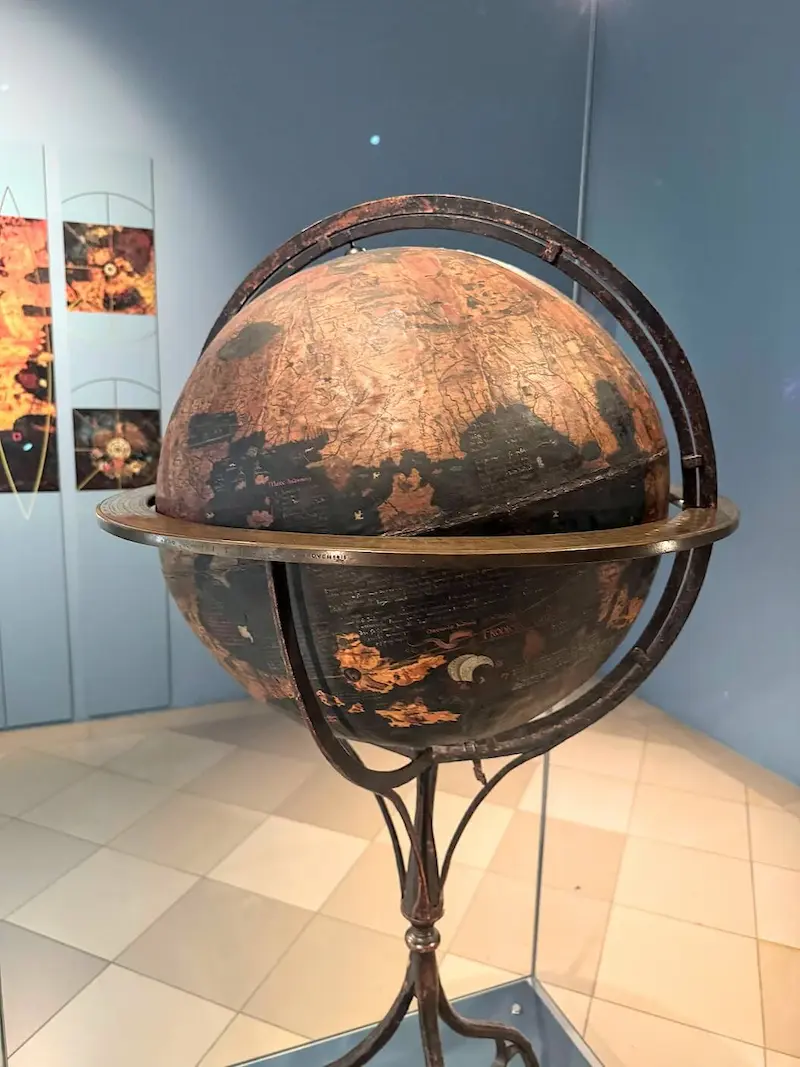
A highlight of the museum is the Behaim Globe, created in 1492 by Martin Behaim. It is the oldest surviving terrestrial globe in the world, completed just before Christopher Columbus returned to Europe with news of the Americas, meaning the American continent is entirely missing. It testifies to Nuremberg being one of the European centres of cartography, navigation, mathematical instrument making, and precision metalworking.
⤷ Read more: Best Exhibitions in European Museums in 2026
10 – Albrecht Dürer’s Grave at St. John’s Cemetery
Address: Johannisstraße, Nuremberg
Albrecht Dürer passed away on 6 April 1528. He was laid to rest at St. John’s Cemetery (Johannisfriedhof), an exceptionally beautiful, historic burial ground blanketed in stone epitaphs and roses. His grave (No. 649) features a famous inscription penned by his close humanist friend, Willibald Pirckheimer:
Whatever was mortal of Albrecht Dürer is covered by this mound.
A group of grieving artist friends reopened his grave the day after the burial. They cast a plaster mold of his face and a hand, and snipped a lock of his hair. That single preserved lock of Dürer’s hair is kept as an artistic relic today in the academy collections in Vienna.
Tips for visiting Nuremberg
⤷ Where to stay in Nuremberg: I stayed at The Cloud One hotel in Nuremberg and liked it a lot! It’s conveniently located right next to the train station (handy, if you’re travelling by train as I did) and at the outskirts of the Old Town. I especially liked its breakfast area, located on the 13th floor overlooking Nuremberg’s historical city centre.
⤷ Where to eat in Nuremberg: I have two restaurant recommendations in Nuremberg! Albrecht-Dürer-Stube serves great local food in a traditional setting and is located very close to the Albrecht Dürer House. My tip is to try the local sausages, which are delicious there. Another restaurant I liked in Nuremberg was Die Wirtschaft, which I already mentioned above.
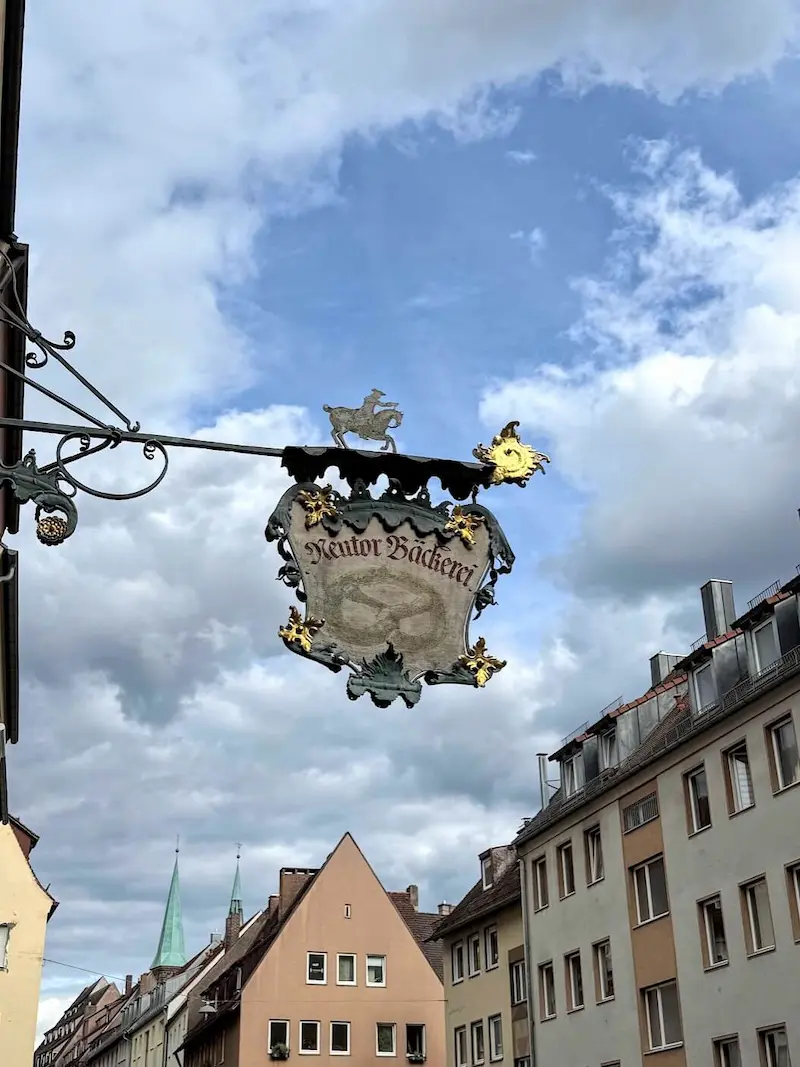
Also, you can’t visit Nuremberg without having a pretzel. The iconic local chain of pretzel bakeries is called Brezen Kolb, and you’ll find them on every corner in Nuremberg.
⤷ Get Nürnberg Cards: I used the Nürnberg Card during my visit and highly recommend you get one, too. I had free access to all of the museums and attractions mentioned in this guide (except for St. Sebald’s Church) and free public transport. You can check all the cards options and get your card via this link.
⤷ 500th anniversary of Albrecht Dürer’s death: Nuremberg marks the grand 500th anniversary of Albrecht Dürer’s death in 2028. The city is already preparing interesting exhibitions, special historic re-enactments, and cultural events. There has truly never been a better time to plan a trip to step straight into the German Renaissance.
⤷ Explore Nuremberg Neighbourhoods: Nuremberg is home to many cute local historical neighbourhoods. I especially liked the Craftsmen’s Courtyard filled with small shops and restaurants. You can check all of them and explore them on this website.
Albrecht Dürer made a strong mark on European Renaissance art and humanism, but also on his hometown of Nuremberg. Walking its cobbled streets feels as if you have travelled back in time and as if the famous artist would walk around the corner any second now.
I visited Nuremberg on a press trip organised by the Nuremberg Tourism Board in May 2026. Many thanks to them and their partners for arranging a wonderful visit for me. However, as always all opinions are my own.