
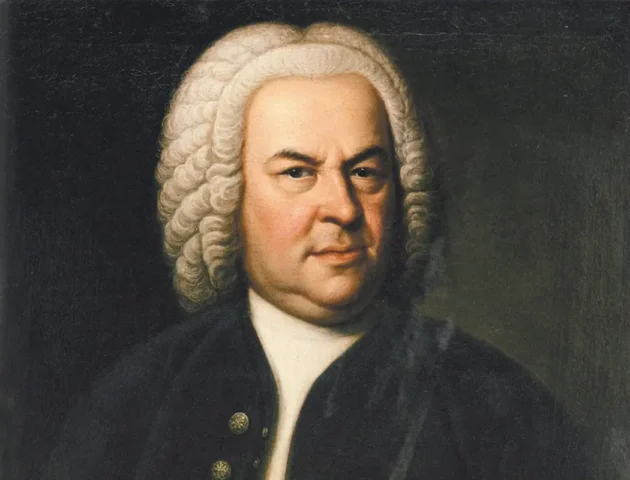
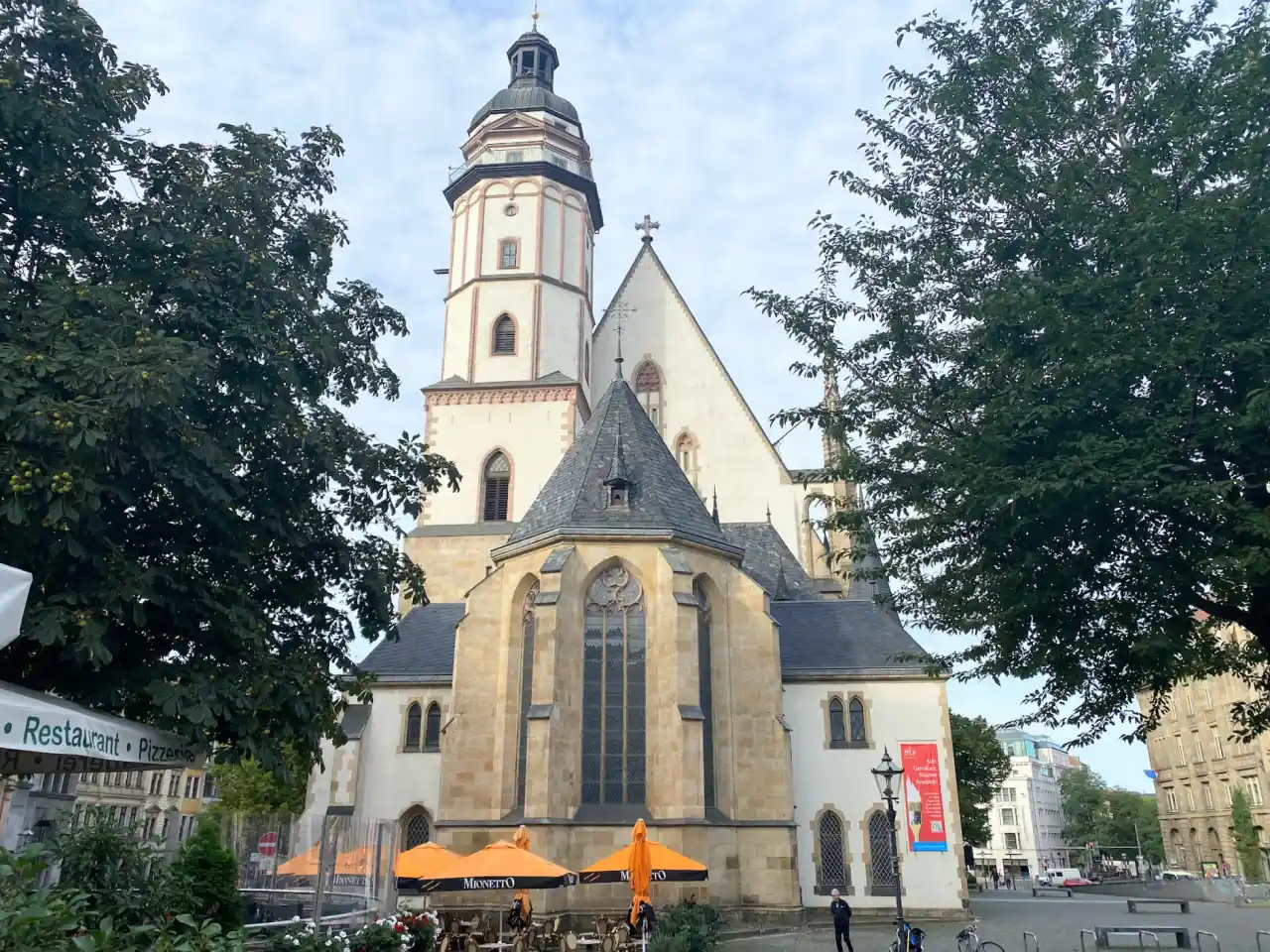
If you ever walk through the lovely, old streets of Leipzig in Germany, you might pass by a large St. Thomas Church (the Thomaskirche). That monumental building is the exact place where Johann Sebastian Bach worked. And he lived right next to it. Today, people all over the world think of Bach as one of the greatest musical geniuses who ever lived. When you look at his image in old paintings, he looks like a serious, strict man wearing a big white wig. But who was that man?
A bit of research into his life made me realise that Bach had a very interesting life. He was not just a quiet man writing music in a corner of his room. He was a passionate, hard-working person who fought for his rights, loved his family deeply, and faced many sad tragedies. To truly enjoy his music, it helps to understand the real man behind it.
Who was Johann Sebastian Bach?
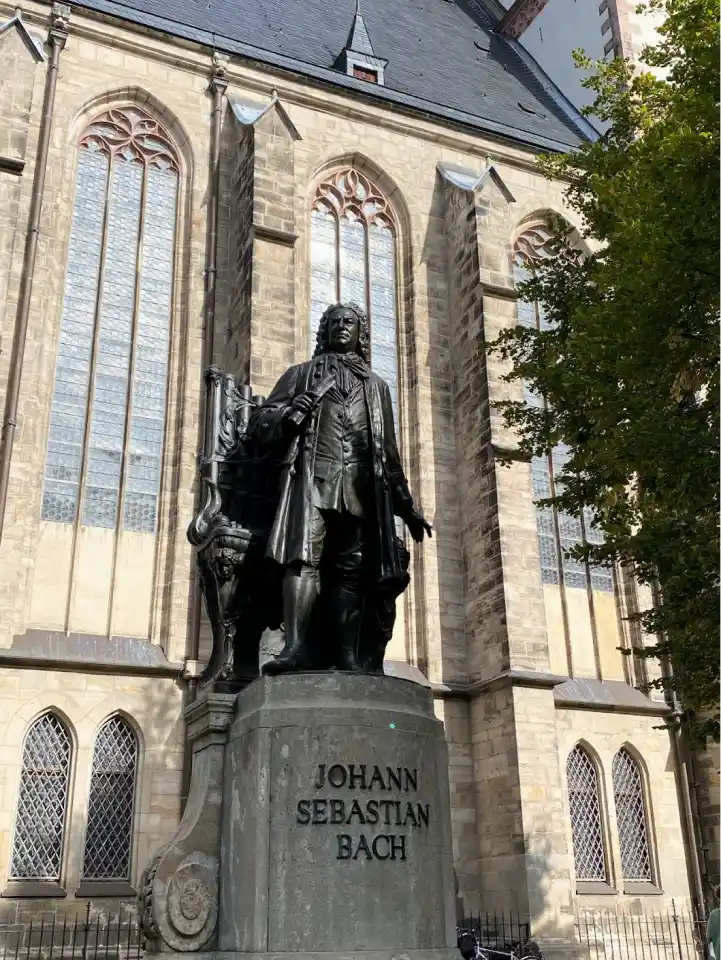
One of my earliest childhood memories is sitting at our dark wooden family piano with a blue music book with four bold letters printed on its cover: BACH. I was maybe six or seven years old when I first encountered the famous composer’s work. While I (always unsuccessfully) tried to play his notes correctly, I wasn’t thinking much about the man behind the music.
But, later on, as I started to stumble upon his name more often, I realised he was quite a master. Yet, I never truly researched more into his life and music. It was only when I first visited Leipzig, a town where he left such a strong mark, that I became more immersed in the life of that fascinating musician.
⤷ Read more: Things To Do in Leipzig – Germany’s City of Music
Bach’s early life: A big musical family
Johann Sebastian Bach was born in a German town called Eisenach in 1685. Since his early childhood, young Bach had been surrounded by music. In his part of Germany, the Bach family was famous for it. His father was a director of town musicians, and almost all of his uncles played instruments and worked as church organists, court chamber musicians, and composers.
However, Bach’s childhood was not easy. By the time he was only ten years old, both his mother and father had died. The young boy had to move in with his eldest brother, Johann Christoph, who lived in the nearby town of Ohrdruf. His brother exposed him to the work of contemporary composers and taught him how to play keyboard instruments, but young Bach wanted to learn even more than his brother allowed.
There is a famous story about Bach from this time. His brother had a locked cupboard filled with music books and manuscript scores by famous composers. He had told Johann Sebastian that he was too immature to look at them. But the young boy wanted to learn so badly that every night, while everyone else was asleep, he would squeeze his small hands through the cupboard door. He copied the music by hand using only the dim light of the moon. It took him six months to finish it. Even though his brother found out and took the copy away, this story shows how determined Bach was to learn music.
⤷ Read more: 15 Most Beautiful Royal Palaces in Europe
Bach’s music career
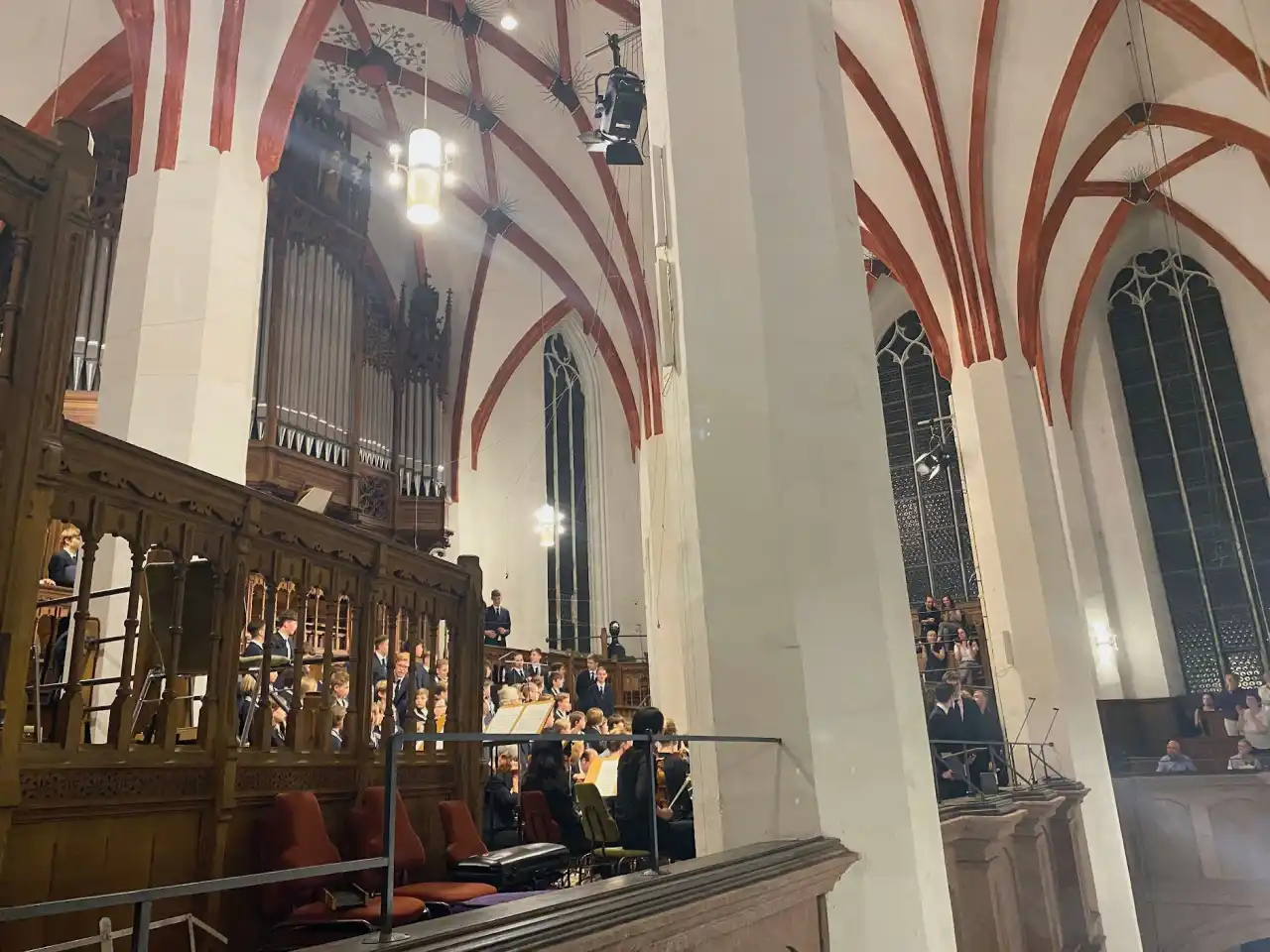
Johann Sebastian Bach’s love for music grew ever bigger, and it eventually became his career. He spent his life moving from town to town across Germany, working for local churches and rich princes.
At his first few jobs, his employers often got upset with him. They thought his organ playing was too complicated and that it confused the people singing in the church. Bach refused to change his style. He also had a bit of a temper. Once, he even got into a physical fight in the street with a student after Bach called him a bad bassoon player.
His life became much happier in 1717 when he went to work for young Prince Leopold of Anhalt-Köthen. The prince truly loved music and treated Bach very well. Because the prince’s church did not need complicated choir music, Bach spent his time writing beautiful instrumental music instead. This is when he wrote some of his most famous pieces, like the Brandenburg Concertos and his music for the cello.
But even during these happy years, tragedy struck again. In 1720, Bach went on a short trip with the prince. When he returned home, he has found out that his beloved wife, Maria Barbara, had suddenly died and been buried while he was away. He was left alone to care for his young children. A year later, he married a gifted soprano named Anna Magdalena Wilcke. They had a happy, busy home full of music and children. In total, Bach had twenty children across his two marriages, but sadly, ten of them died when they were very young. Unsurprisingly, four of his children became well-known composers, as well.
In 1723, Bach took a job as the music director in the city of Leipzig and he remained there until his death in 1750. His job there was quite demanding. He was hired as Thomaskantor (the church music director of the city of Leipzig) and was responsible for the music in four of the city’s churches. He also had to teach schoolboys at the St. Thomas School, and write a brand-new piece of choir music every single week.
⤷ Read more: 20 Most Iconic Churches in Europe
The famous portrait: How Bach wanted to be seen?
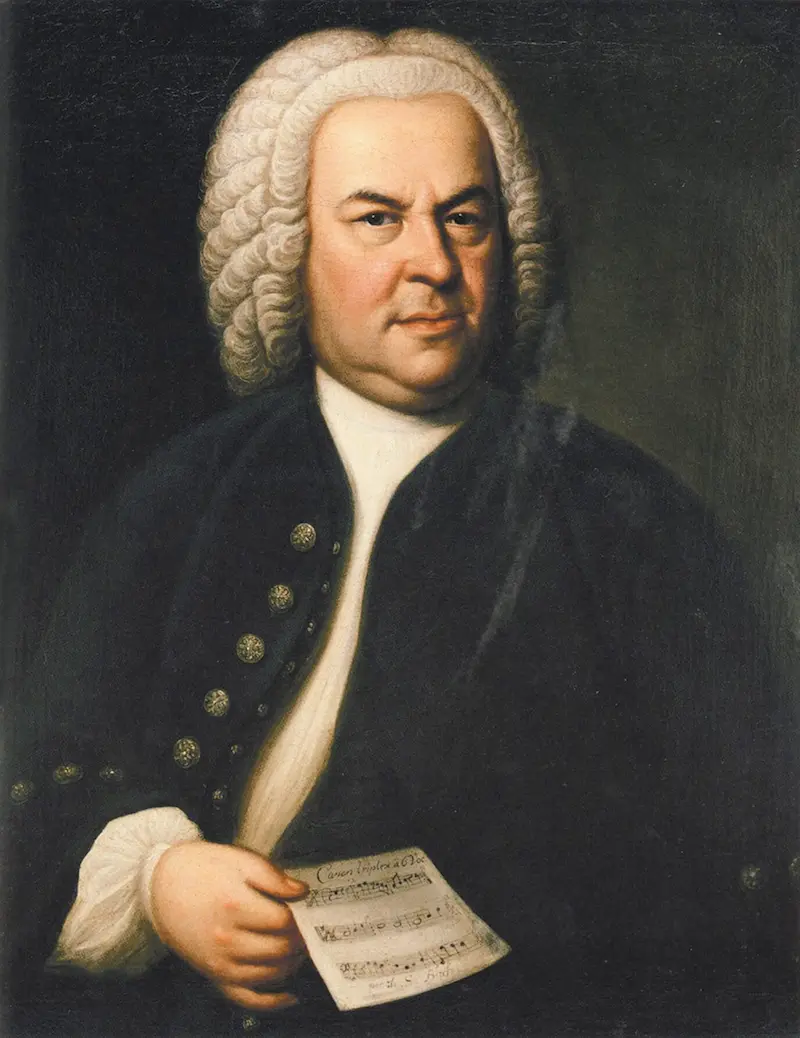
If you want to know what Bach really looked like, there is one very important painting. It was painted in 1746 by an artist named Elias Gottlob Haussmann. This is the only portrait of Bach that we know he definitely sat for.
Bach had this portrait painted for a special reason. He wanted to join an exclusive Society of Musical Sciences. To join, members had to submit a formal painted portrait of themselves and a highly complex piece of music.
In the painting, Bach is sixty-one years old, looks at us with a serious gaze, and wears a formal dark jacket. He is holding a sheet of music in his hand, identifying himself as a talented and intellectual musician. Today, two versions of this famous painting hang in museums in Leipzig, one at the Bach Museum, and another one at the City History Museum.
⤷ Read more: Summer in Art
Why is Bach’s music so important?
What truly sets Bach’s music apart from almost anyone else in history is his ability to merge pure, mathematical logic with raw human emotion. On paper, his music is filled with intricate patterns, mirrored melodies, and strict geometric structures.
Yet, when you actually listen to it, it doesn’t feel cold or academic at all. Instead, it feels incredibly alive. Bach could take a rigid musical formula and use it to express the deepest grief, the most ecstatic joy, or a sense of total, comforting peace. He managed to capture the entire spectrum of human feeling inside a framework of perfect order, which is exactly why his music still feels so powerful, comforting, and fundamentally cosmic to us today.
When you listen to his music, you recognise some melodies you feel you have known forever, proving how deeply his compositions are engraved in our minds.
Why Bach’s music still matters today?
When Bach died in 1750, the musical world was changing. Younger people thought his style was too old-fashioned and too complex. For a long time, people forgot about his compositions, and he was only remembered as a great organ player.
However, about eighty years later, a young composer named Felix Mendelssohn brought Bach’s music back to life. He organised a big concert of Bach’s music in Berlin, and audiences were amazed. Suddenly, people realised that Bach was a master at combining mathematical patterns with deep, raw human emotions.
Bach’s music can sound perfectly structured, but, at the same time, it can also make you feel immense joy, deep sadness, or total peace. Another famous composer, Ludwig van Beethoven, loved Bach so much that he famously said his name shouldn’t be Bach (which means “brook” or “small stream” in German), but rather “the ocean,” because his talent was so vast.
Bach’s music is so important that when scientists sent the Voyager spacecraft into outer space in 1977 to share humanity’s greatest achievements with the universe, they included three pieces of music by Bach. That’s quite an achievement, right?
This article is a part of the content campaign “ARTISTS & Their Cities” created in a collaboration with Leipzig Tourismus.