
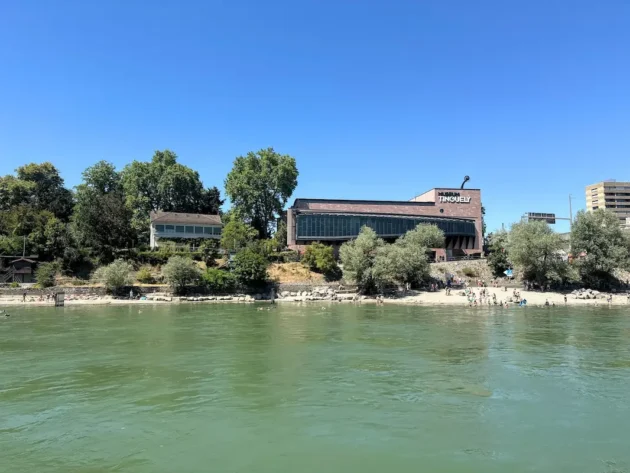
Basel is home of the world-famous Art Basel fair, numerous prestigious art collections (including the Kunstmuseum Basel, the oldest public art collection in the world), and fantastic public art installations. There is no doubt about it, Basel is a city of art. However, this Swiss city was also the home of one of the most intriguing artists of the 20th century: Jean Tinguely. And there are still quite a few places in Basel linked to him.
Jean Tinguely in Basel
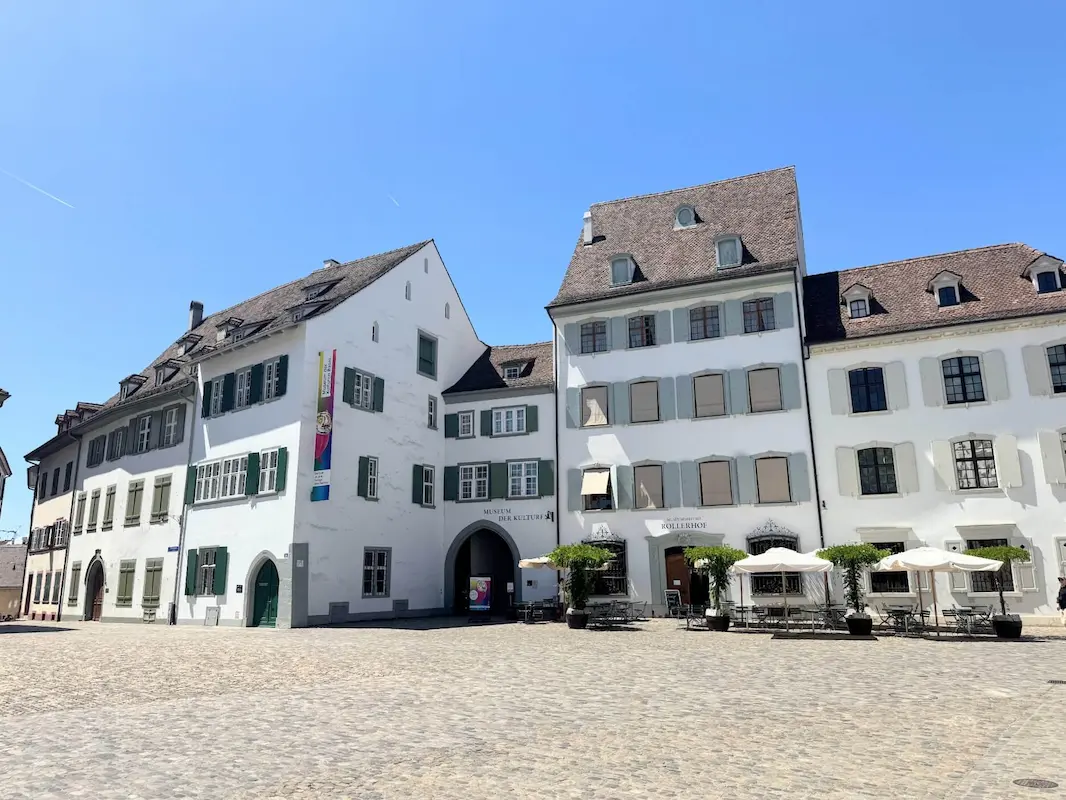
Many locations in Basel are linked to the life and work of Jean Tinguely. While the Tinguely Museum and the iconic Tinguely Fountain are the most famous landmarks, you can easily follow in his footsteps to discover more of his fascinating life story while strolling through this gorgeous Swiss town.
⤷ Read more: Basel Travel Guide – Switzerland’s Cultural Capital
Who Was Jean Tinguely?
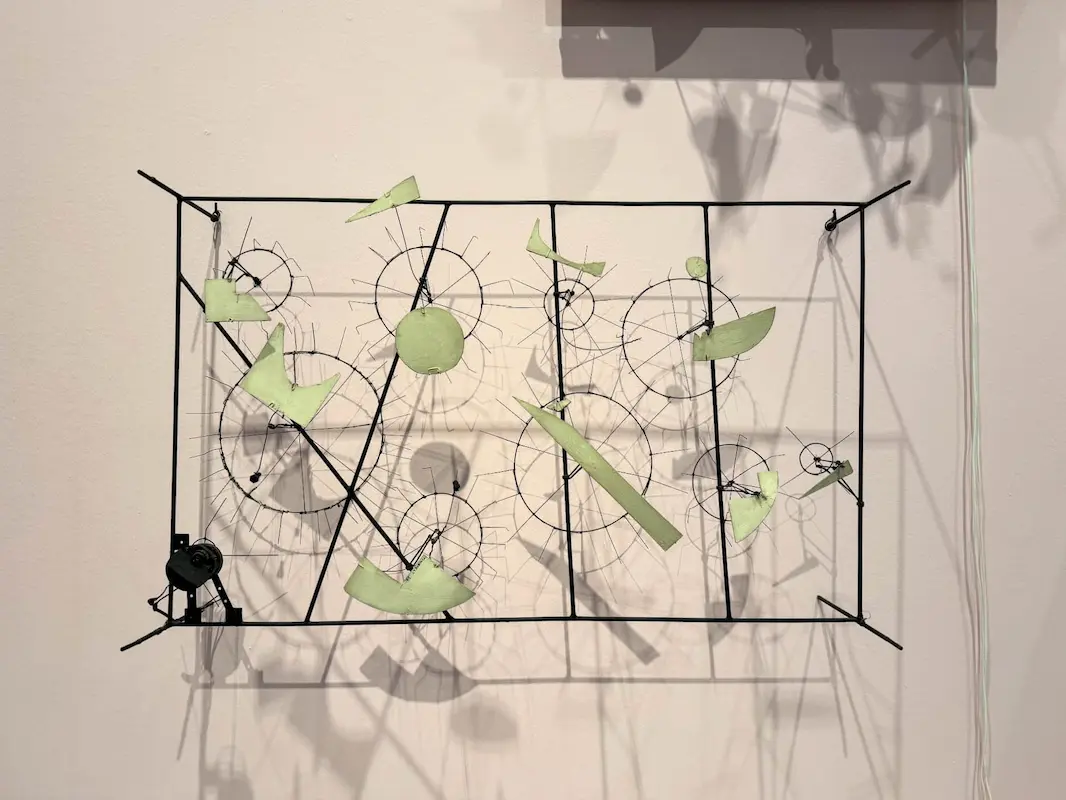
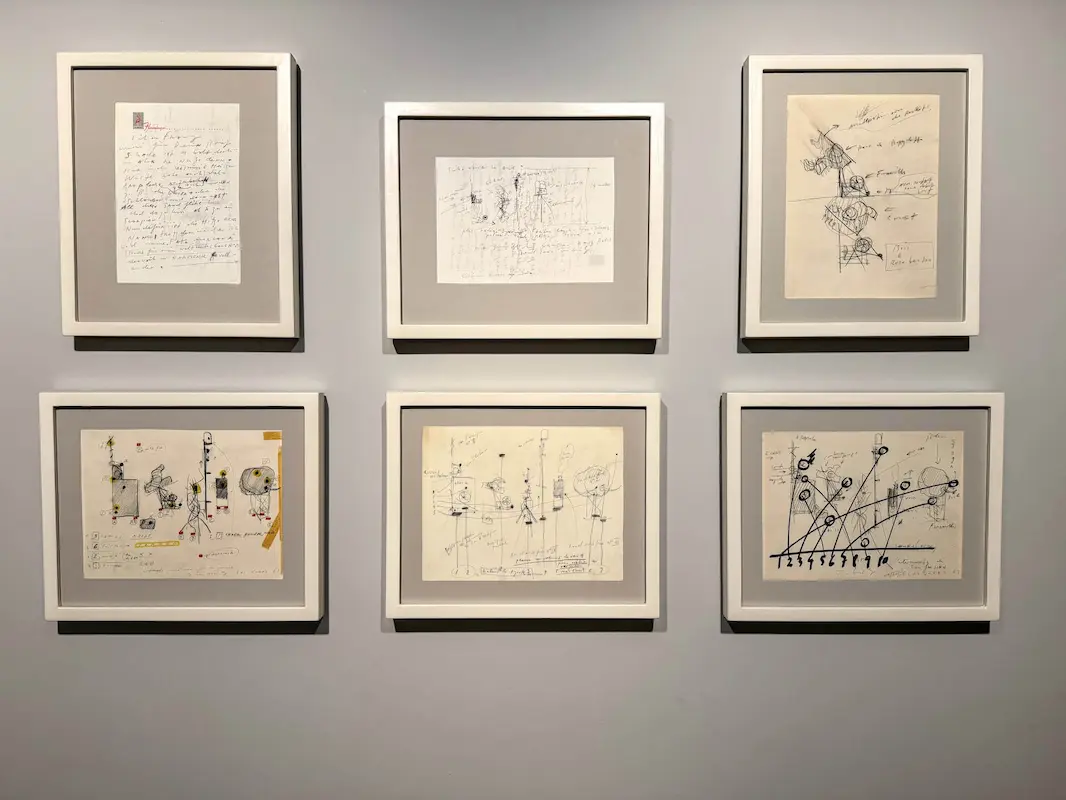
A master of kinetic art, Jean Tinguely was born in Fribourg in 1925 and belonged to the Nouveau Réalisme (New Realism) avant-garde movement. This group rejected traditional painting to work directly with the raw, everyday materials of the modern world.
Tinguely’s specific genius lay in creating complex, motorised sculptures built almost entirely from industrial scrap metal, and discarded wheels. Far from being cold or purely mechanical, his artworks were designed to be intentionally imperfect, shaky, loud, and humorous.
His most legendary piece, Homage to New York (1960), was a massive 23-foot-long kinetic installation set up in the MoMA sculpture garden that was engineered to systematically destroy itself in a spectacular frenzy of smoke and noise during its premiere.
While his artworks are displayed in major museums around the world, and his public art decorates many European cities, you cannot get closer to Jean Tinguely than by visiting his hometown of Basel.
⤷ Read more: The Beautiful Chaos of Jean Tinguely
10 Locations in Basel Linked to Jean Tinguely
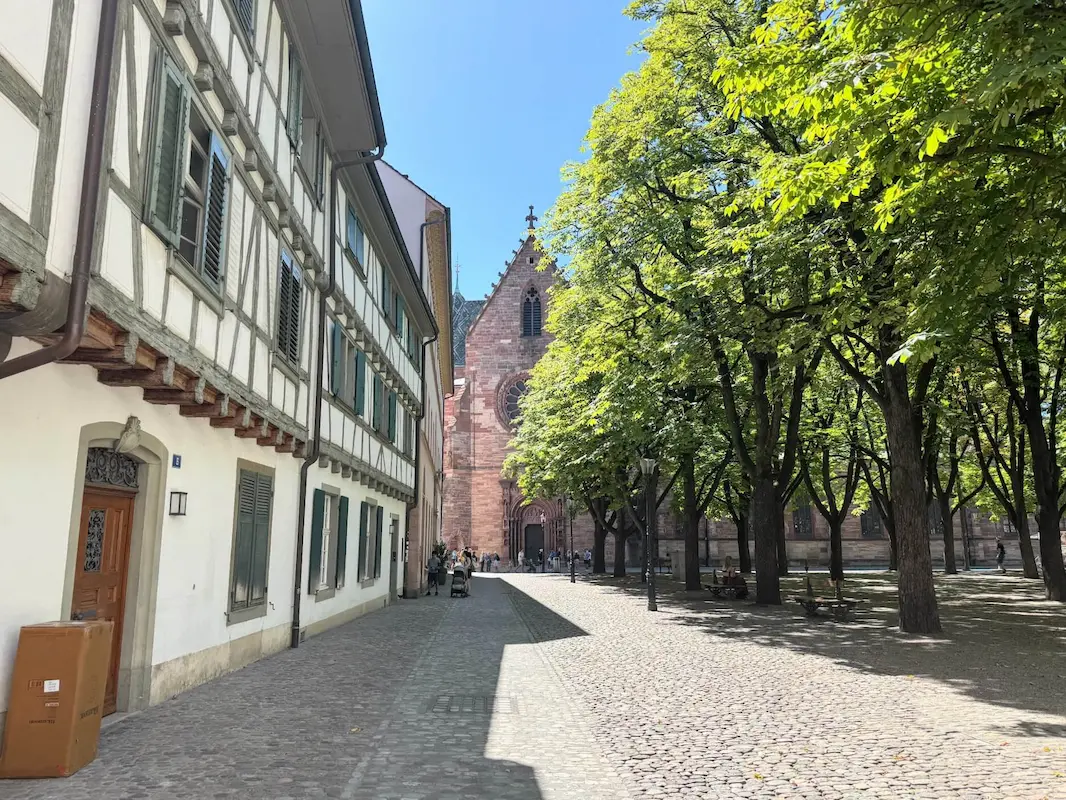
Basel was Jean Tinguely’s childhood home. His family moved here from the French-speaking part of Switzerland when he was still a baby. They lived in the working class, industrial area of the Gundeldingen neighbourhood, close to the train station.
Tinguely grew up bilingual, went to art school in Basel, and started his artistic career here. At art school, he met his first wife, Eva Aeppli, and before moving to Paris, they lived together in a house that once stood on the site of the current Kunstmuseum Basel’s new building.
1 – Tinguely Museum
Address: Paul Sacher-Anlage 2, 4002 Basel
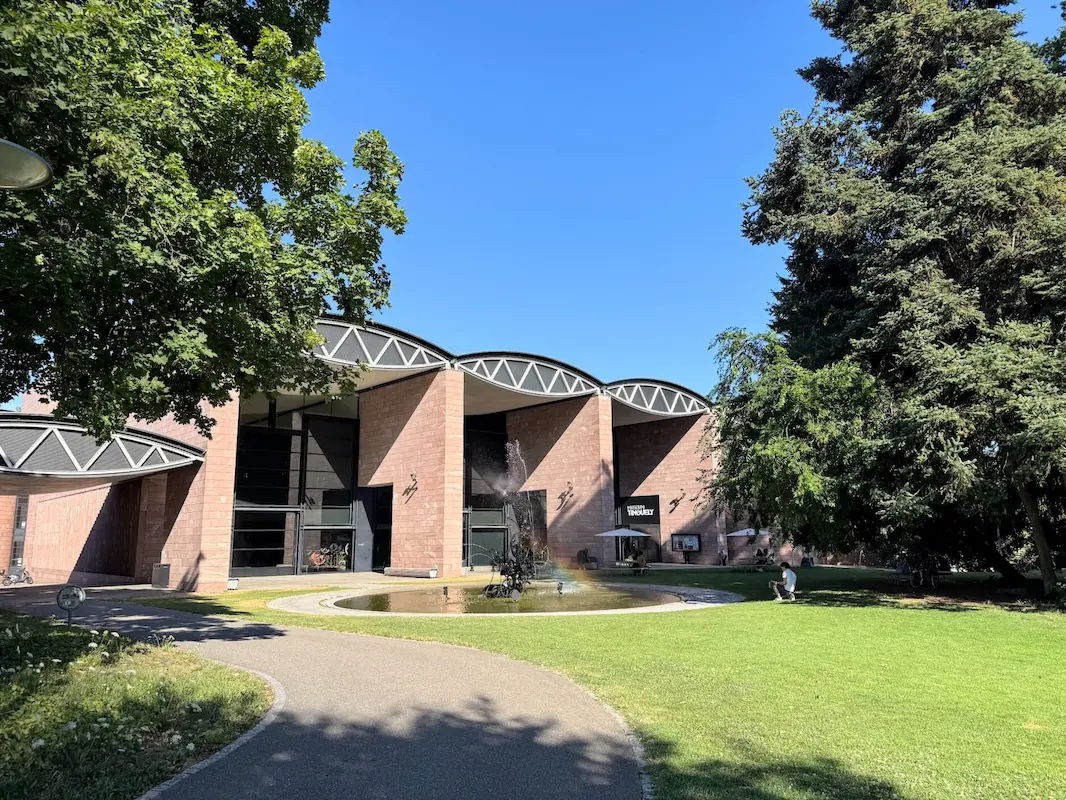
Start your morning at the Tinguely Museum, located right on the banks of the Rhine. Opened in 1996, this museum is absolutely the best place to understand the creative mind of the artist. Designed by the famous Swiss architect Mario Botta, it houses the world’s largest collection of Tinguely’s art.
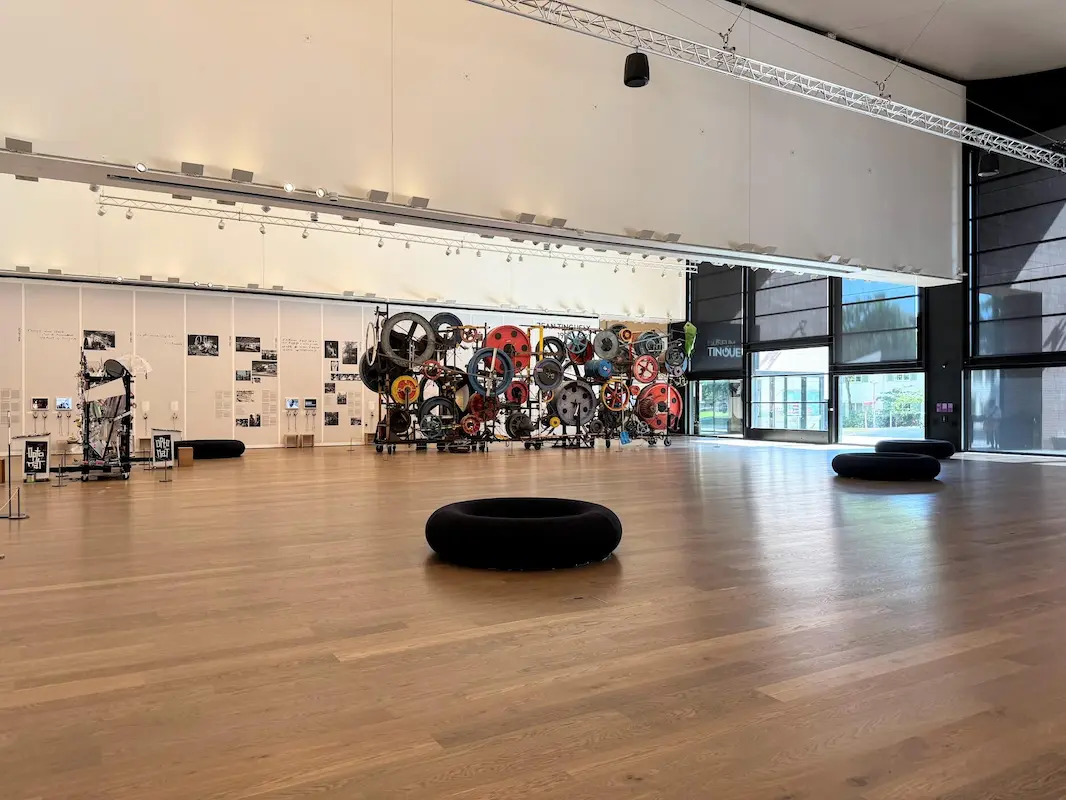
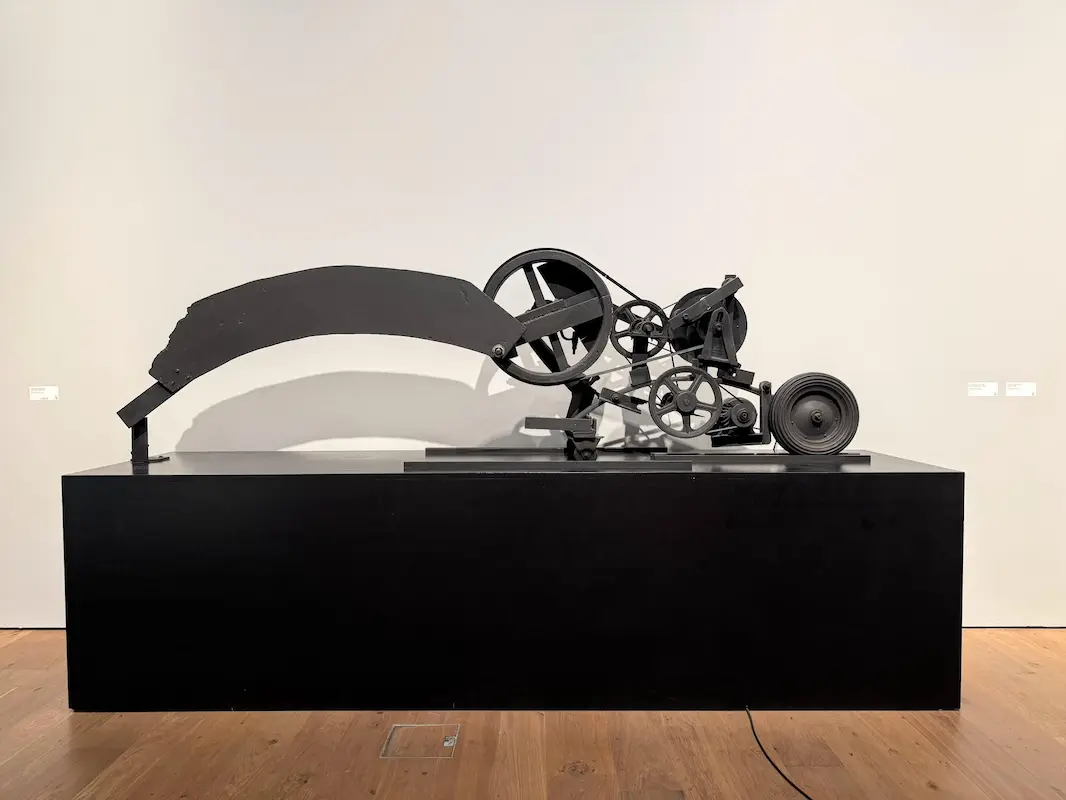
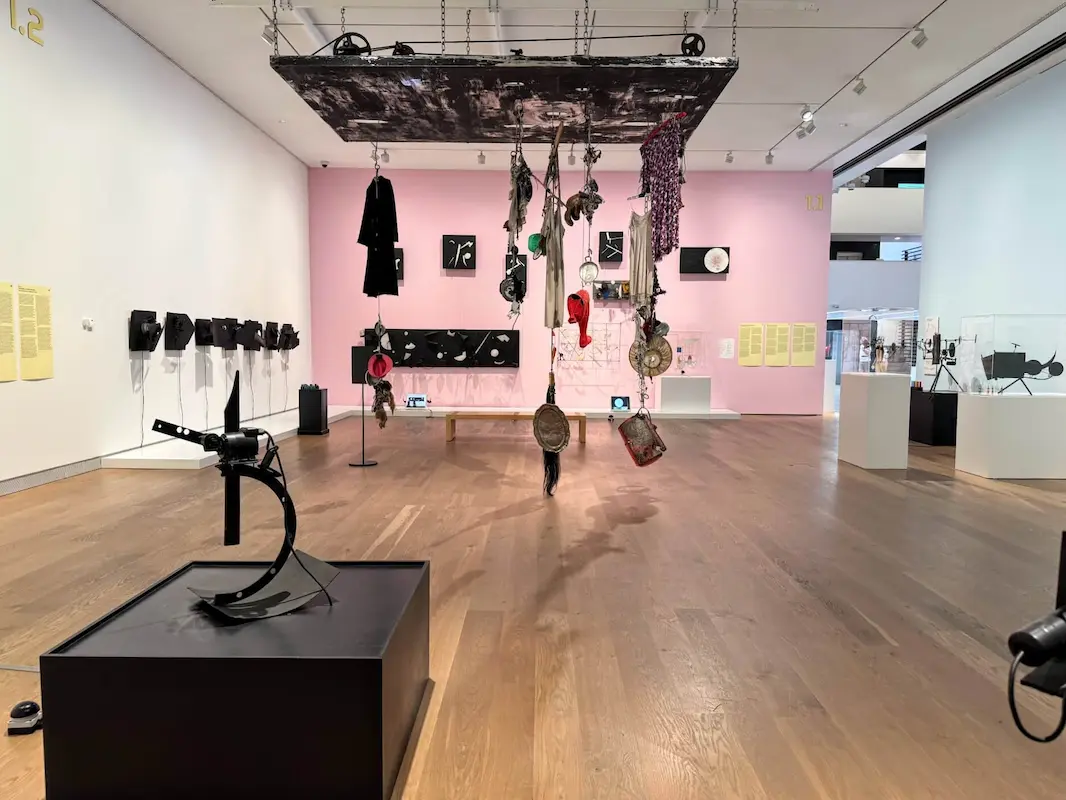
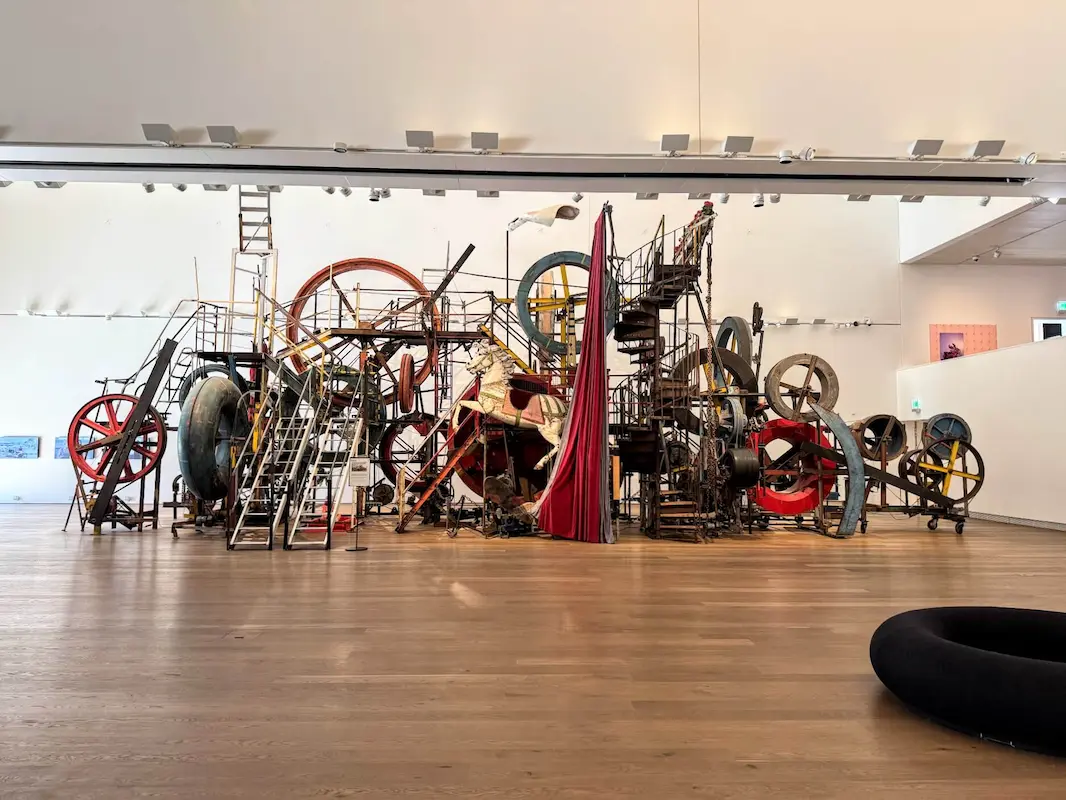
The permanent collection spans four decades of his creative life, tracing his evolution from delicate early reliefs to the overwhelmingly loud, monumental mechanical installations of the 1980s. You will have the chance to explore his Méta-Matics, learn about the iconic Homage to New York, and marvel at his artworks.
One of my favourite things about the Tinguely Museum is that is incredibly interactive! You can press large rubber buttons on the floor next to the sculptures to bring the gigantic scrap-metal creations to life, experiencing them exactly as the artists intended, in motion.
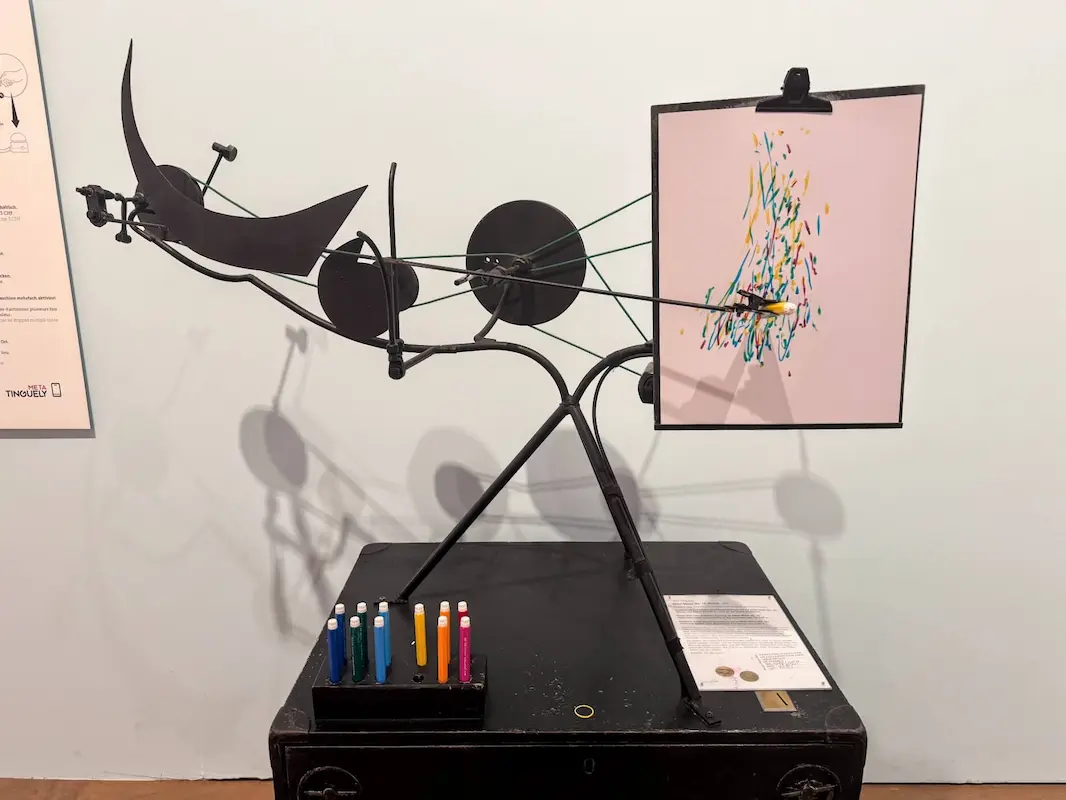
⤷ TIP: You can actually operate one of his Méta-Matics drawing machines and see it in action at the Tinguely Museum! Ask for a piece of paper and a special coin to turn it on at the reception desk, and enjoy watching Tinguely’s mechanical genius produce a unique drawing that you can keep as a great souvenir from Basel.
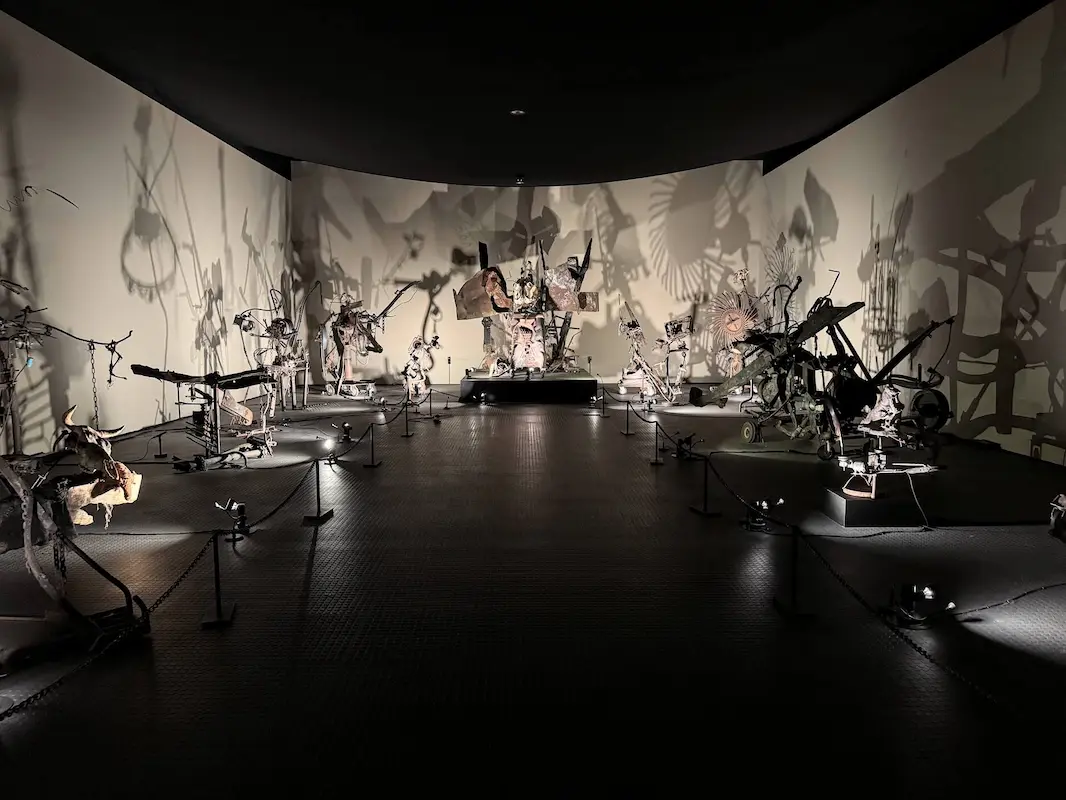
The most fascinating and haunting artwork in the museum was the Mengele-Totentanz (Mengele Dance of Death). On 26 August, 1986, a massive lightning strike hit a farmhouse neighbouring Tinguely’s studio in Neyruz, Switzerland. Tinguely, who had recently survived a severe heart attack and open-heart surgery, was deeply shaken yet fascinated by the charred ruins.
Amidst the ashes, he salvaged blackened wool, twisted iron, ash-covered household items, and the skulls of the perished animals, viewing them as physical remnants of sudden, violent destruction. Among the debris of the farm, Tinguely found the metal frame of a motorised agricultural machine with its manufacturer’s name still visible: Mengele. It immediately triggered a dark association with Josef Mengele, the infamous Nazi doctor of Auschwitz.
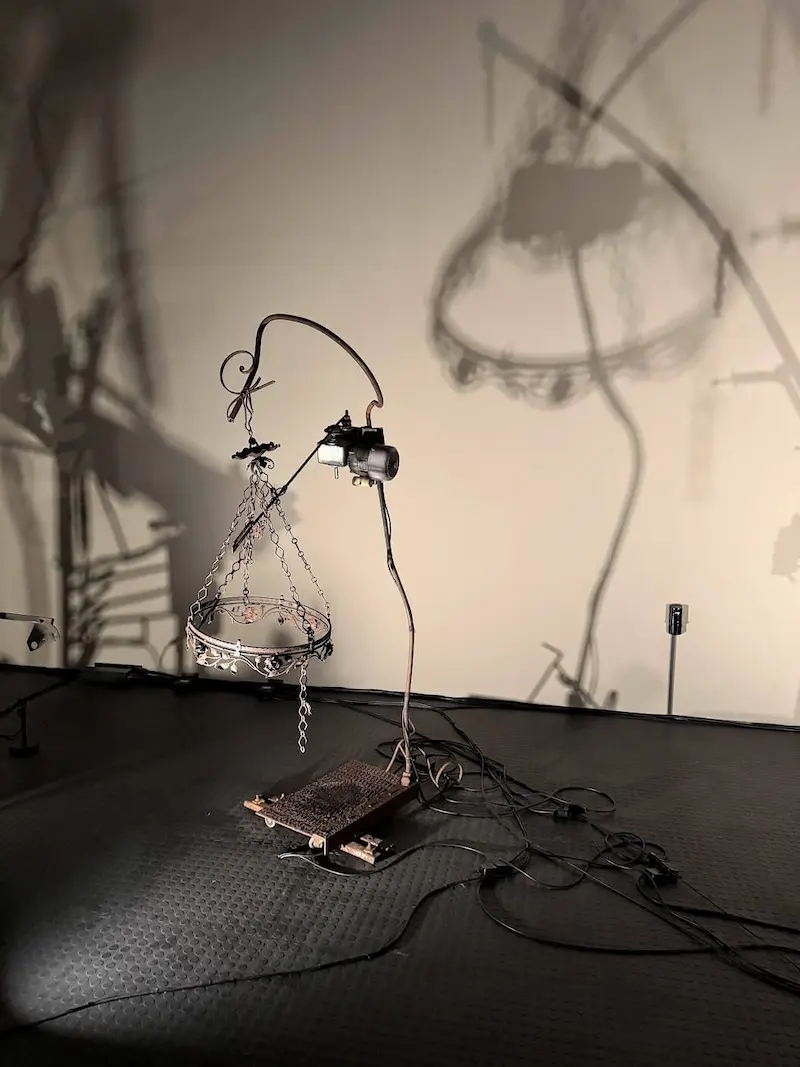
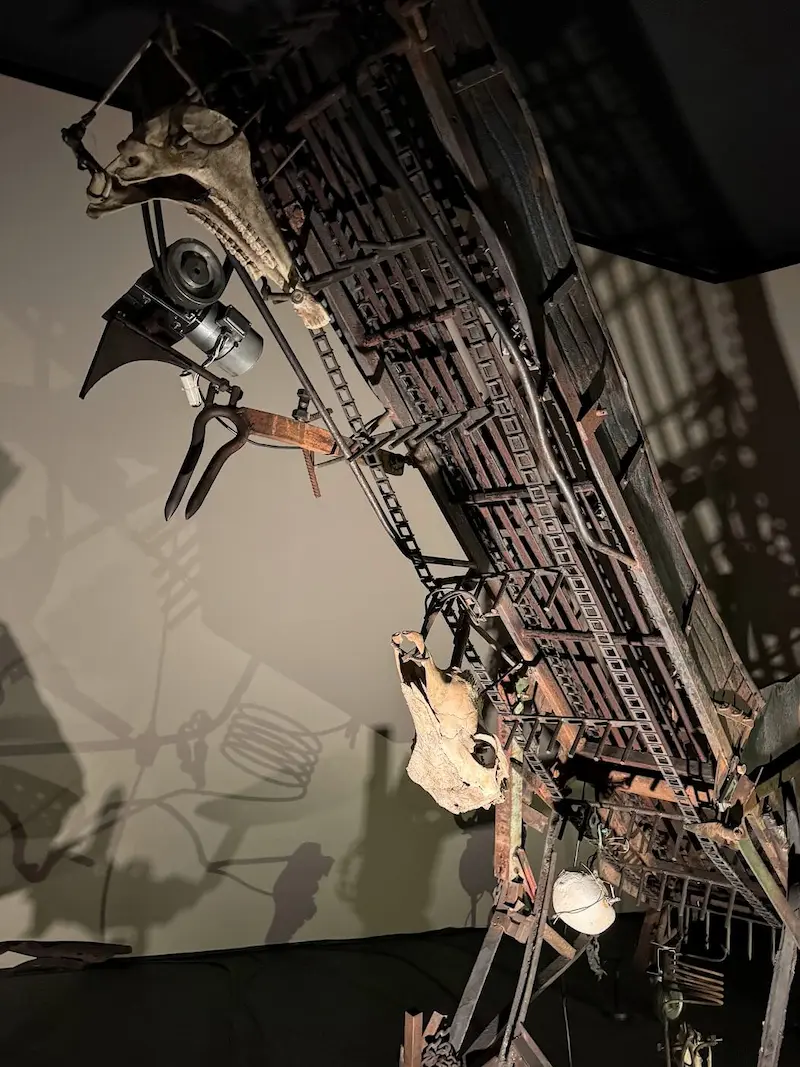
Tinguely used these objects to create 14 kinetic sculptures. When the installation is activated, it transforms the dark, quiet room into a screeching, juddering theatre of shadows. Electric motors cause the grotesque figures to twitch and sway, creating a terrifying, yet strangely theatrical, dance.
With this piece, Tinguely was paying direct homage to a historic Basel art tradition. During the Middle Ages, the city was famous for its Totentanz (Dance of Death) wall paintings, especially the one at Basel’s Dominican Monastery.
Tinguely wanted this piece to be housed in a church-like, contemplative space in Basel. Although he passed away in 1991 before he could personally build it, his dream directly inspired the creation of the Tinguely Museum.
2 – Solitude Park
Address: Solitude Park
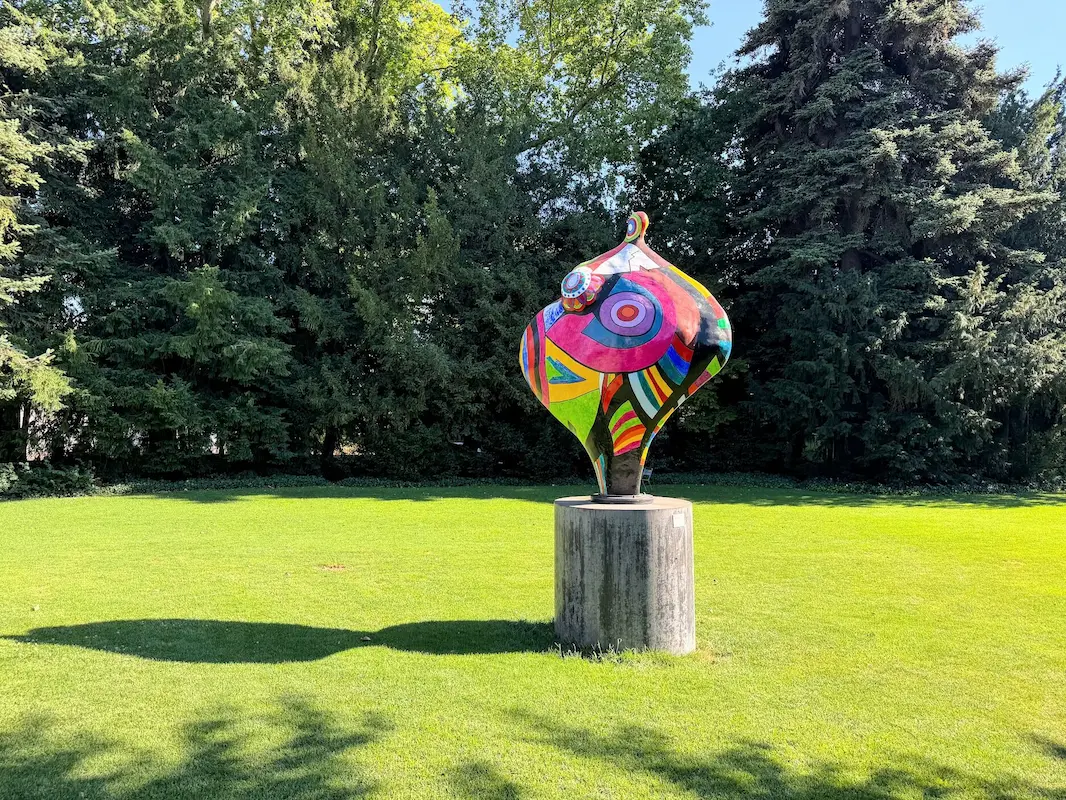
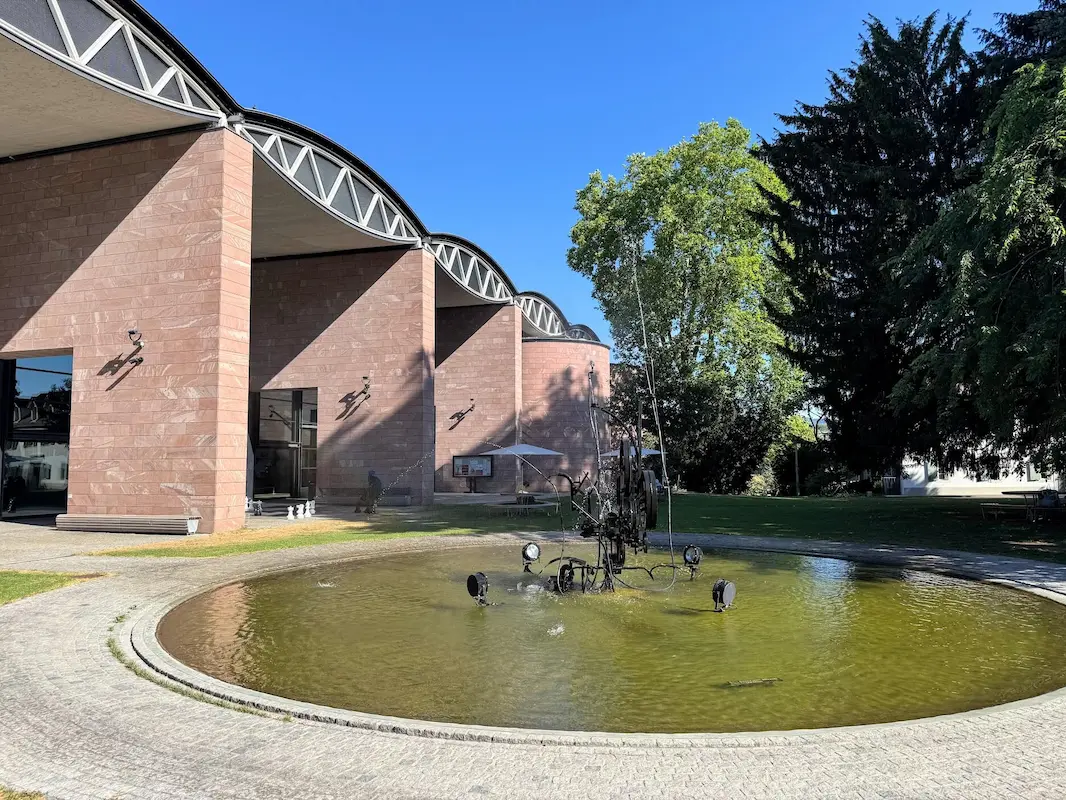
After your museum visit, take a peaceful stroll through the lovely park right outside. It’s a wonderful spot to relax, enjoy the greenery, and look out over the Rhine River. It also offers a fantastic view of the museum’s striking architecture.
You’ll also find a few interesting artworks there. One of them is Tinguely’s Schwimmwasser-Plastik (Swimming Water Sculpture). Near by, you’ll also find Nana Gwendolyn, a colourful sculpture created in 1966 by Tinguely’s second wife, the famous artist Niki de Saint Phalle.
⤷ TIP: Walk along the Rhine path towards the city centre for your next stop. You will pass plenty of charming riverside cafés. If you feel more adventurous (and if the weather permits it) you can take a swim in the Rhine and float away on on the iconic Basel’s Wickelfisch (waterproof swimming bag) to the next destination. Read more tips about swimming in the Rhine here. For a sit-down lunch, I highly recommend Restaurant Krafft, which serves delicious food with a stunning view of the river.
3 – Tinguely Fountain
Address: Klostergasse 7, 4051 Basel
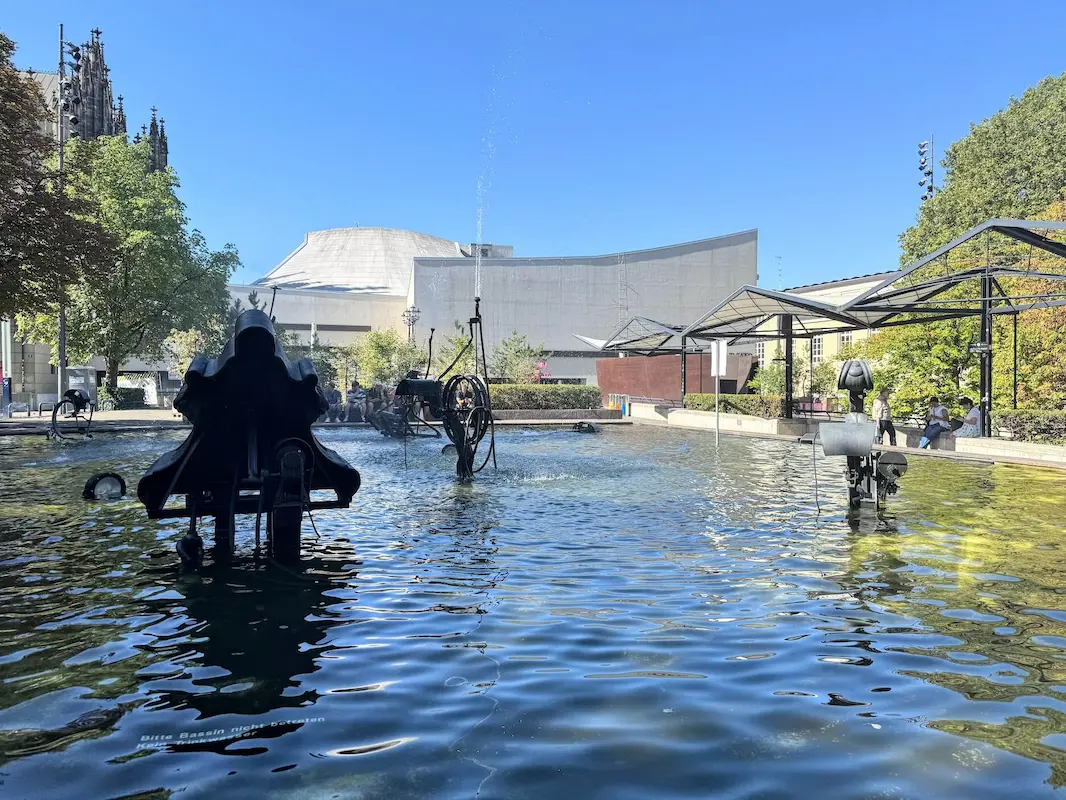
After lunch, cross the Rhine and head to Basel’s most beloved public artwork: the Tinguely Fountain (locally known as the Fasnachtsbrunnen or Carnival Fountain).
Created between 1975 and 1977, it is located on Theaterplatz, just outside Theatre Basel. The fountain sits precisely where the stage of the old city theatre used to be before it was demolished in the 1970s. Tinguely designed ten water-spouting mechanical sculptures from black-painted iron and recycled machine parts, placing them in a shallow pool. The machines continuously move, spray, spin, and interact, mimicking the lively movements of the actors, mime artists, and dancers who once performed on that very spot. Each of ten unique iron sculptures has its own name, distinct movement and rhythm.
4 – Dance of Death at the Basel Historical Museum
Address: Barfüsserplatz 7, 4051 Basel
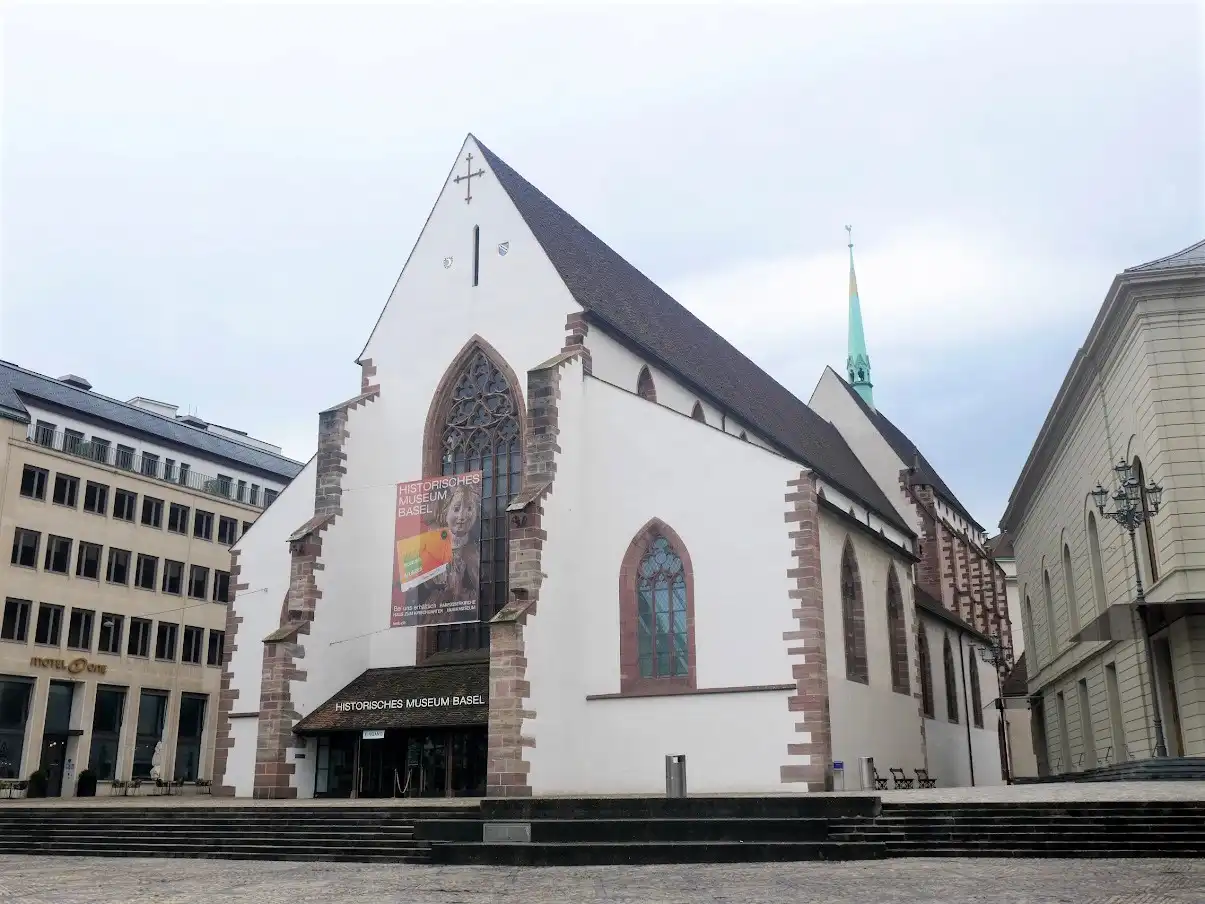
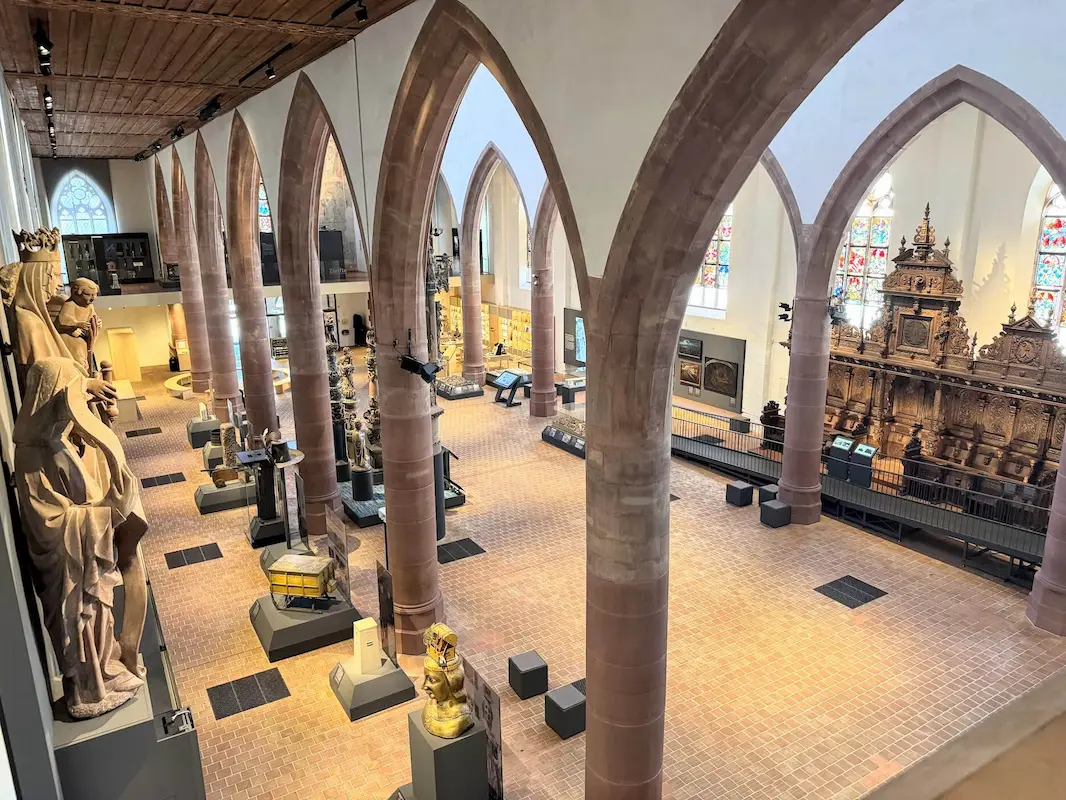
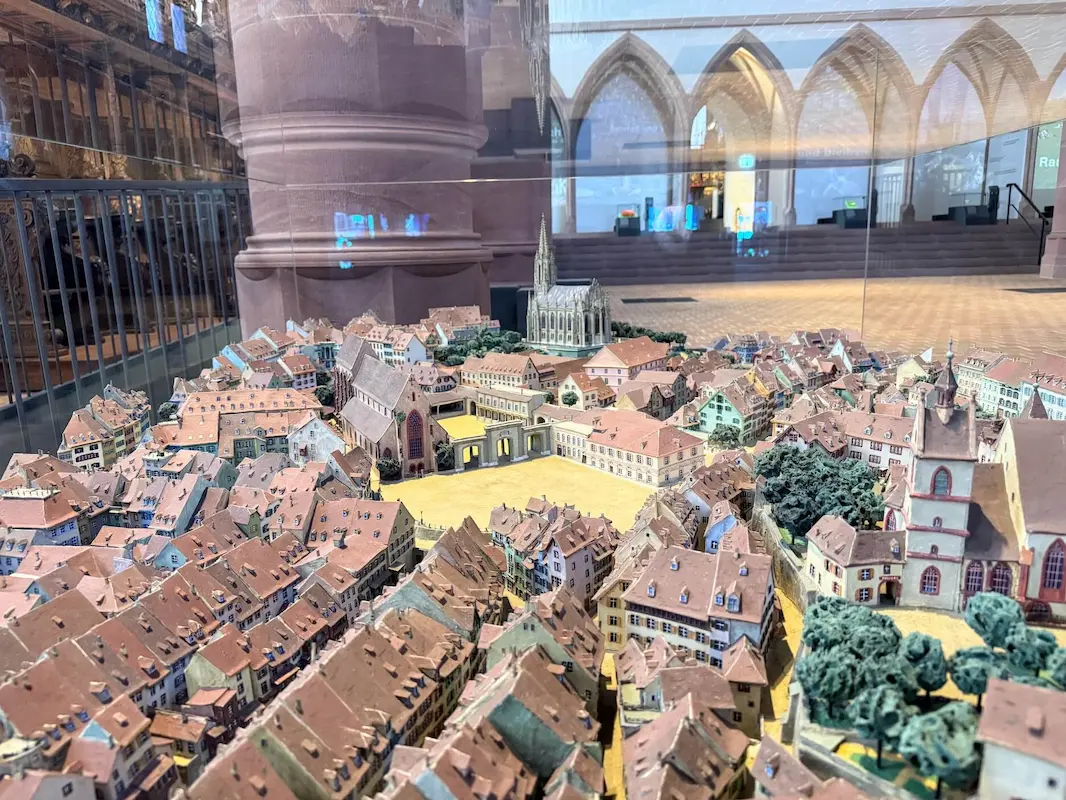
To see the historical artwork that directly inspired Tinguely’s Mengele Dance of Death, walk just a few steps from the fountain to the Basel Historical Museum (located inside the Barfüsserkirche).
Here, you can view the rare surviving fragments of the Basler Totentanz (Basel Dance of Death), one of the most important monumental wall paintings of the late Middle Ages. Painted around 1440 on the cemetery wall of Basel’s Dominican Monastery, this massive fresco was nearly 60 metres long and depicted Death dancing 39 different figures (the Pope, the Emperor, and the King, down to the physician, the cook, the beggar, and even a newborn baby) straight to the grave. It was a stark reminder that in the eyes of mortality, no amount of wealth or power could save you.
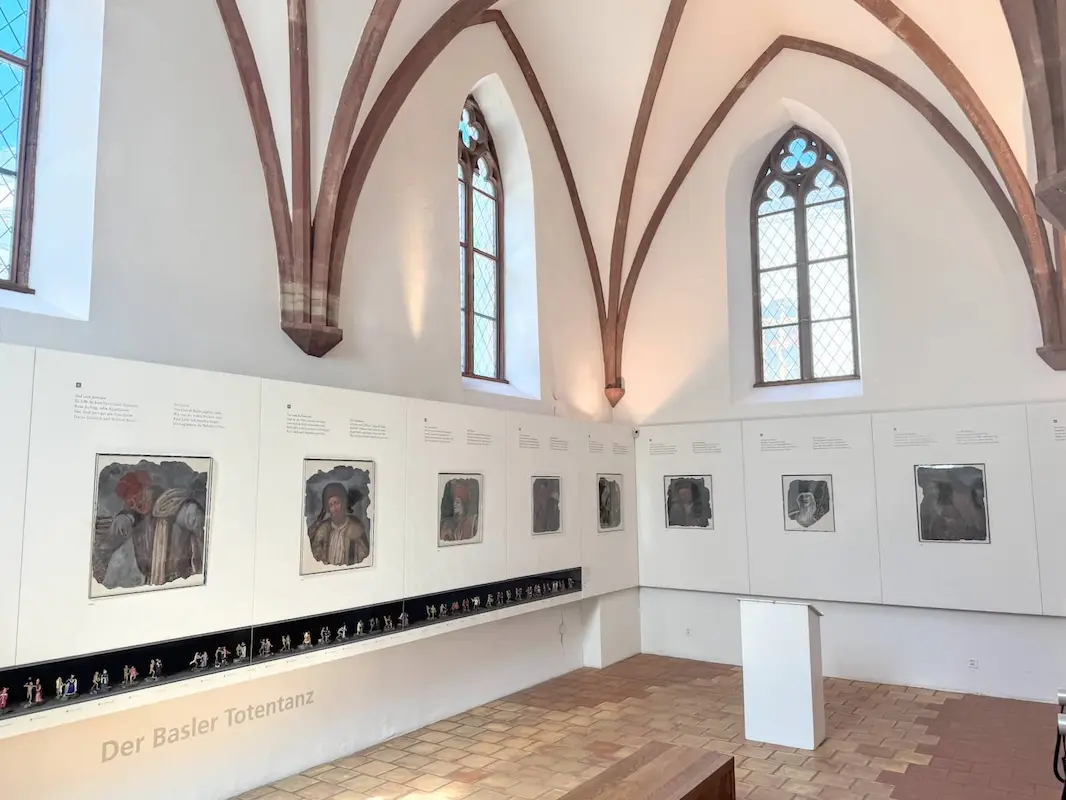
Although the wall was demolished in 1805, local art lovers rescued several pieces. The museum permanently displays 19 of these original fragments. Growing up in Basel, Tinguely was completely obsessed with them, famously stating: “In Basel, I lived with the Dance of Death.” When he built his own mechanical version of the Dance of Death in 1986, he was taking this exact medieval concept translating it into a modern nightmare.
⤷ Watch my video: Best Museums in Basel
Strolling Around Basel City Centre
Wandering through Basel’s old town is like walking in Jean Tinguely’s footsteps. He once strolled these narrow, cobblestone streets on his way to work, to meet art clients, or to visit local galleries.
5 – Globus Department Store
Address: Marktplatz 2, 4001 Basel
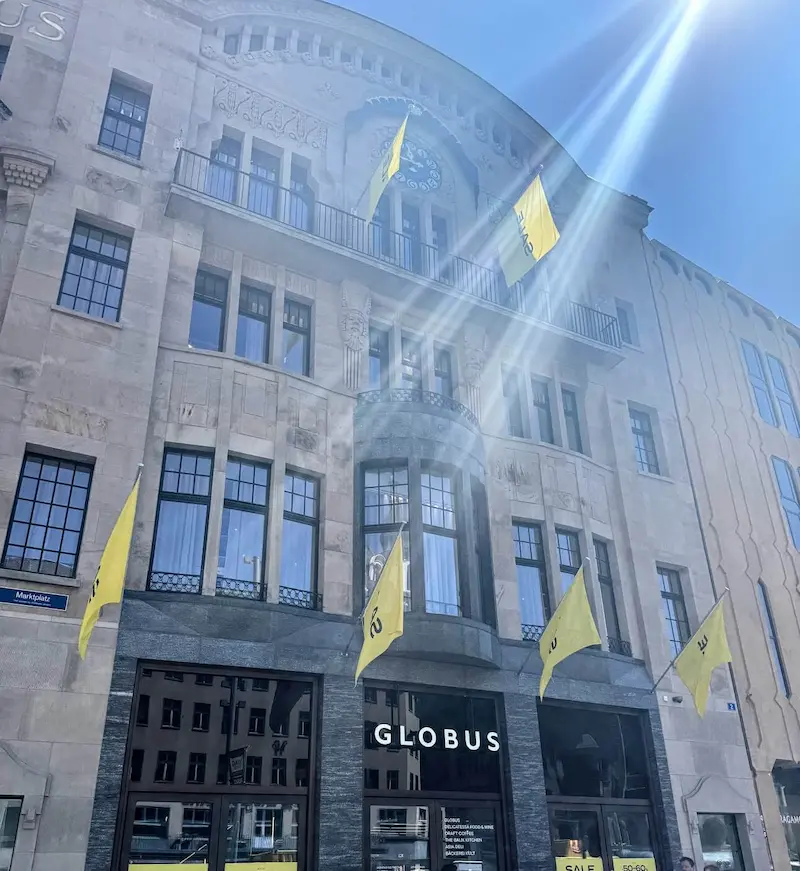
Long before he got world renowned for his kinetic sculptures, a 15-year-old Jean Tinguely started his first job in 1941 as an apprentice window dresser at the upscale Globus department store on Marktplatz.
True to his rebellious nature, he wasn’t exactly model employee material and was fired in 1943 for “undisciplined behaviour.” He finished his training under an independent local decorator named Joos Hutter, who recognised the boy’s raw talent and encouraged him to formalise his passion by enrolling at the Basel School of Arts and Crafts.
Despite the rocky start, his first job arranging window displays was incredibly important. It was here that Tinguely first learned how to play with physical dimensions, work with lighting, and capture the attention of ordinary people walking down the street (skills that would later define his public art).
6 – Former Galerie Felix Handschin
Address: Bäumleingasse 16, 4051 Basel
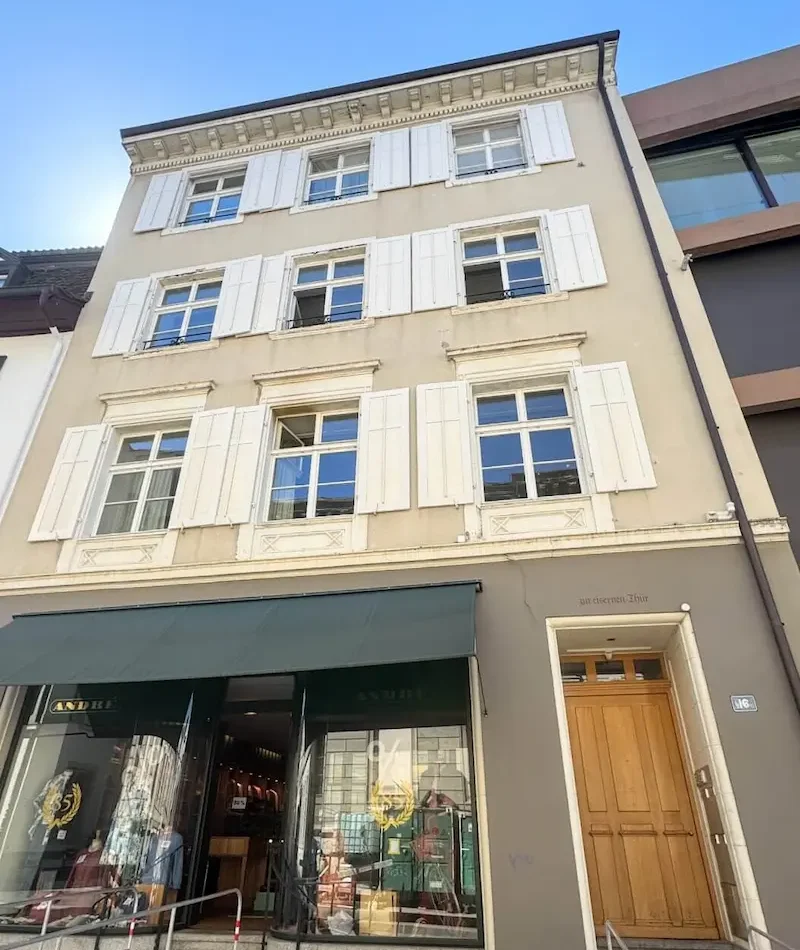
Galerie Felix Handschin was the very first gallery to represent and exhibit Tinguely’s work in Basel, hosting his first Basel exhibition in 1962, followed by the second in 1964. Handschin was a visionary Swiss art dealer who played an important role in launching the careers of several major avant-garde and kinetic artists. Although it’s not there anymore, you can still see the original gallery building today.
⤷ Read more: Weekend in Basel Filled With Art & Culture
7 – Former Galerie Beyeler
Address: Bäumleingasse 9, 4051 Basel
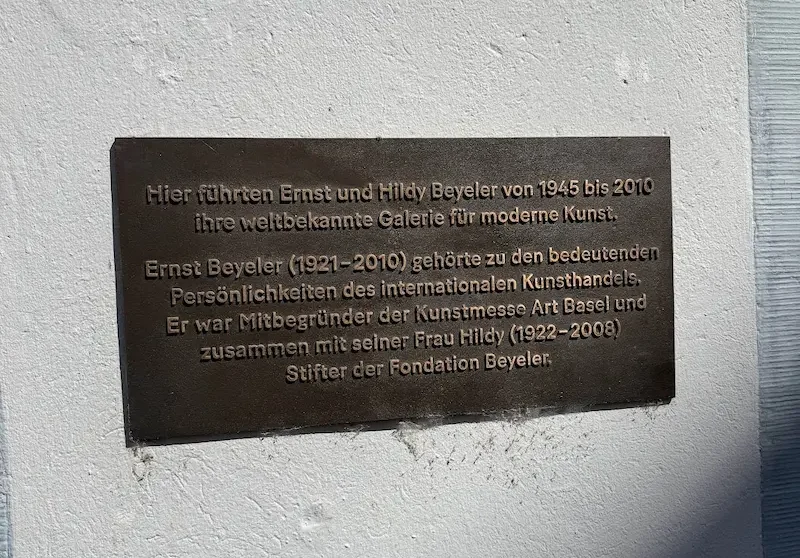
Just a few doors down, you will find the former home of another iconic art collector, Ernst Beyeler. Originally an antiquarian bookstore that Beyeler took over in 1945, he and his wife Hildy officially transformed it into Galerie Beyeler in 1952. As a co-founder of the international Art Basel art fair, Beyeler worked tirelessly to champion the local Swiss avant-garde, helping to put Basel onto the global art stage.
in 1987, Galerie Beyeler hosted the world premiere of Tinguely’s Mengele Dance of Death. The exhibition was a huge success, elevating the artwork’s status before it was sent to Venice for a massive retrospective.
Throughout the 1980s, Tinguely was a prominent figure at Galerie Beyeler. They hosted major solo shows for the artist, including a highly celebrated comprehensive exhibition in the spring of 1987 and the Femme Libre exhibition in 1989.
The gallery space closed its doors in 2011 following Ernst Beyeler’s death, but you can experience his legacy today by visiting Fondation Beyeler museum in nearby Riehen.
⤷ Read more: Best Museums in Basel
8 – The Walk of Spalebärg
Address: Spalenberg, 4051 Basel
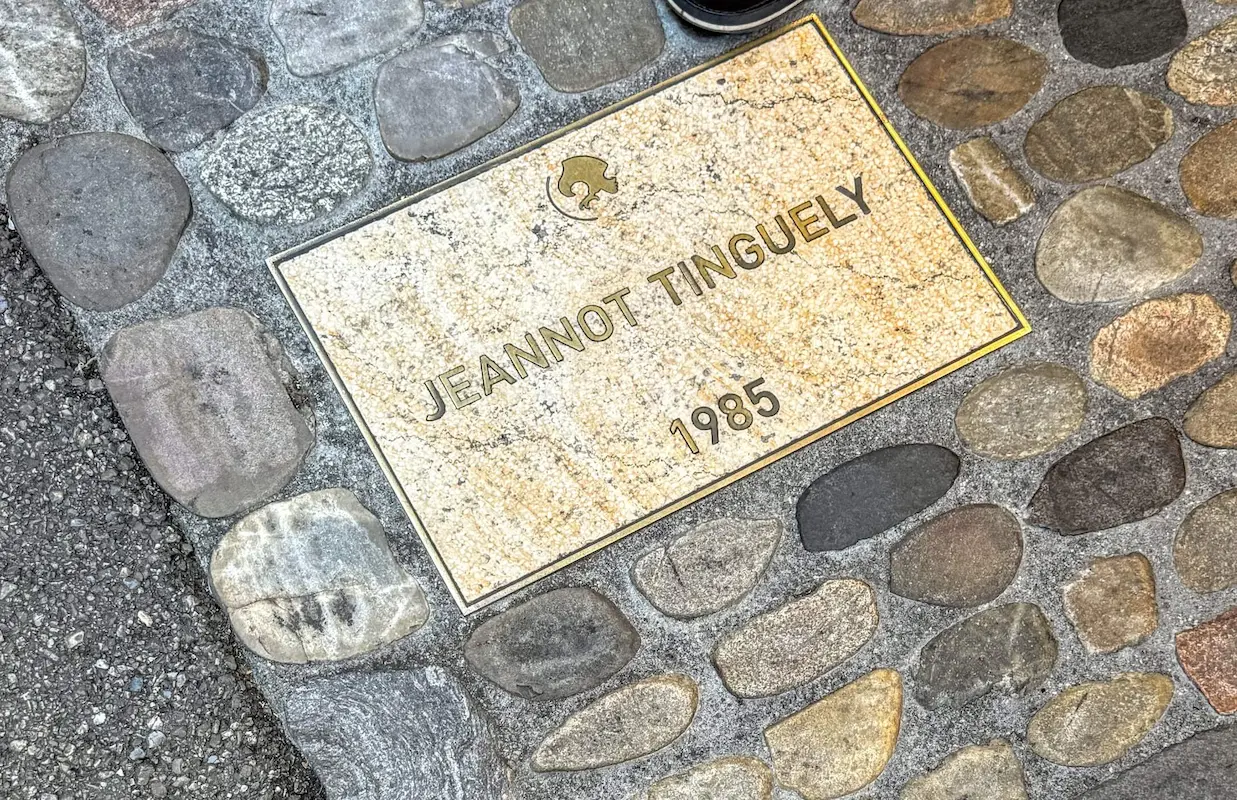
Basel’s official cultural “Walk of Fame” is located along the historic, cobblestone shopping street of Spalenberg. Rather than movie stars, this walk honours individuals who have represented or brought positive cultural renown to the city of Basel.
Initiated in the 1970s by the local Sperber-Kollegium association, the city honours one outstanding personality almost every year by engraving their name and induction year into limestone plaques embedded directly into the street. Jean Tinguely was proudly inducted in 1985.
9 – Basel City Hall (Rathaus)
Address: Marktplatz 9, 4001 Basel
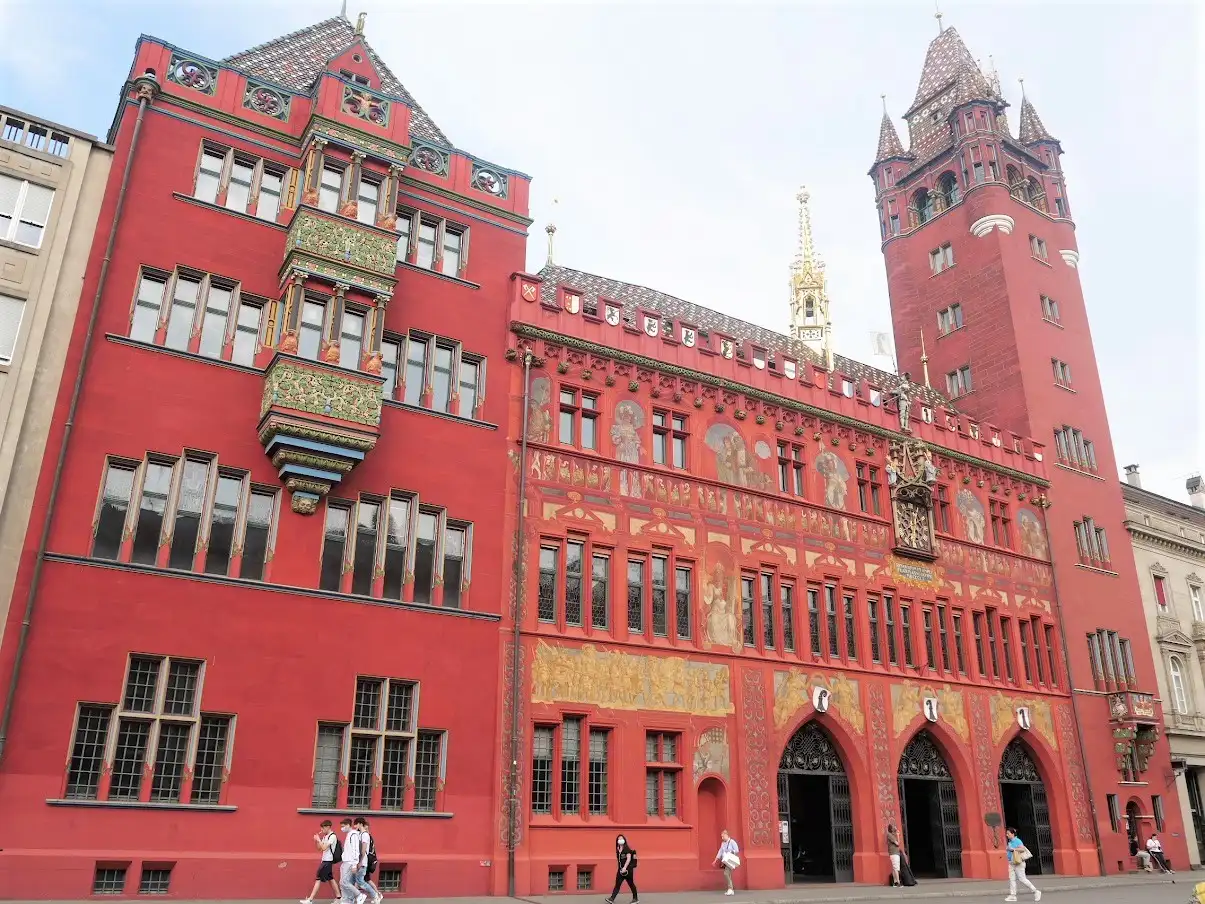
Jean Tinguely’s connection to Basel’s iconic, bright-red Rathaus comes from his deep love for the Basel Carnival (Fasnacht). He was an active member of one of the local carnival cliques, the Kuttlebutzer, and in 1974, he took over the artistic direction of their parade entry, resulting in an event known as “The Great Bang.”
Historically, during the parade, the formal organisers of Fasnacht (the Fasnachts-Comité) would stand on a raised platform directly in front of the Rathaus to judge the passing groups. Tinguely planned a provocative surprise. The Kuttlebutzer marched onto the Marktplatz dressed in black tailcoats, top hats, and creepy plastic masks, wheeling a massive black coffin.
Right as they stopped in front of the jury, the walls of the coffin suddenly crashed down, triggering a massive explosion of firecrackers, smoke bombs, black soot, confetti, and feathers. The stunt caused an absolute uproar and even led to legal disputes, but it permanently cemented Tinguely’s status as Basel’s ultimate artistic provocateur.
10 – Kunstmuseum Basel
Address: St. Alban-Graben 16, 4010 Basel
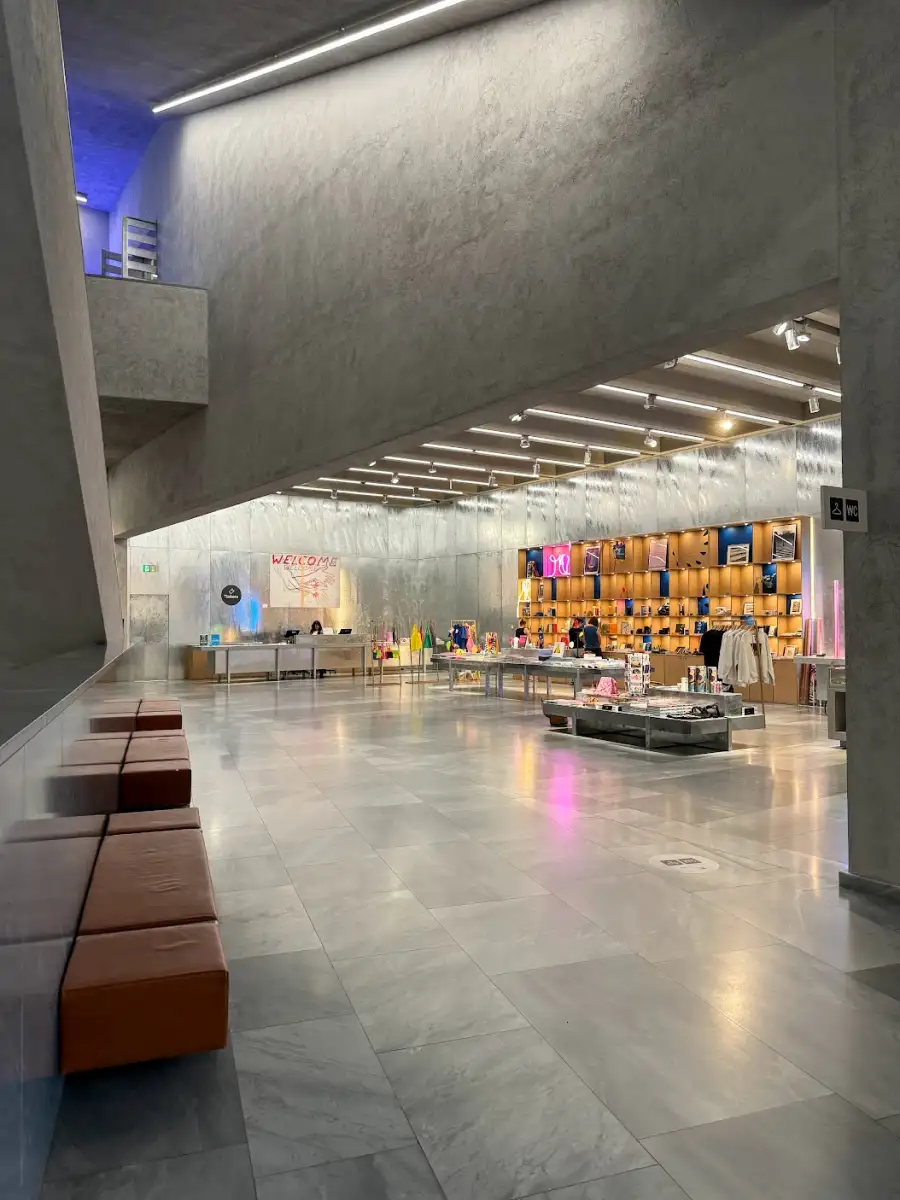
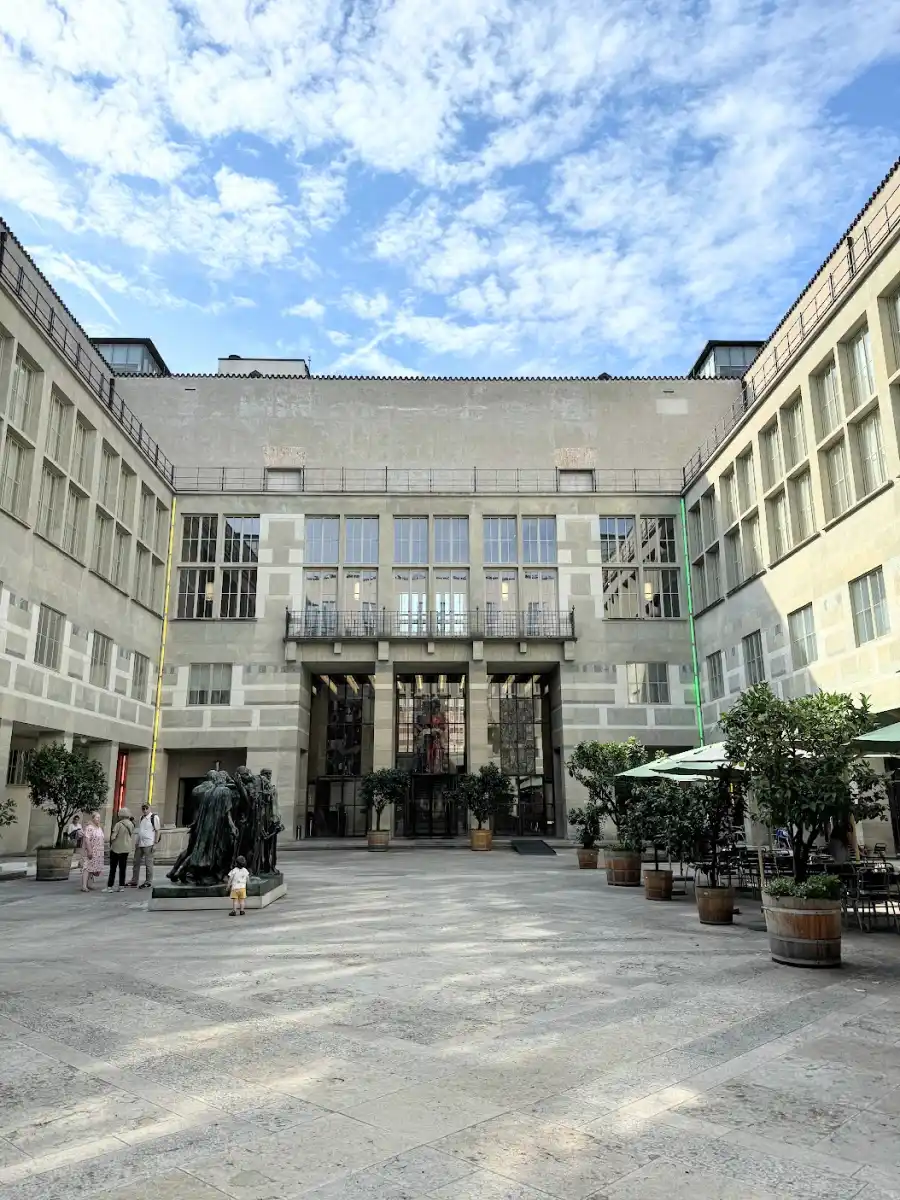
The Kunstmuseum Basel is one of the finest art museums in Europe. While it houses several of Tinguely’s works, it is also the perfect place to see his art in the context of the 20th-century avant-garde.
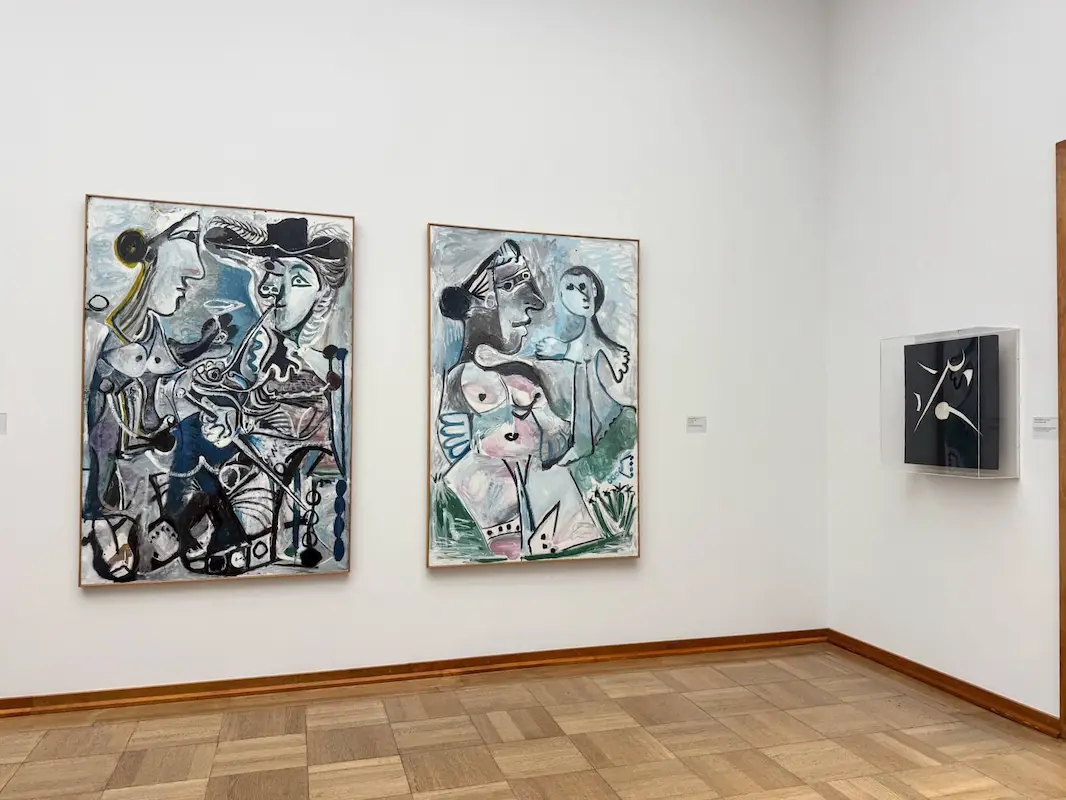
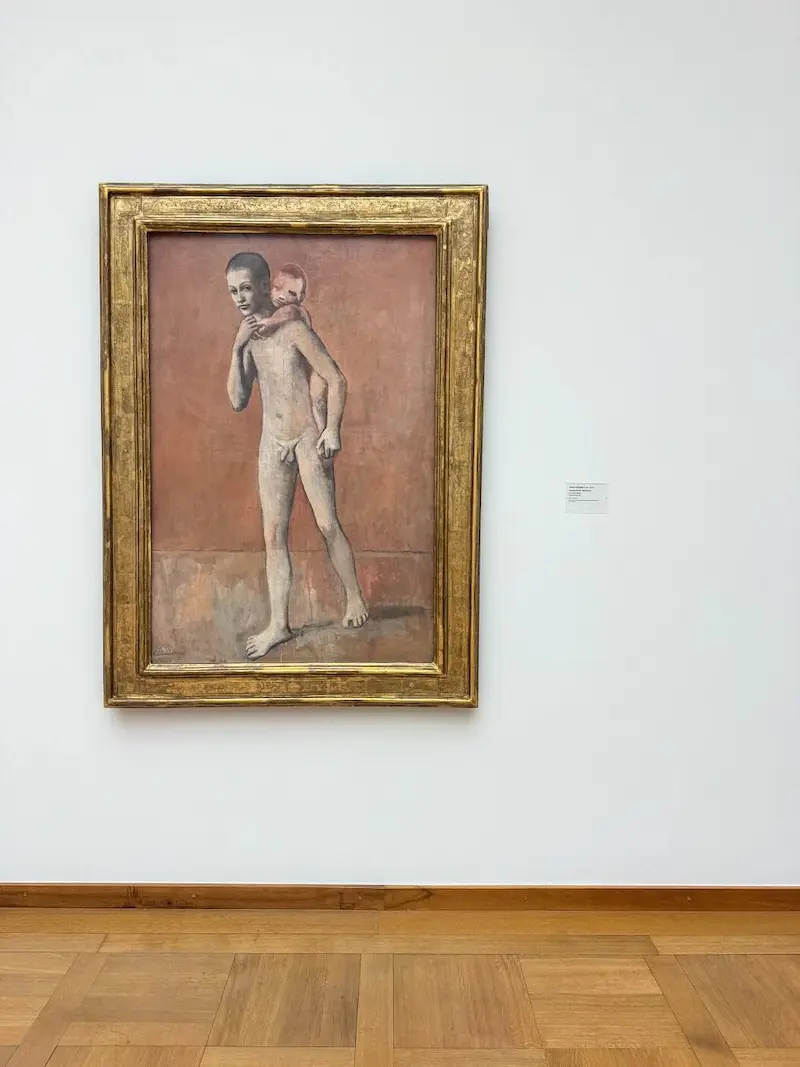
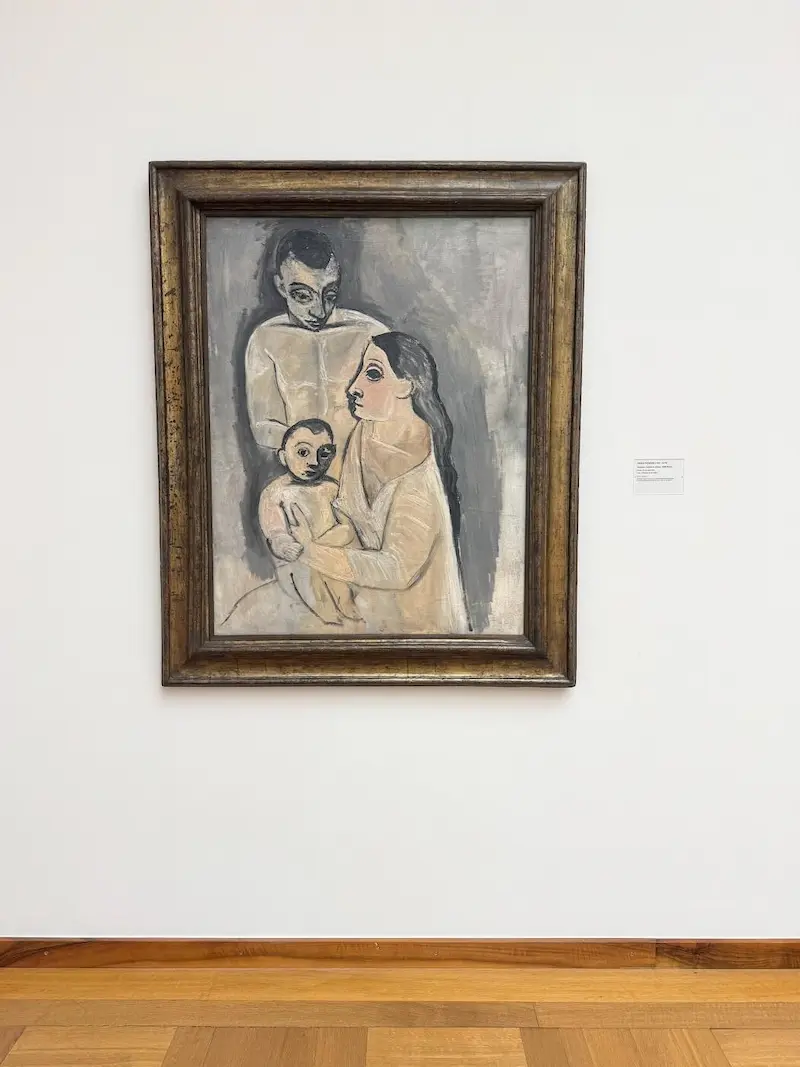
The museum is also famous for a heartwarming art story. In 1967, when a local art collector, Peter G. Staechelin, fell into financial trouble and had to sell two Picasso paintings loaned to the Kunstmuseum, the citizens of Basel voted in a public referendum to approve tax funds (and raised private donations), to buy the paintings for 8.4 million Swiss Francs so they could stay in the city. Pablo Picasso was so touched by this gesture that he personally gifted four additional artworks to the museum. Today, they form one of the most significant Picasso collections in Europe.
Tinguely held a profound respect for Picasso. In 1973, the year of Picasso’s death, Tinguely paid tribute to him by creating a celebrated multimedia print and collage piece titled Viva Picasso (Hommage à Picasso). Today, both artists share a permanent home within the collection of the Kunstmuseum Basel.
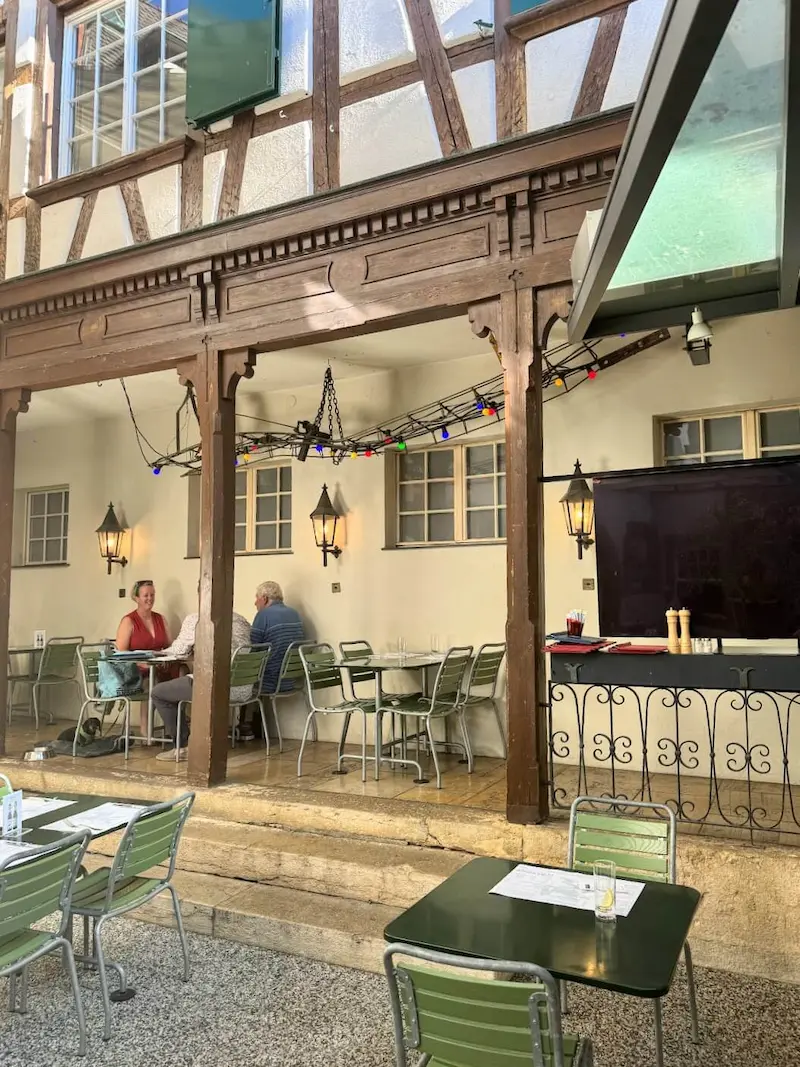
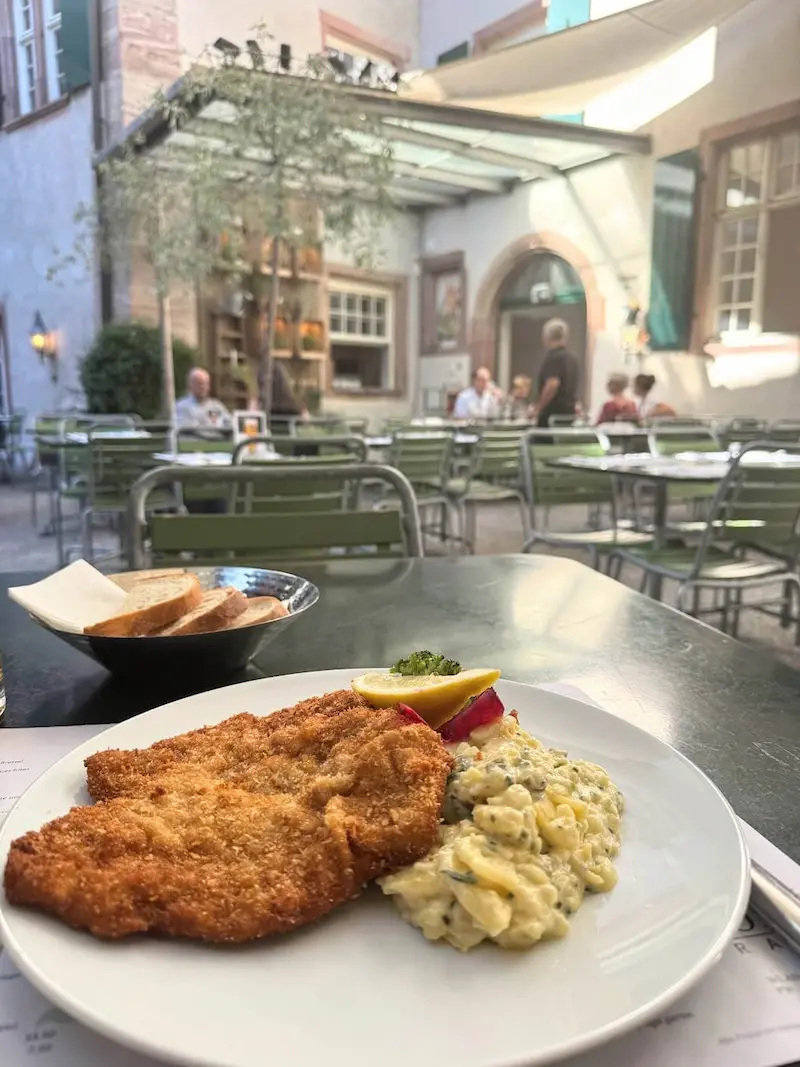
⤷ TIP: For dinner, head to Löwenzorn Restaurant. They serve wonderful, hearty local food. If you dine in their beautiful courtyard garden, you will be eating right next to an original Tinguely sculpture displayed on the wall!
Extra Tinguely Location: Basel Airport
If you fly into Basel, you can spot one last masterpiece before you leave the airport. Located inside the EuroAirport Basel-Mulhouse-Freiburg is Tinguely’s monumental kinetic light sculpture, the Luminator. It looks like a giant, fantastical lamp built out of black iron frames, recycled mechanical wheels, and a colourful array of electric lights.
⤷ Read more: Dreispitz Area in Basel
Practical Tips for Your Visit to Basel
Where to Stay in Basel
Hotel Odelya – During my search for the Tinguely locations in Basel, I stayed at Hotel Odelya. Located on the edge of the city centre, this hotel sits in a tranquil private park. It is incredibly peaceful, offers a fantastic breakfast, and is within easy walking distance of all the major sights.
Hotel Au Violon – During my previous trip to Basel, I stayed at Hotel Au Violon and loved it! Centrally located in a beautifully converted historic prison, this hotel has a wonderful atmosphere, comfortable rooms, and an excellent French restaurant.
Novotel Basel City – During my visit a couple of years ago, I stayed at the Novotel Basel City. Easily reachable form the main train station and right next to several tram lines, this is a highly convenient hotel with modern rooms and a great breakfast selection.
eSIM Card for Switzerland
If you are travelling from outside Switzerland, getting an eSIM before you arrive is highly recommended. The Ubigi eSIM is incredibly easy to set up and works flawlessly. You can read my full Ubigi eSIM review here, and use the promo code CULTURETOURIST for a 10% discount.
Use Your BaselCard
All the hotels in Basel provide you with a BaselCard automatically when you check in. It gives you free use of all public transport (including to and from the airport) and a 25% discount on museum entry fees.
I visited Basel on a press trip organised by Basel Tourismus in July 2026. This article is a part of the “ARTISTS & Their Cities” campaign held by Culture Tourist in 2026 and 2027. Many thanks to them and their partners for arranging this wonderful visit. As always, all opinions are my own.