
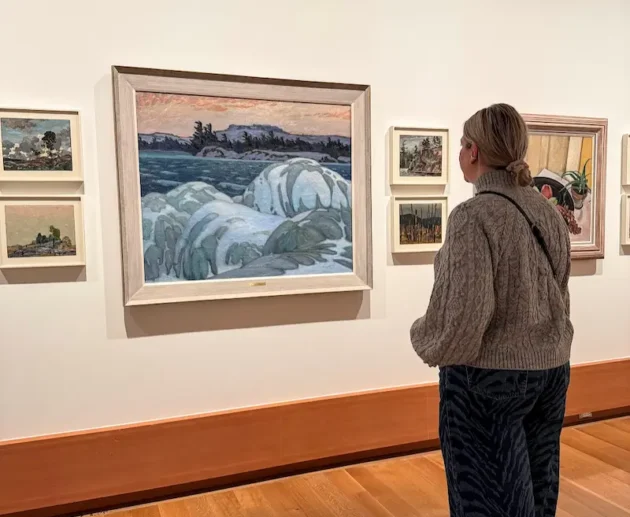
As an art historian who has visited the majority of European museums, I (foolishly) believed I was quite familiar with Western art. So, imagine my surprise when I stepped into the Art Gallery of Ontario (AGO). The works of Canadian artists, particularly the Group of Seven, struck me with the explosion of raw, northern power and a fierce struggle for a unique national identity. It made me realise there is still so much to discover for me within the art world.
The Art Gallery of Ontario
This post contains some affiliate links. Read my Privacy Policy for more info.
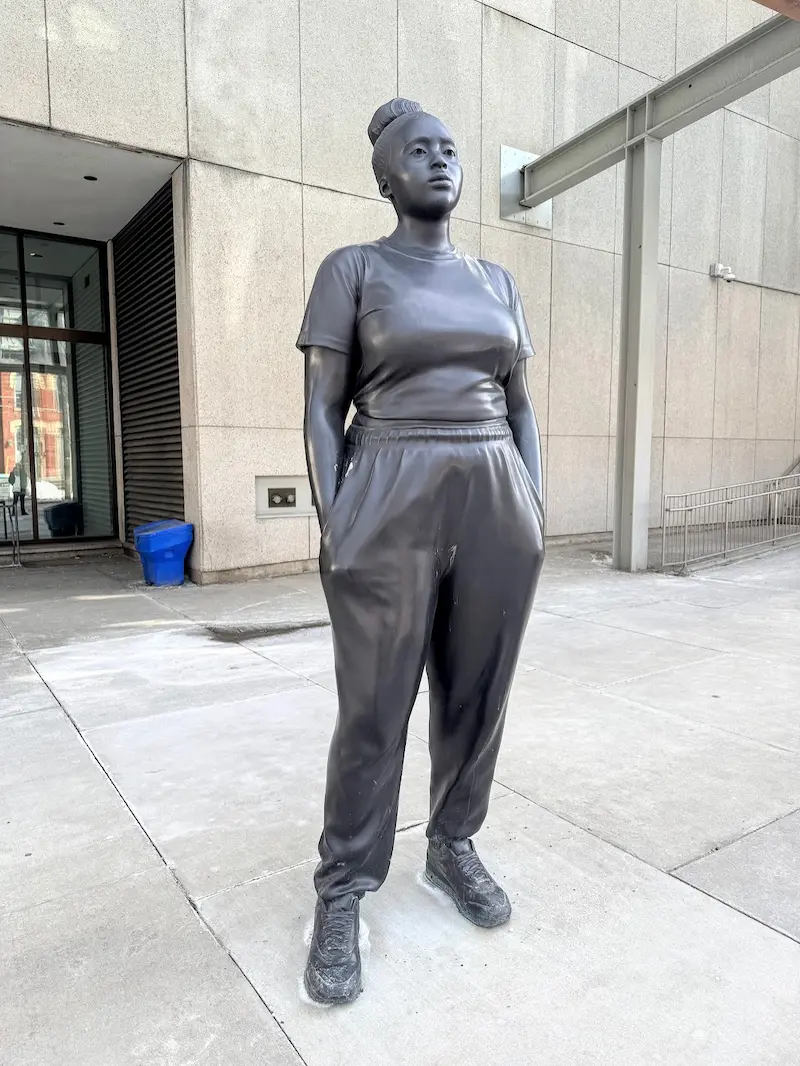
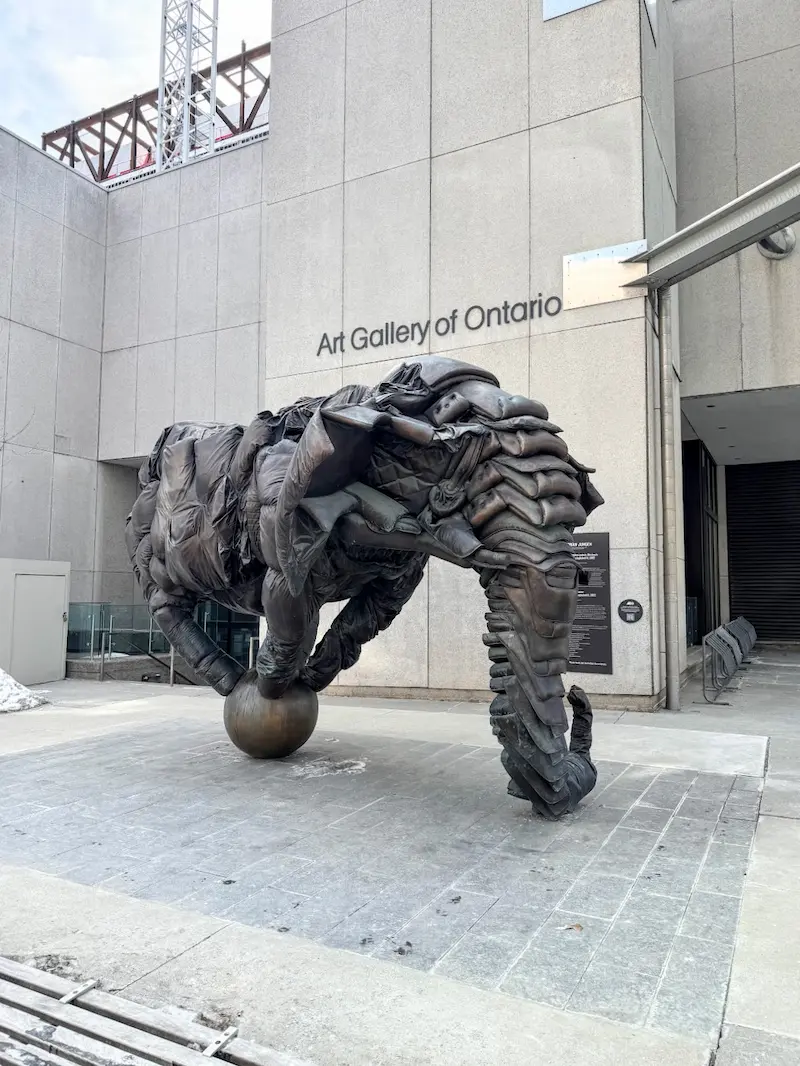
The Art Gallery of Ontario was undoubtedly the highlight of my recent trip to Toronto. Home to more than 120,000 artworks, the collection is vast, so I knew I had to focus on seeing the Art Gallery of Ontario highlights during my visit.
Being in Canada, I wanted to explore the kind of art rarely found in European galleries. A friendly museum employee directed me to the first floor, where the majority of paintings made by Canadian artists are displayed.
I quickly lost track of time, spending the rest of my afternoon immersed in the beauty of the North as seen through the eyes of its most iconic artists.
⤷ Read more: Cultural Guide – Best Things To Do in Toronto
Frank Gehry’s Architecture
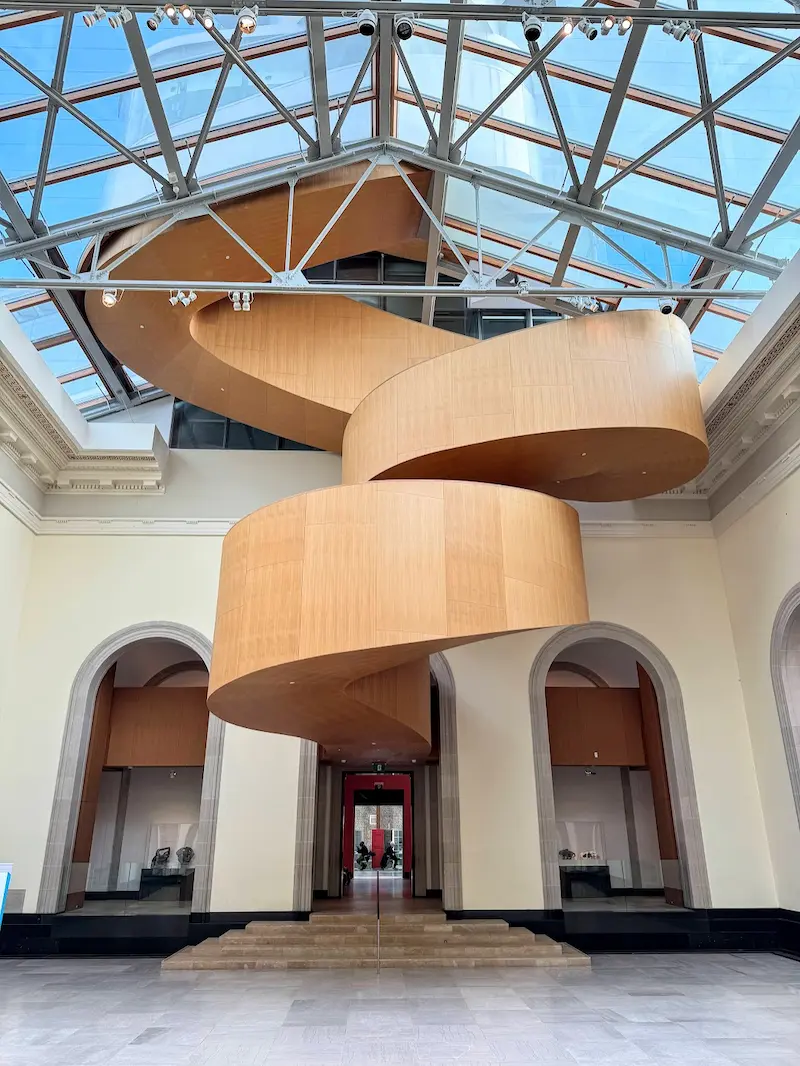
My journey began not with a canvas, but with the building itself. In 2004, when the Art Gallery of Ontario announced that Frank Gehry would lead its massive expansion, the world expected another Guggenheim Museum in Bilbao, a titanium explosion of metallic curves. But Gehry, who grew up just blocks away on St. Patrick Street, had something more intimate in mind.
He famously told the city, “It’s not going to look like Bilbao. It’s going to look like Toronto.” Having visited the Guggenheim Museum in Bilbao only months prior, I noticed a very different vibe here. Yet, Gehry’s signature was immediately recognisable.
Besides his Galleria Italiana, I was especially fascinated by the wooden staircase in Walker Court. It feels less like a functional part of the building’s architecture and more like a fluid art installation.
The museum is a masterclass in classical-modern design: intimate, illuminated with subtle light, and never overwhelming.
The Evolution of Canadian Painting: Canadian Art at the Art Gallery of Ontario
My journey through Canadian painting at the Art Gallery of Ontario began with works that felt familiar, still heavily influenced by European traditions.
⤷ Read more: Best Museum Instagram Accounts You Should Follow
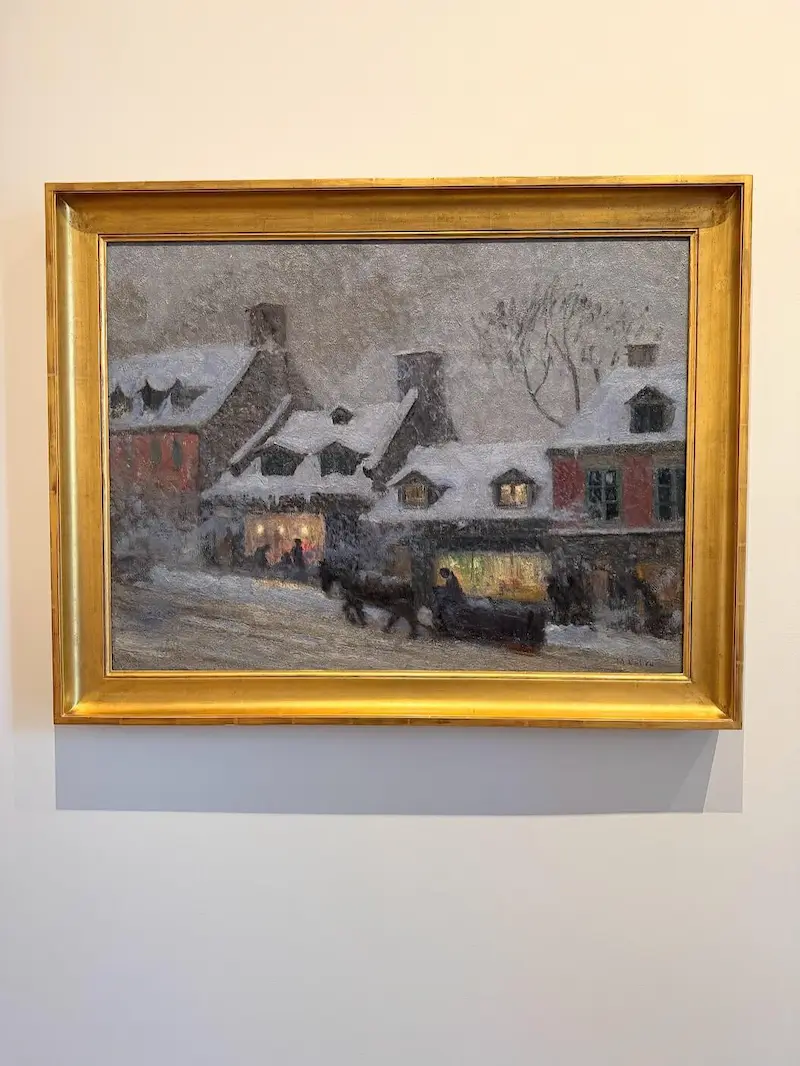
Cornelius Krieghoff (1815-1872)
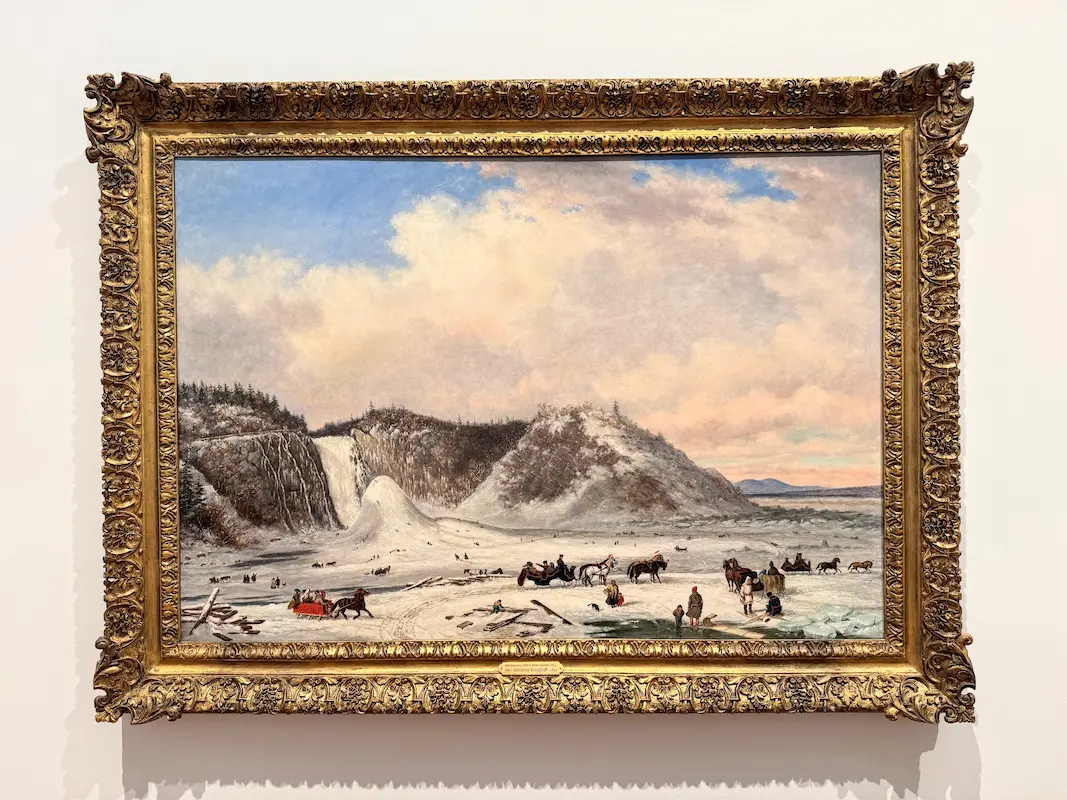
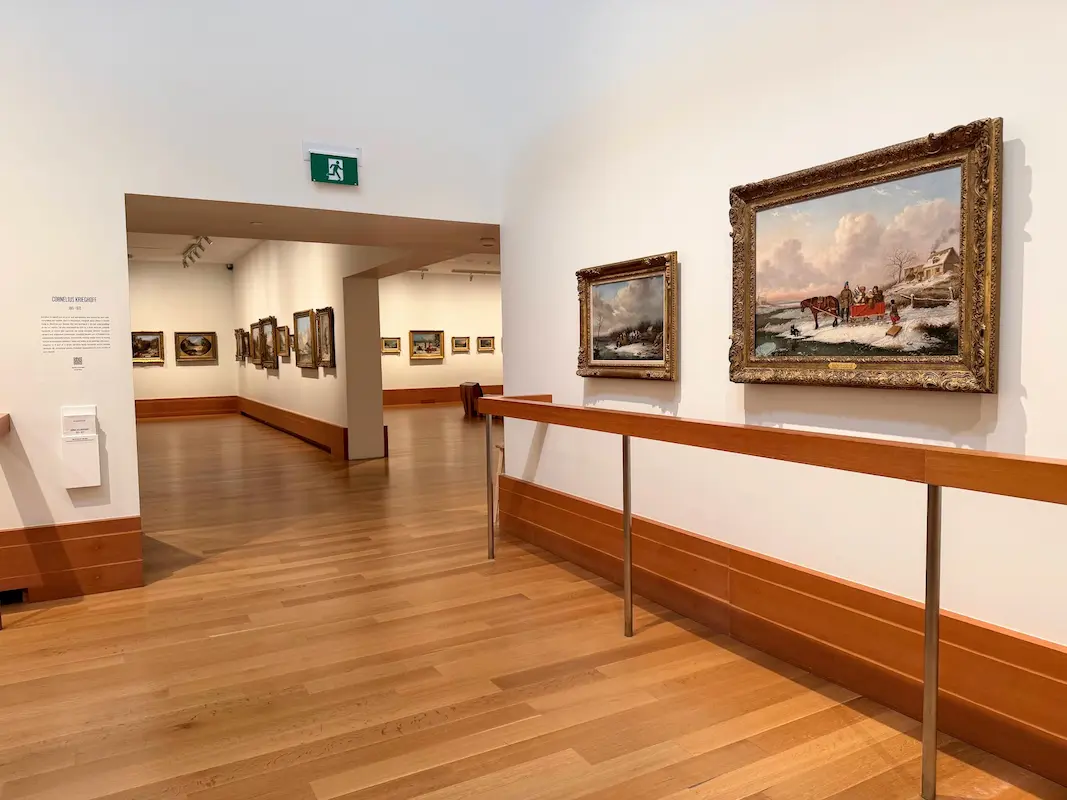
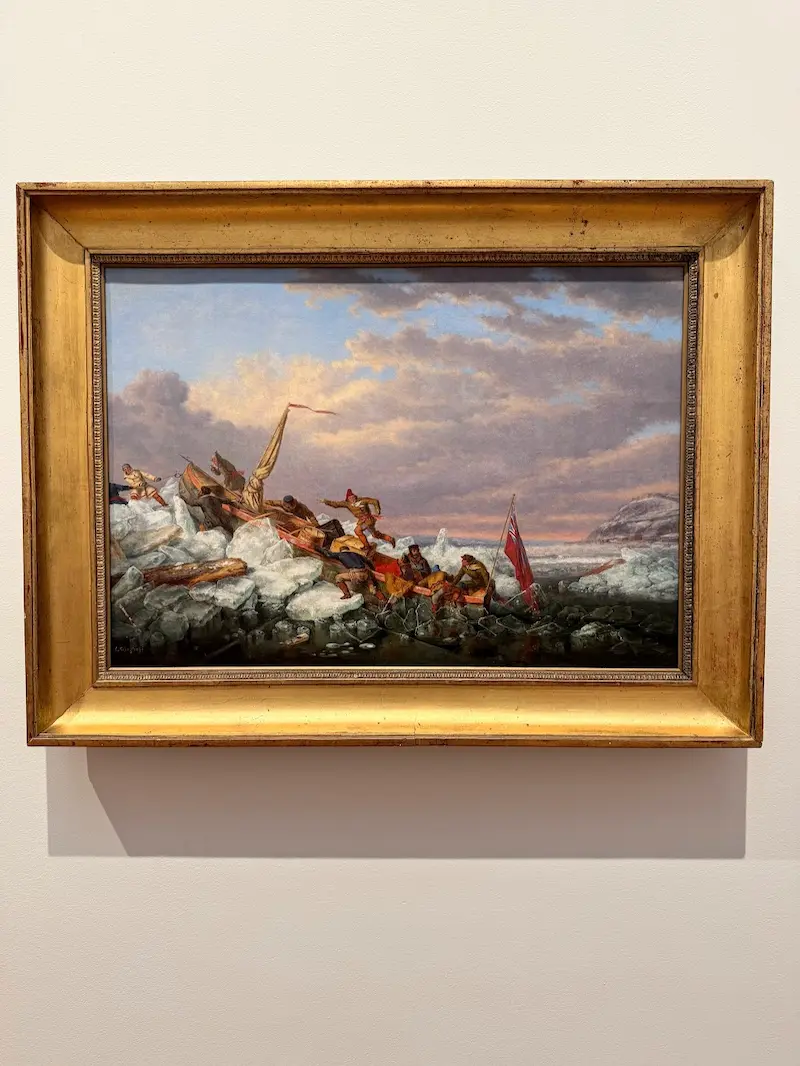
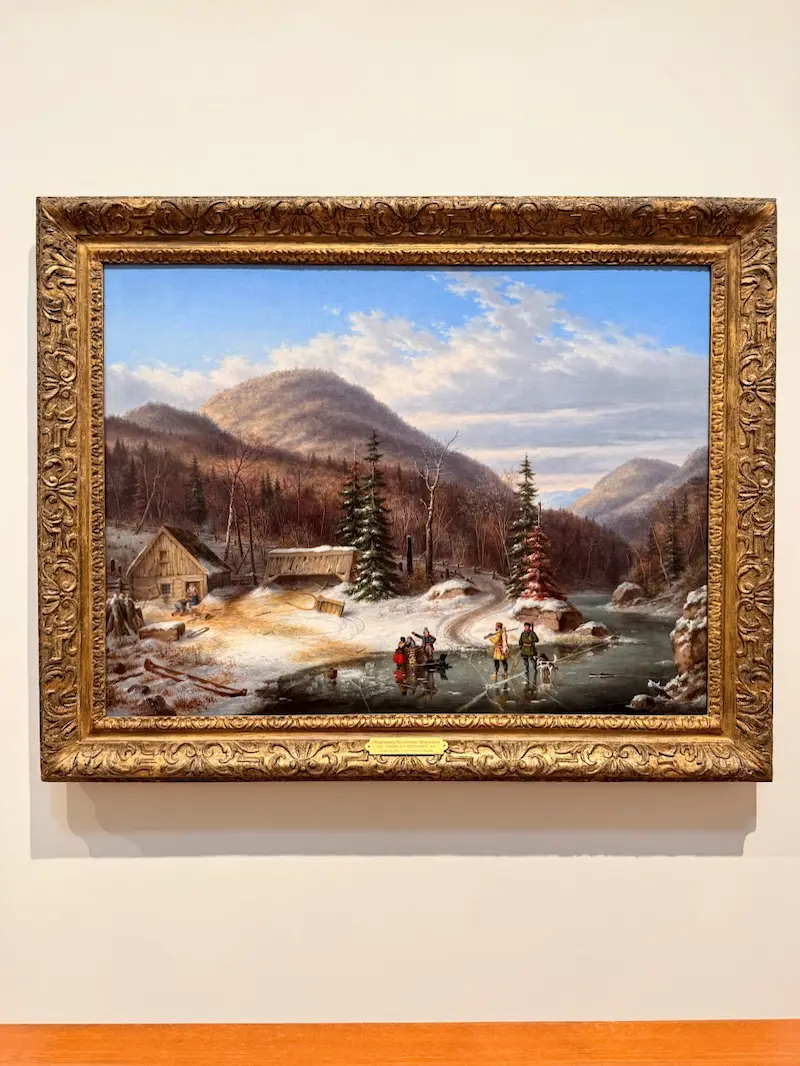
Cornelius Krieghoff was an Amsterdam-born, 18th-century painter who moved to Canada and spent almost a decade capturing the beginnings of the country: the first settlers’ encounters with the people who lived in that vast country, typical Canadian winter landscapes and the earliest traces of settlements. He created hundreds of artworks within that theme, becoming the most widely recognised Canadian artist of the 19th century.
As art historian Dennis Reid noted:
Canada made Krieghoff an artist and he, in turn, interpreted the emerging nation as deeply rooted in traditions of human habitation dating back centuries.
Although the subject matter in his paintings was new to me, the style definitely felt familiar. I recognised the brushstrokes of the Dutch Masters I’d seen in the Rijksmuseum. But just as Toronto’s architecture felt beautifully familiar, yet distinctly different, I had the same impression with Krieghoff’s artworks.
James Wilson Morrice
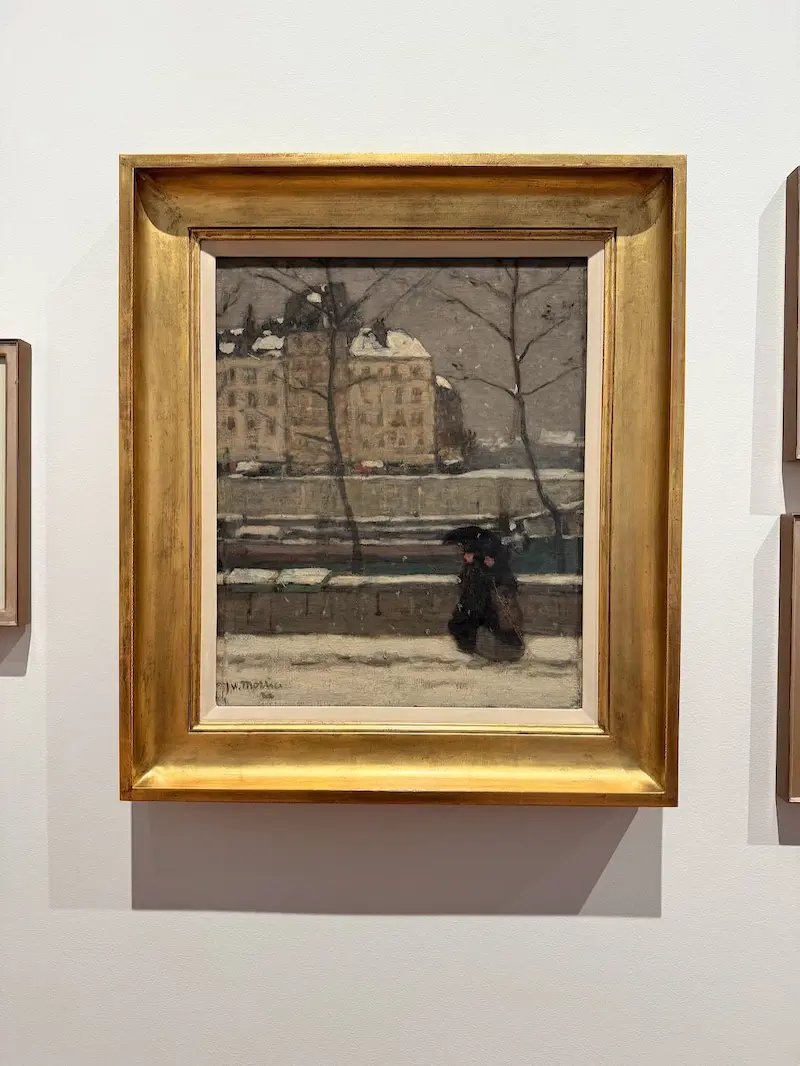
As I moved through the galleries, the mood shifted. European influences remained, but they began to pivot from Romanticism to Impressionism. This is most evident in the work of James Wilson Morrice, who spent decades in Paris, learning from French peers.
Interestingly, Morrice was introduced to Impressionism back in Canada by Maurice Cullen. Over his 40-year career, he produced roughly 1,000 artworks, which he didn’t date or title.
After 1900, he was mainly creating small paintings on panel. He would sit on park benches or in cafes, documenting daily life with vivid colours and loose, expressive brush strokes. These intimate paintings make up around half of his artwork.
Although he primarily resided in Paris, he consistently sent his work to the salons and art fairs in Europe, the USA and Canada, bridging the gap between the two continents.
⤷ Read more: Impressionists in Paris
Group of Seven Artworks at the Art Gallery of Ontario
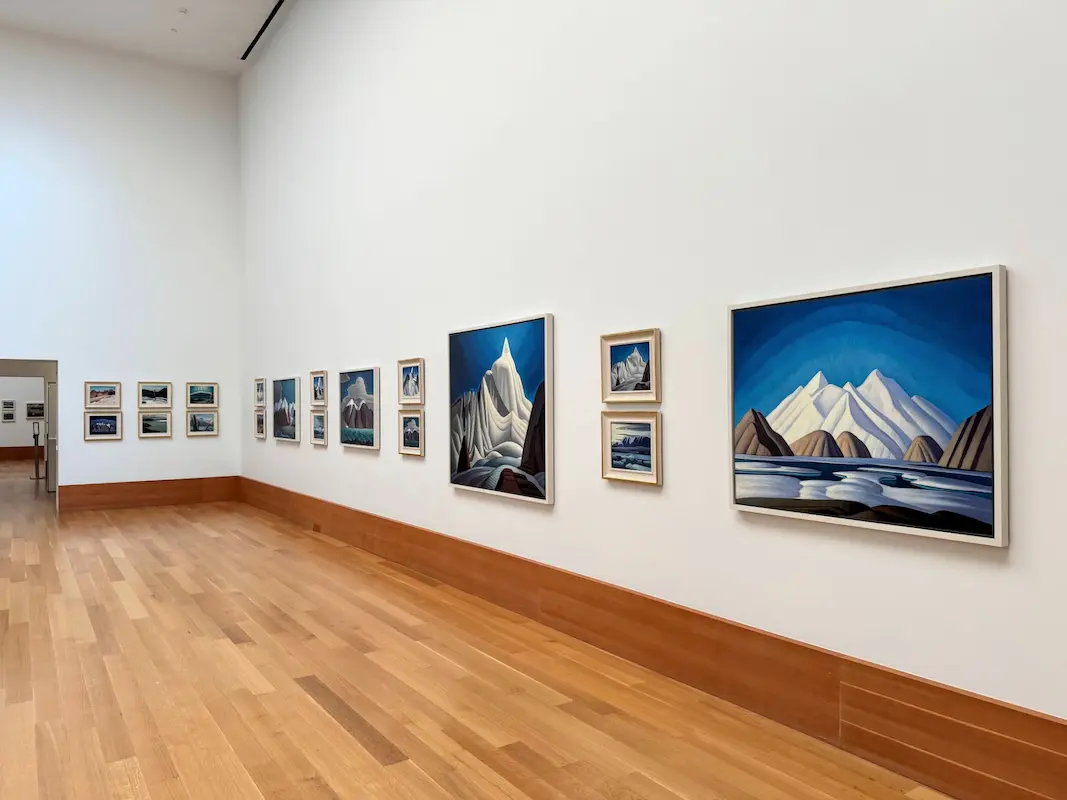
Nothing could have prepared me for the explosion of colour and the contemplative wildness found in the galleries dedicated to the Group of Seven. The Art Gallery of Ontario holds one of the world’s most significant collections of their work.
In January 1913, the group’s founding members, Lawren Harris and J.E.H. MacDonald, travelled to Buffalo, USA, to see an exhibition of modern Scandinavian painting. After seeing the Nordic landscapes, they wanted to capture Canada’s similarly rugged, northern scenery, free from the European pastoral landscape traditions. As Macdonald recalled in 1931:
Except in minor points, the pictures might all have been Canadian… And we felt, ‘This is what we want to do with Canada.’
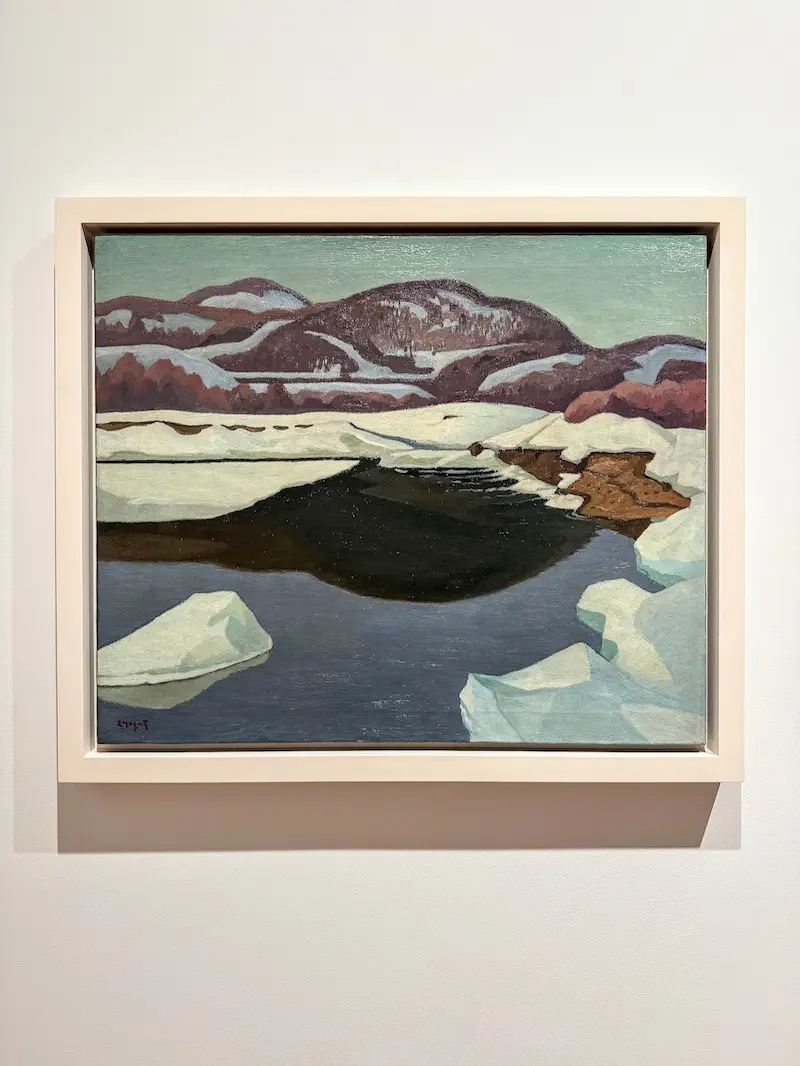
In the autumn of 1918, Harris organised the first of several sketching tours to the Algoma region. The artists travelled in a converted boxcar supplied by the railway, which served as a mobile studio with bunks, a table, chairs and a stove. The artists also used a canoe to reach more distant areas.
⤷ Read more: A Guide For the Perfect Museum Visit
A Break from Tradition
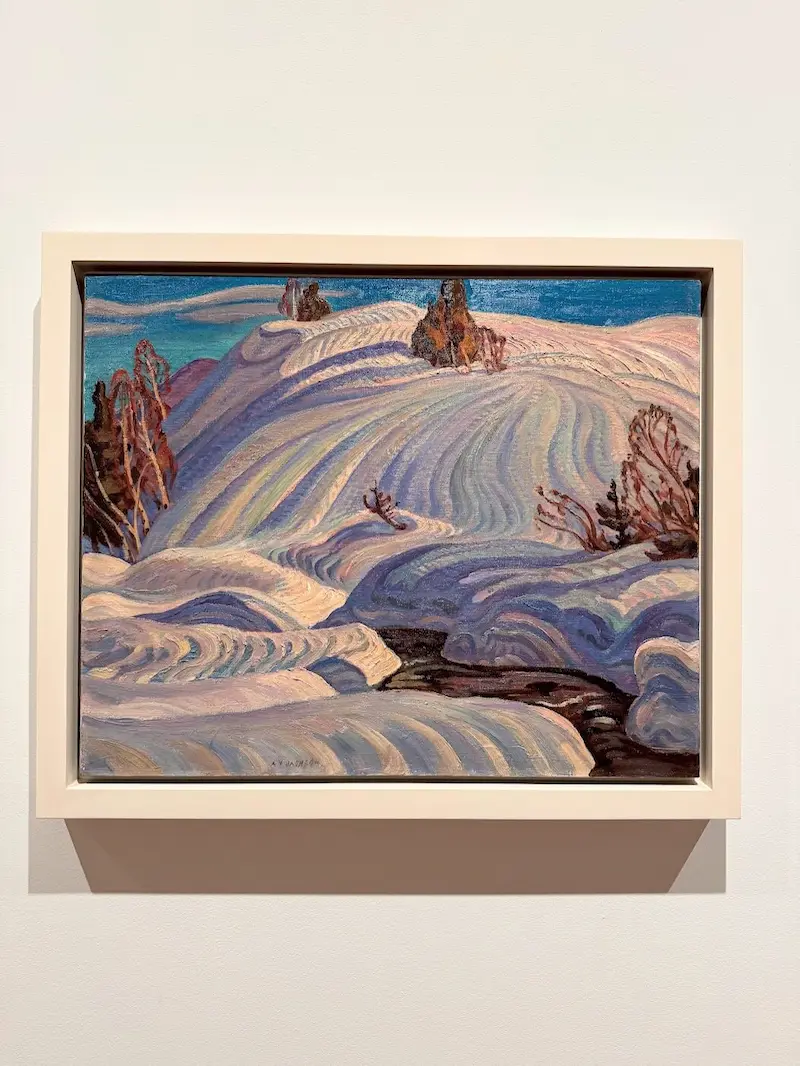
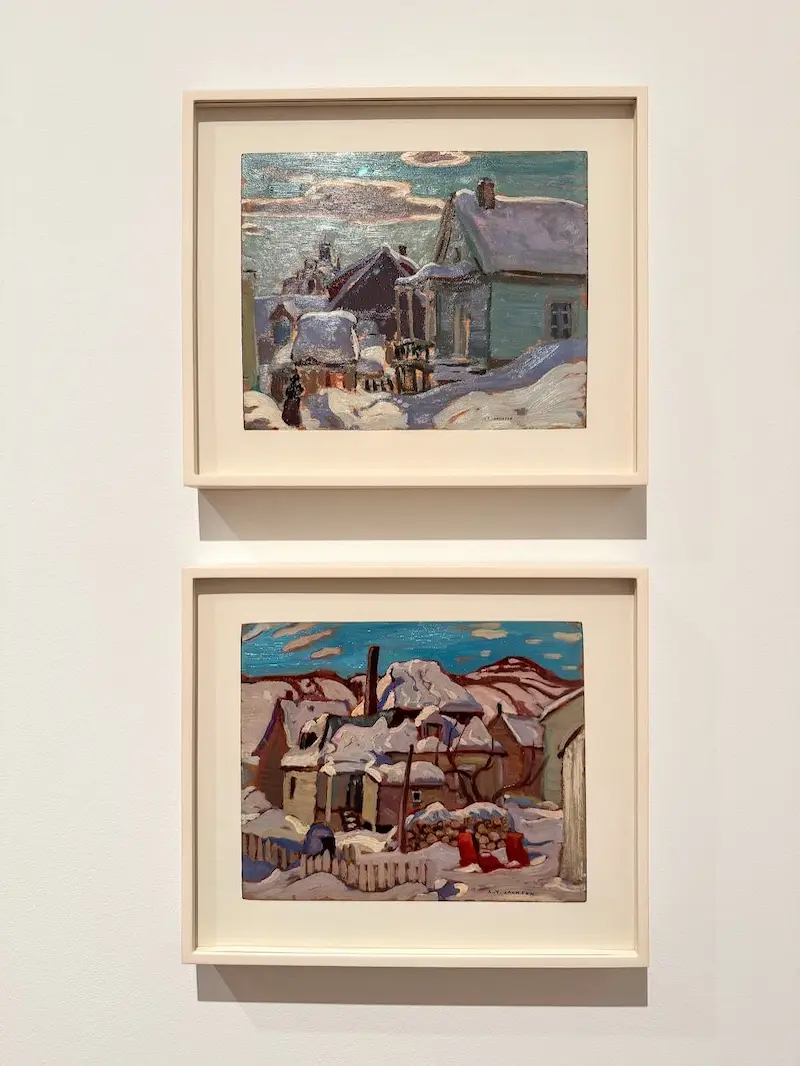
Before this collective, Canadian art was largely derivative of European traditions. Painters tried to apply the soft, misty palettes of English and French landscapes to the Canadian wilderness. It was a mismatch that failed to capture the North’s rugged reality.
The Toronto-based artists of the Group of Seven, originally consisting of Franklin Carmichael, Lawren Harris, A.Y. Jackson, Frank Johnston, Arthur Lismer, J.E.H. MacDonald, and F.H. Varley, rejected this. They believed Canada needed a unique visual voice in order to truly become a nation.
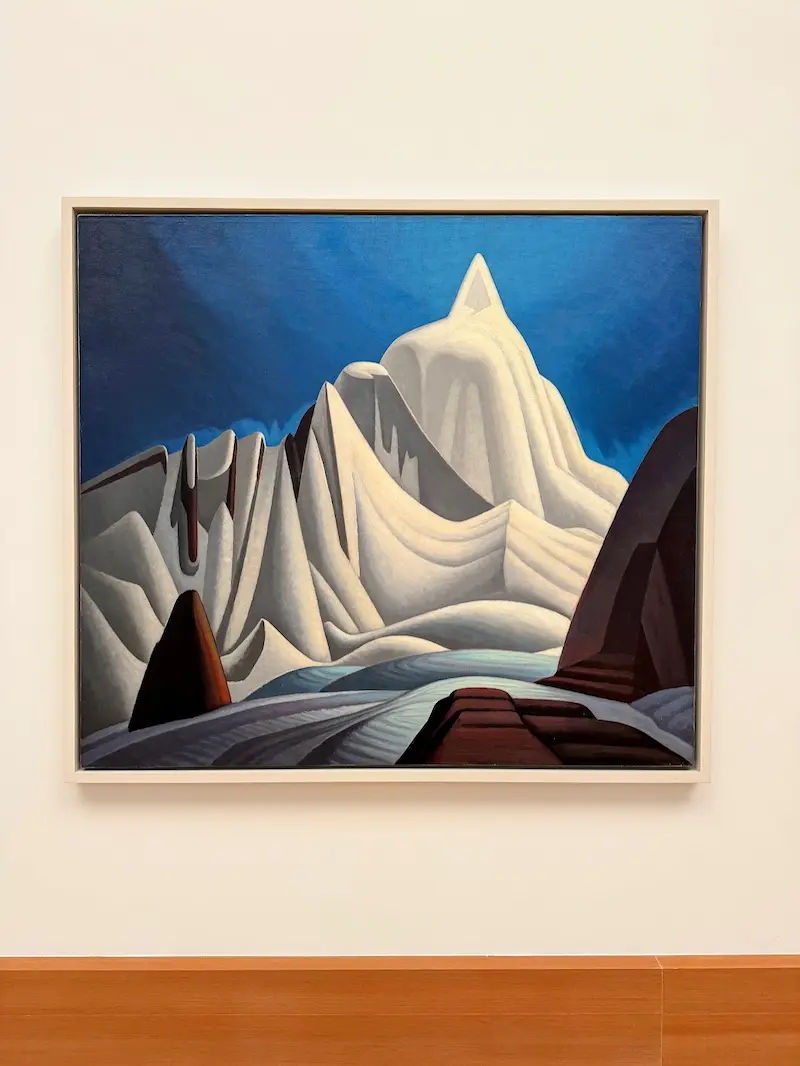
The Group developed a raw, expressive visual language. Instead of muted tones, they used vibrant, often unnatural colours: fiery oranges, deep purples, and electric blues, to convey the emotional impact of the landscape. They moved away from realism toward a more graphic, almost sculptural style. Trees became twisted silhouettes; mountains became smooth, geometric domes.
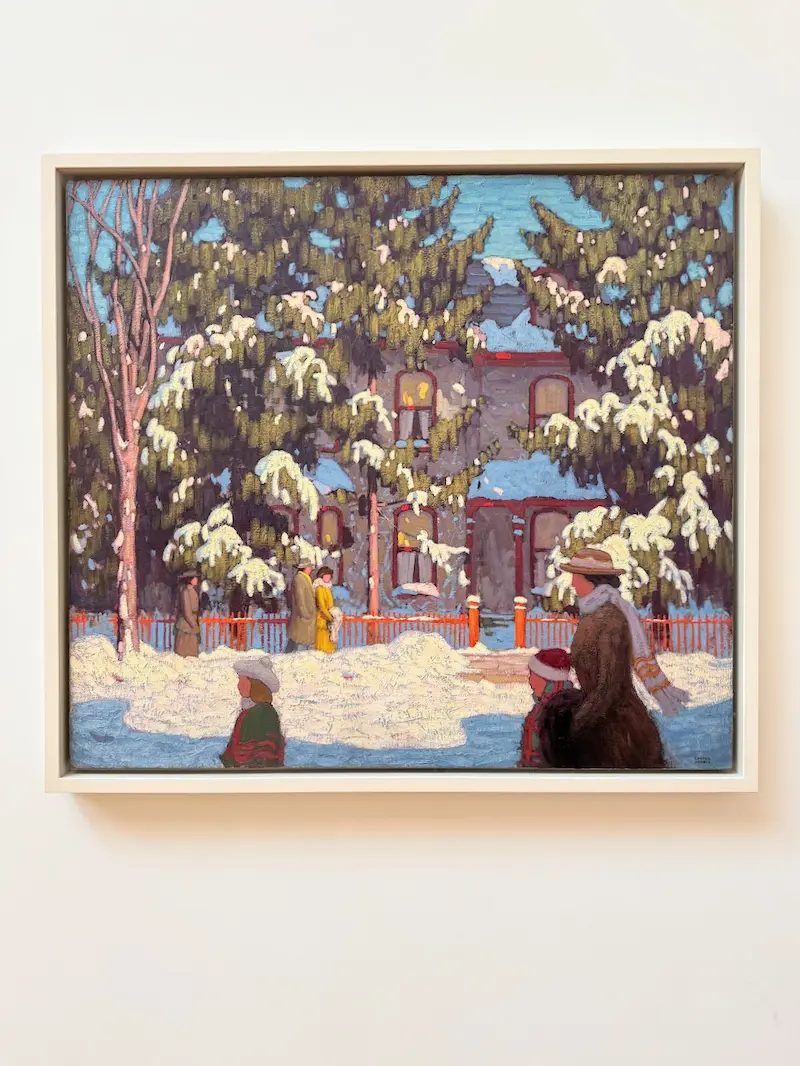
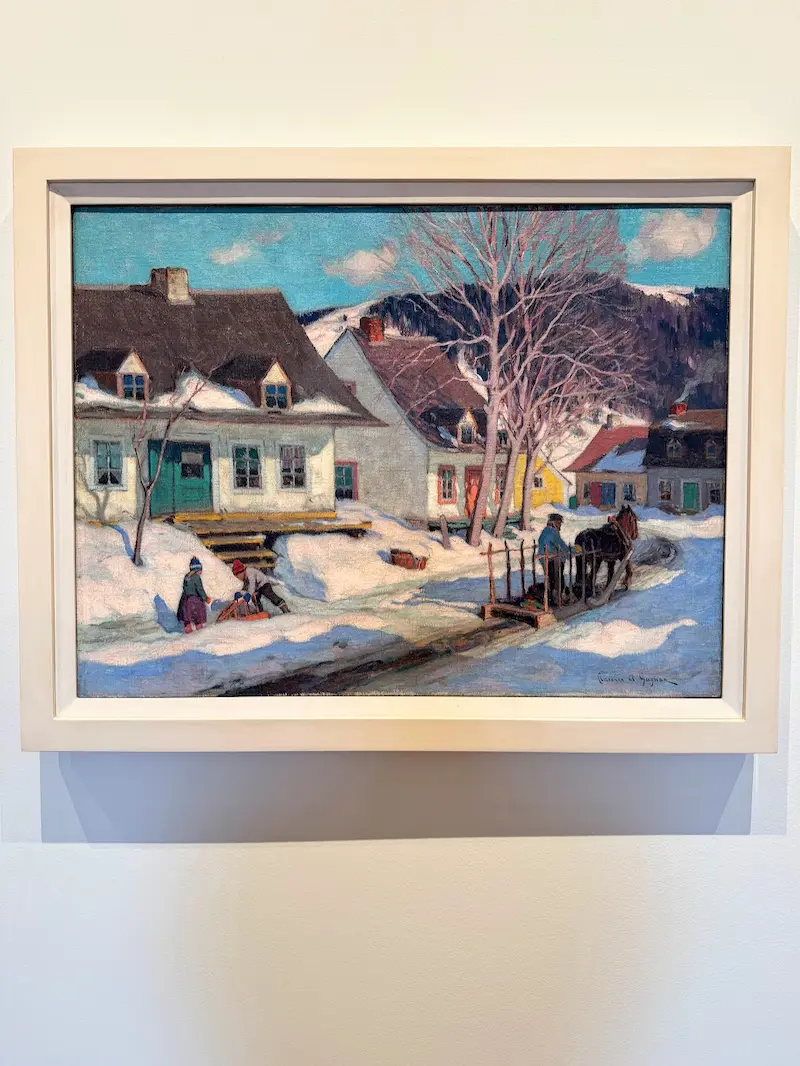
Toronto’s Art Gallery of Ontario is a very special place to explore these artworks because this is where the Group of Seven held their very first exhibition in 1920. Although their artwork wasn’t well received (one critic called their work “the contents of a drunkard’s stomach”), the reception changed soon, and they forever changed the trajectory of Canadian art.
The AGO has recently worked to contextualise the Group of Seven within the broader history of the land by hanging Indigenous art (Anishinaabe and Inuit artworks) alongside them. This creates a critical dialogue: while the Group often painted the land as an empty wilderness, the Indigenous works remind us that this land has been inhabited for millennia.
⤷ Read more: 16 Inspiring Female Artists in History
Icons of the Art Gallery of Ontario
Tom Thomson (1877-1917)
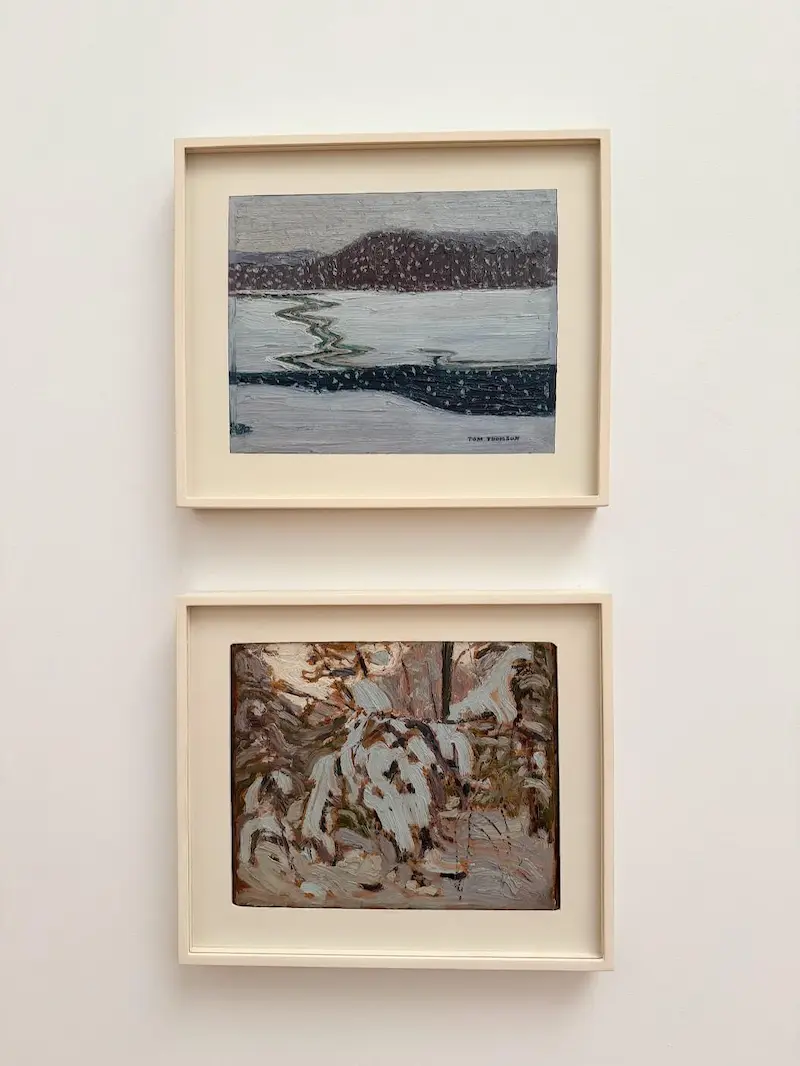
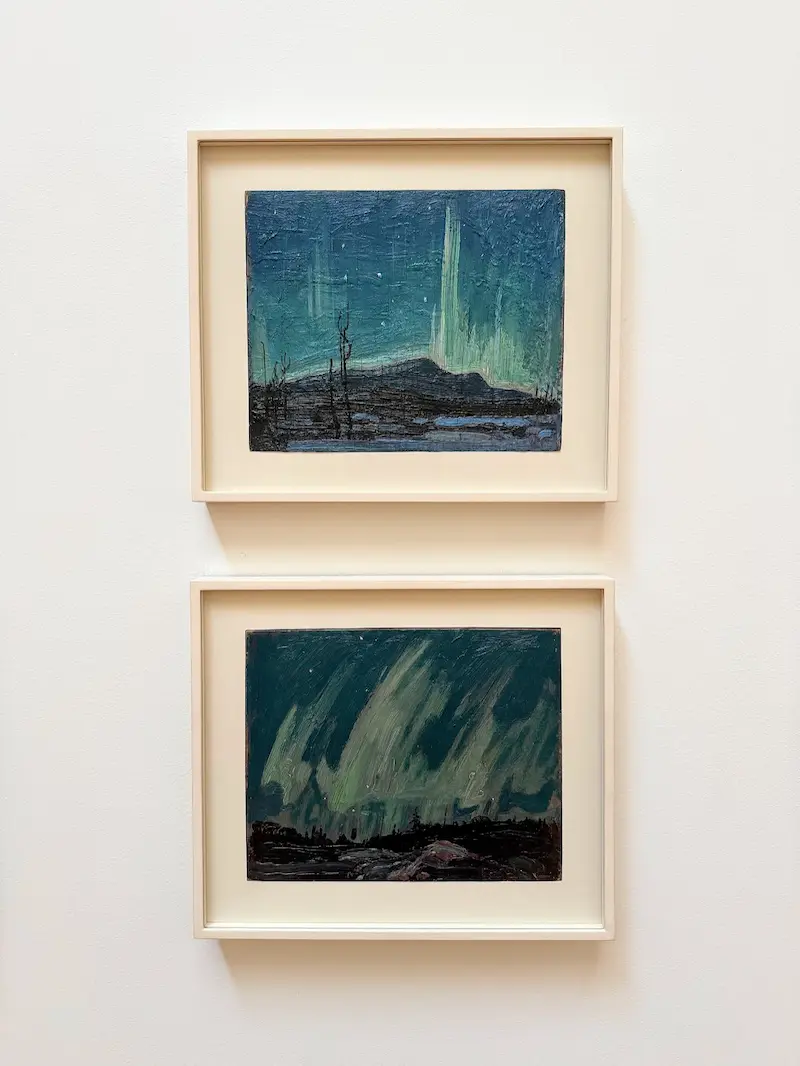
While not an official member of the Group (having died tragically in 1917), Thomson was their primary inspiration. He divided his time between Toronto and Algonquin Park in Northern Ontario, where he worked as a fishing guide and a fire ranger. The AGO houses many of his small oil sketches, which are often considered more powerful than his larger canvases for their raw, immediate brushwork.
Lawren Harris (1885-1970)
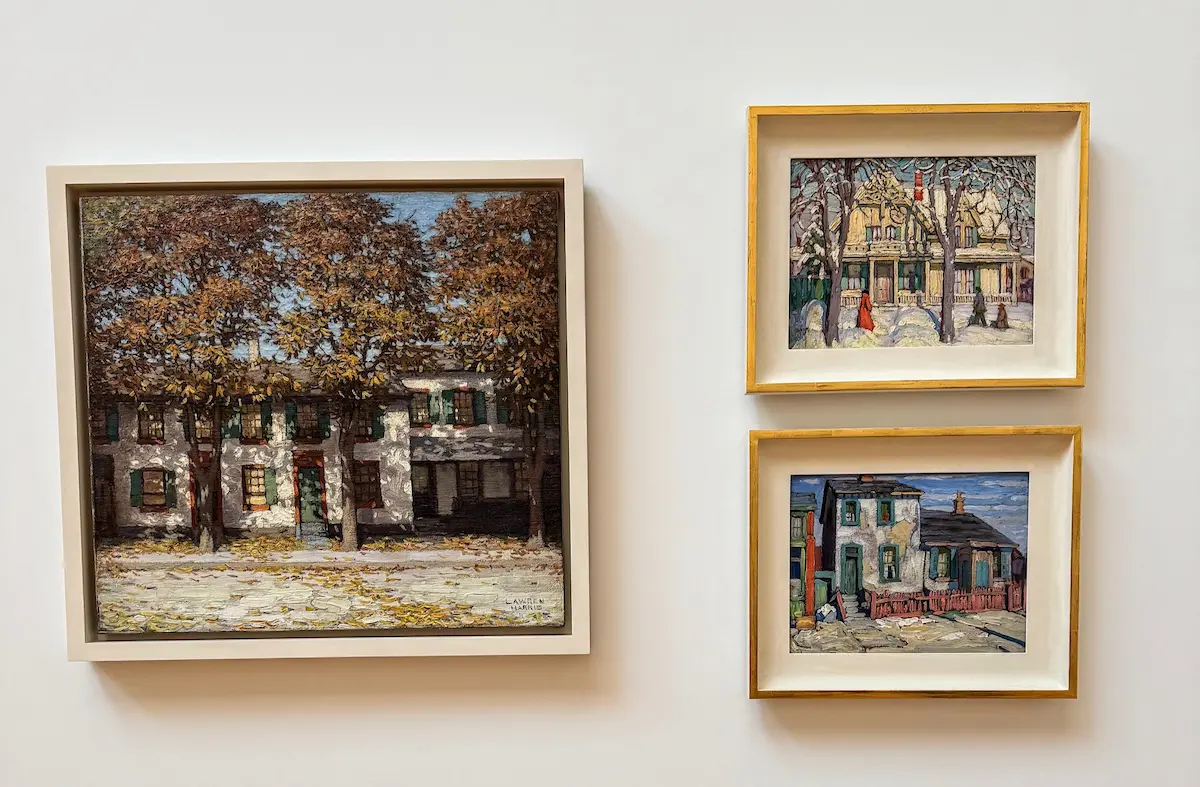
The unofficial leader of the Group of Seven, Lawren Harris, aimed to capture the spirit of the Canadian North. Focused on light and colour, he made some of the most iconic Group of Seven artworks. He painted numerous views of Lake Superior, the Rocky Mountains, and the Arctic in the 1920s and 1930s.
Lawren Harris studied art in Berlin and travelled extensively through Germany, France, Italy, England, and even journeyed by camel for two months from Jerusalem to Cairo. He was probably inspired by the Berlin Secession exhibition group for his Group of Seven.
Upon returning to Toronto, he grew interested in painting the city’s architecture. From 1908 to 1926, simple dwellings in Toronto, Hamilton, Barrie and Halifax became an important part of his work. He thought of that kind of architecture as typically Canadian.
Emily Carr (1871-1945)
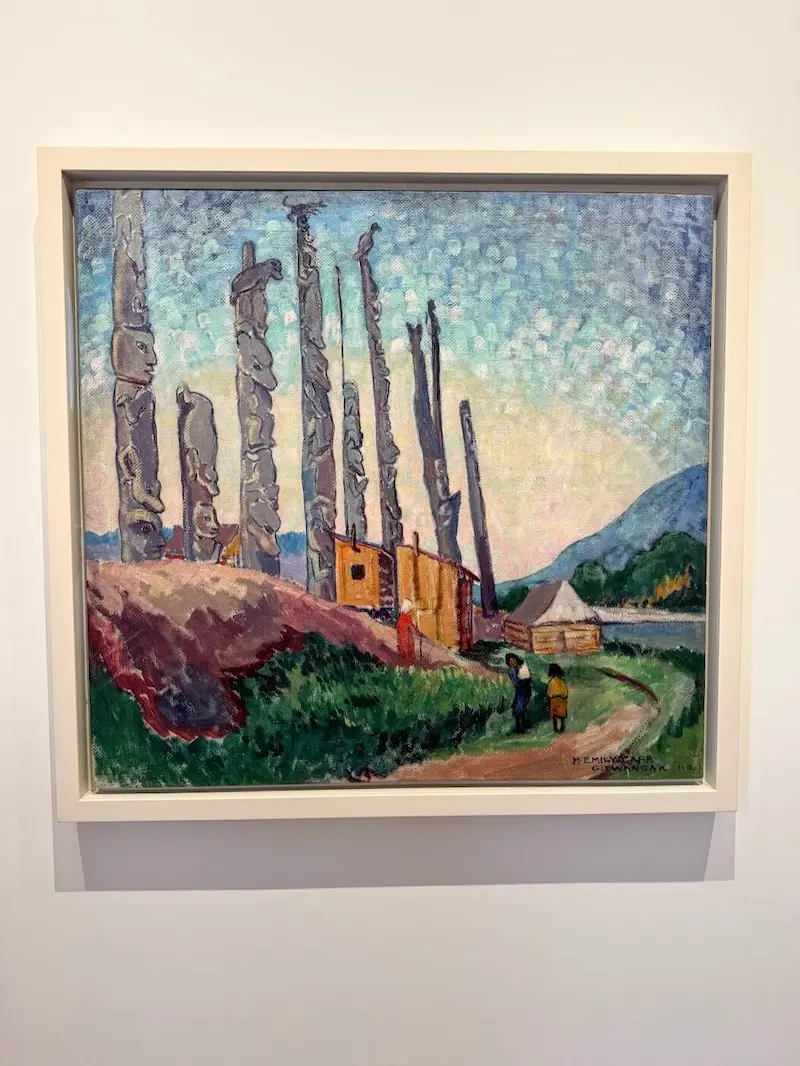
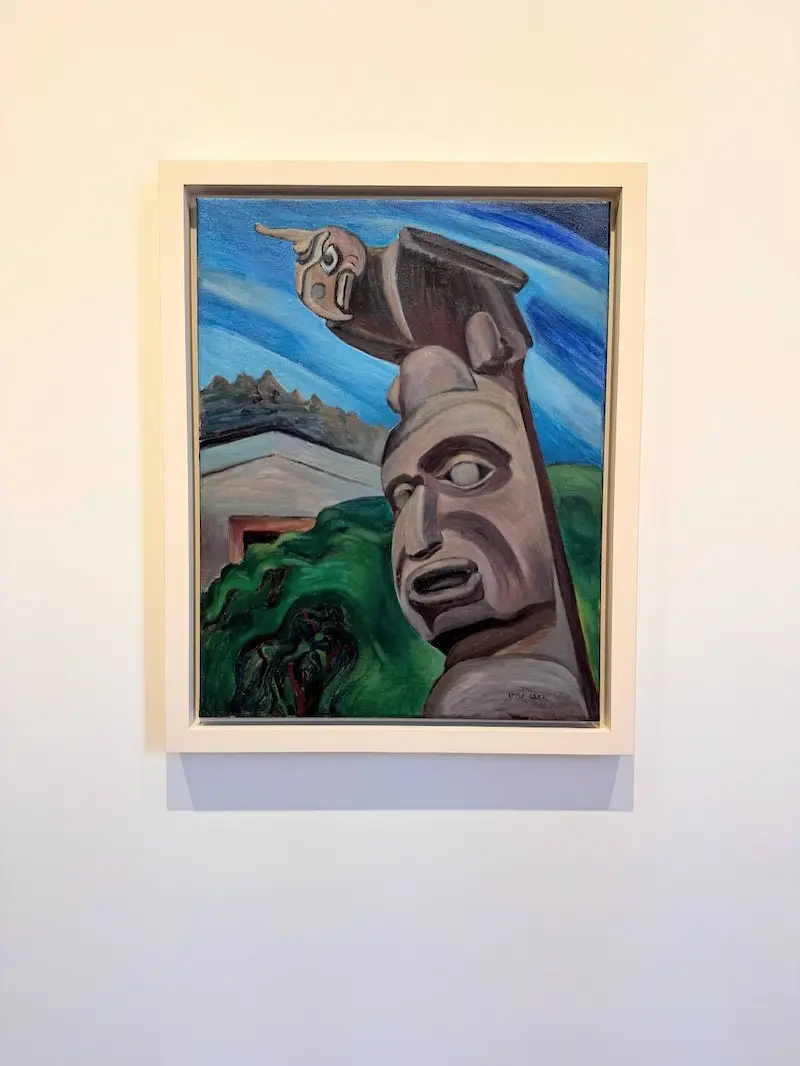
An independent woman who broke from the artistic and social restrictions of her time, Carr’s work was revived after she met the Group of Seven in 1927. Her artwork was strongly influenced by the Indigenous peoples of the Pacific West Coast.
⤷ TIP: Get your online Art Gallery of Ontario entrance ticket through this link.
Leaving the Art Gallery of Ontario, I felt as though I was seeing Toronto with new eyes. The clear, harsh light that the Group of Seven fought to capture seemed to follow me out onto the street. Whether you are drawn to the architectural mastery of Frank Gehry or the haunting, spiritual landscapes of Emily Carr and Lawren Harris, the AGO is more than just a gallery; it is a gateway into the Canadian spirit. If you find yourself in Toronto, visit the Art Gallery of Ontario. Step inside, lose track of time on the first floor, and let the North surprise you just as it did me.